Ramkhamhaeng National Museum: Sukhothai Travel Guide (4.4★)
✓ Facts verified via Google Places · Sep 17, 2026
At a glance
Opening hours
- Monday: 9:00 AM – 4:00 PM
- Tuesday: 9:00 AM – 4:00 PM
- Wednesday: 9:00 AM – 4:00 PM
- Thursday: 9:00 AM – 4:00 PM
- Friday: 9:00 AM – 4:00 PM
- Saturday: 9:00 AM – 4:00 PM
- Sunday: 9:00 AM – 4:00 PM
How this guide is made
Produced with AI assistance and reviewed against live data sources. Facts such as hours, ratings, and location come from Google Places; images are licensed or public domain. Details can change — please verify before visiting. Editorial policy
Why start here, not at the ruins
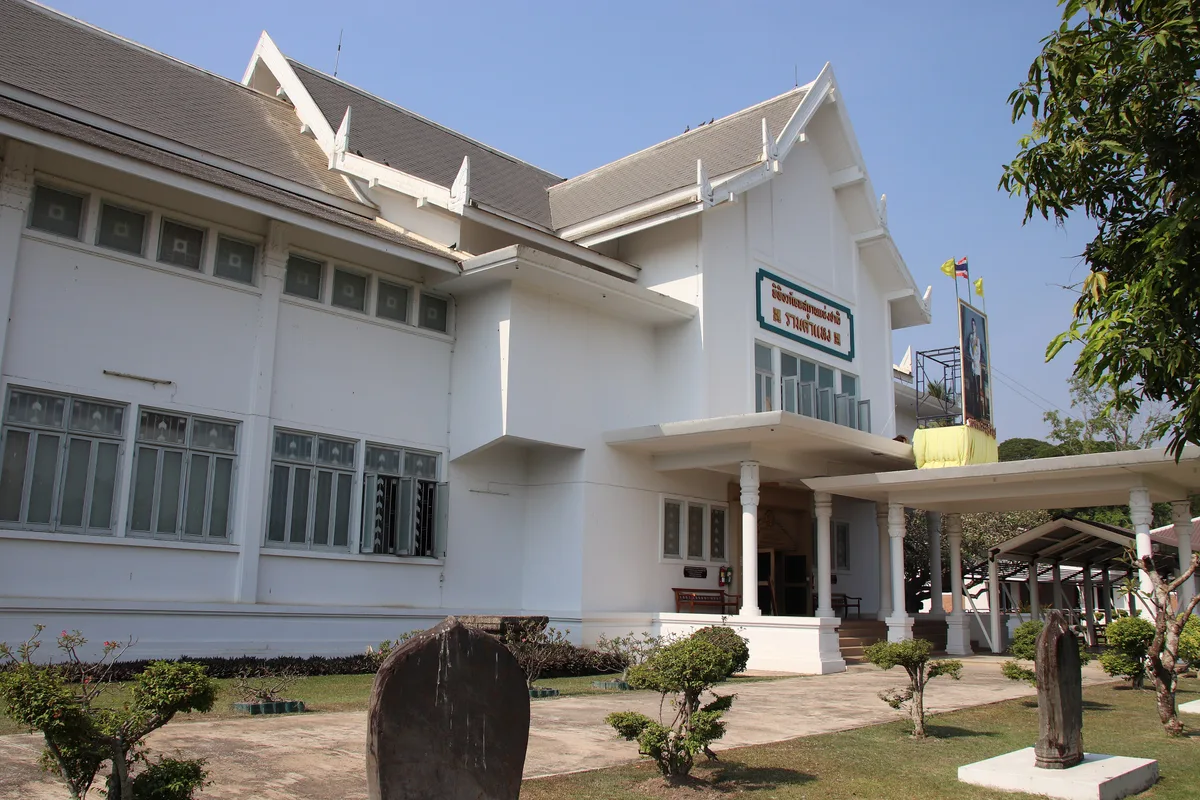
Sukhothai’s temples make more sense once you’ve seen what filled them. This museum holds the Buddha images, inscriptions and ceramics that once stood inside those brick shells.
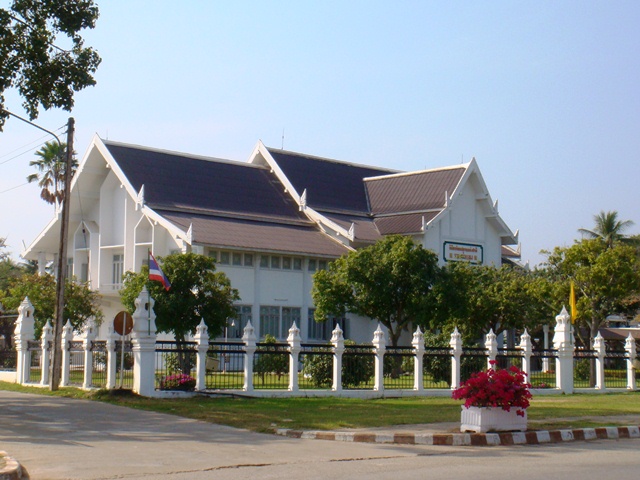
The building sits just outside the old city walls, a short walk from the historical park’s main entrance. Most visitors skip straight to the ruins; the museum stays comparatively empty even in high season.
What’s inside
The ground floor covers Sukhothai-period sculpture: bronze and stucco Buddha images in the walking pose the kingdom made famous, its elongated limbs and flame-topped head a signature style found nowhere else in Thailand.
A cast of the Ramkhamhaeng Inscription stone sits near the entrance. The original, credited with the earliest known Thai script from 1292, now lives in Bangkok’s National Museum, but the replica here comes with context on how the writing system evolved.
Upstairs galleries hold:
- Sangkhalok ceramics, the celadon and underglaze-painted stoneware Sukhothai exported across Southeast Asia
- Stone inscriptions and boundary markers pulled from nearby temple sites
- Household and religious artifacts excavated from the historical park itself
Labels are in Thai and English throughout, giving enough historical framing to make the ruins outside legible rather than just photogenic.
Timing your visit
Open daily, 9am to 4pm, with no day off. Plan on 45 minutes to an hour, less if you’re only skimming the ground floor.
Go before you tour the historical park’s central zone, not after. Fifteen minutes with the walking Buddha displays changes how you read the same pose carved into eroded stone at Wat Mahathat an hour later.
Midday sun makes the park brutal; the museum’s air conditioning makes it a sensible break between temple loops rather than a bolt-on errand. Cycling between the two, the standard way to cover the park, means the museum is barely five minutes off your route.
Getting the most from a short stop
Buy your park entrance ticket separately; the museum has its own small admission fee, paid at the desk inside.
- Bicycles are the standard way to reach both the museum and the park zones; rentals cluster near New Sukhothai’s bus station and around the park’s entrance road
- There’s no strict dress code enforced here the way there is at active temples, but modest clothing is still the norm
- Photography is generally allowed in the galleries; flash is usually restricted near the older stone pieces, so check posted signs rather than assume
Because the museum draws a fraction of the historical park’s foot traffic, you can read every label without jostling for space, a rarity at a site this close to a major ruin complex. Treat it as the reference room for the archaeological zone rather than a standalone stop, and budget your day with the museum first, ruins after.
Frequently asked questions
What are the opening hours?
Daily, 9am to 4pm, with no weekly closing day. Confirm before a public holiday visit since hours can shift.
How much time should I budget?
45 minutes to an hour covers both floors; less if you're only checking the ground-floor sculpture.
Is it crowded?
No. It's under-the-radar compared to the historical park itself, so galleries are usually quiet even in peak travel months.
Should I visit before or after the ruins?
Before. The exhibits on Sukhothai-style Buddha images and the Ramkhamhaeng Inscription give context that makes the temple ruins easier to read.
How do I get there from the park entrance?
It's a short walk or a few minutes by bicycle, the standard way visitors move between the museum and the historical park's temple zones.
Plan your trip to Sukhothai
Some links above are affiliate links — if you book through them, Wander Atlas earns a small commission at no extra cost to you. It's how we keep every guide free.
Related guides
 attraction
 Sukhothai Buddha Park: Travel Guide (4.5★)
 hidden gem
 Sukhothai Historical Park: Travel Guide (4.7★)
 attraction
 Wat Chedi Luang: Chiang Mai Travel Guide
 attraction