Ramkhamhaeng National Park: Sukhothai Travel Guide (4.7★)
✓ Facts verified via Google Places · Sep 18, 2026
At a glance
Opening hours
- Monday: 7:00 AM – 2:00 PM
- Tuesday: 7:00 AM – 2:00 PM
- Wednesday: 7:00 AM – 2:00 PM
- Thursday: 7:00 AM – 2:00 PM
- Friday: 7:00 AM – 2:00 PM
- Saturday: 6:00 AM – 2:00 PM
- Sunday: 6:00 AM – 2:00 PM
How this guide is made
Produced with AI assistance and reviewed against live data sources. Facts such as hours, ratings, and location come from Google Places; images are licensed or public domain. Details can change — please verify before visiting. Editorial policy
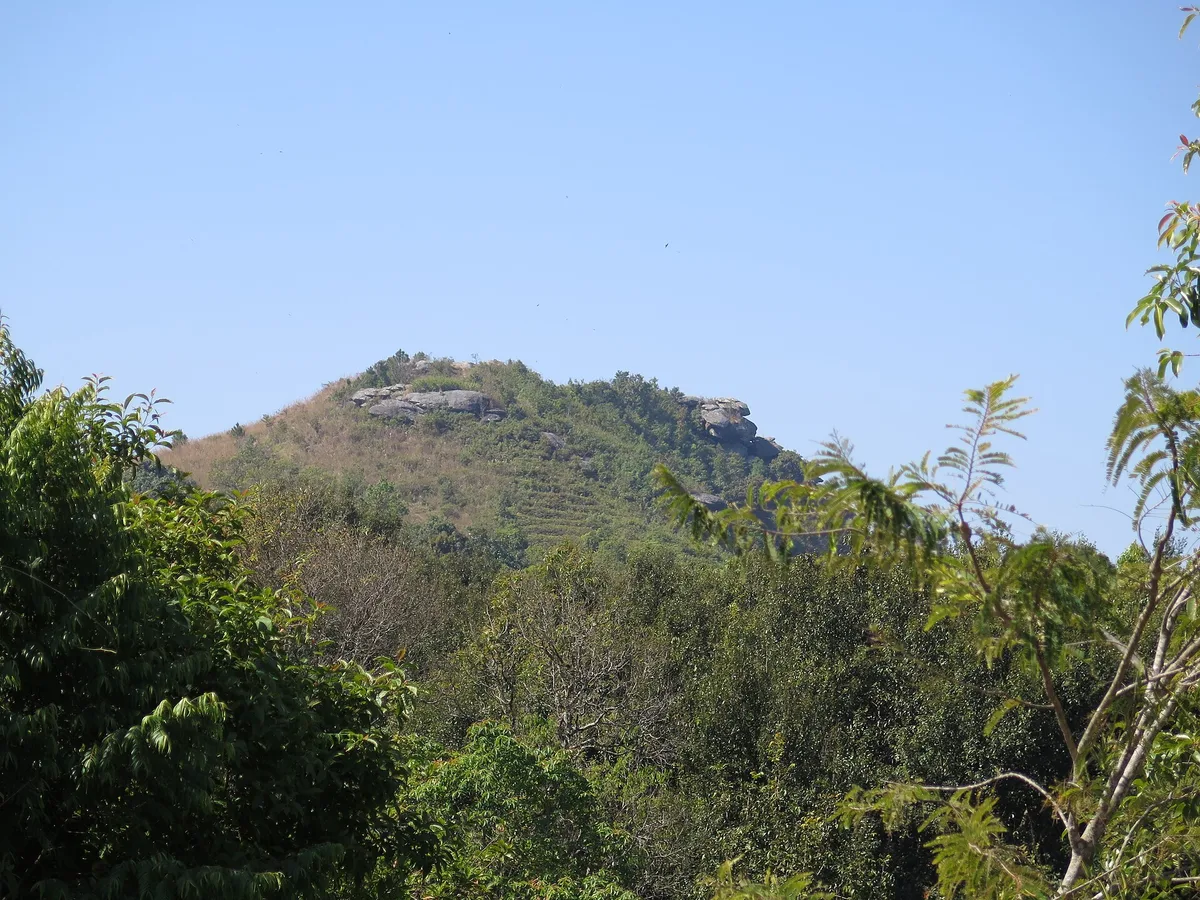
Most visitors to Sukhothai never make it past the historical park’s brick temples, which is exactly why Ramkhamhaeng National Park feels like a different province entirely. This is Khao Luang, a limestone and sandstone massif that rises abruptly out of the flat central plain, and the park wraps around its upper slopes with a mix of dry evergreen forest, pine stands at altitude, and the eroded rock formations the range is known for.
The name honours King Ramkhamhaeng, the Sukhothai-era ruler credited with developing the Thai script, and local tradition holds that Khao Luang’s caves and heights were tied to the old kingdom’s spiritual life. Whether or not every legend checks out, the mountain clearly mattered to the people who built their capital in its shadow.
Getting up the mountain
There’s no public bus route into the park, so you’ll need your own transport, a rented motorbike, or a hired driver from Sukhothai town. The paved road climbs steadily from the district town of Khiri Mat, with switchbacks tight enough that you’ll want a vehicle you trust on hills.
Budget close to an hour for the drive from Sukhothai’s Old City, more if you stop at the roadside viewpoints on the way up. A few basic food stalls cluster near the park entrance and visitor center, useful for topping up on water before you start walking, since there’s little for sale higher up.
The 7am-to-2pm window
This park keeps unusually short hours: 7am to 2pm Monday through Friday, and an earlier 6am opening on weekends. There is no late afternoon or evening access at all, which catches out visitors used to parks that stay open until dusk.
That early closing time isn’t a suggestion, it’s when the gates shut, so plan your visit as a morning trip and be back down before early afternoon. Arriving right at opening is also your best strategy for cooler temperatures, since the exposed rock sections heat up fast once the sun is high.
Tham Phra Ruang and the summit trails
The park’s best-known feature is Tham Phra Ruang, a limestone cave associated with the Sukhothai period, reachable via a marked trail from the main visitor area. Steps and a rope-assisted scramble lead up through boulders to the cave mouth, and the surrounding karst has smaller chambers worth a look with a flashlight.
Beyond the cave, trails continue toward Khao Luang’s summit ridge, passing through changing forest types as you gain elevation. Signage is present but not dense, so a guide or a clear map from the visitor center helps if you’re pushing further than the cave loop.
- Tham Phra Ruang cave: moderate scramble, roughly 30-45 minutes round trip from the trailhead
- Summit trail: a half-day undertaking for reasonably fit hikers, steep in sections
- Waterfall trails near the entrance: shorter, family-friendly options when water levels are up
Reading the rock: Sukhothai’s border wall
One thing that sets this park apart from other forested mountains in the region is the presence of an ancient stone wall running along part of the ridge, believed to be a defensive structure from the Sukhothai kingdom guarding its western approach. Walking alongside it, you’re tracing a boundary that mattered to a 13th and 14th century capital rather than a modern park perimeter.
It’s a low, weathered line of stacked stone rather than anything monumental, easy to miss if you’re not looking for it. Ask staff at the entrance to point out where the trail intersects it, since it isn’t always signed clearly.
Cool-season colour and native plants
The park’s forests shift noticeably with the season. Cool months, roughly November through February, bring drier air, better summit visibility, and are when many of the park’s flowering trees and orchids are most active, according to the park’s own emphasis on its native plant life.
Rainy season, June through October, greens up the forest but can make the cave scramble and steeper trail sections slick and best avoided after heavy rain. Hot season, March to May, is manageable early in the morning but punishing by late morning on exposed rock.
Visiting without crowding the trail
Because Ramkhamhaeng National Park isn’t yet on the standard Sukhothai itinerary the way the historical park is, you can often have long stretches of trail to yourself, even on a weekend morning. That’s part of the appeal: it rewards visitors willing to go a bit further than the temple ruins everyone else stops at.
A few practical habits make the visit smoother:
- Fill up on water and snacks at the stalls near the entrance; options thin out fast once you’re on the trail
- Wear proper hiking shoes for the Tham Phra Ruang scramble, sandals aren’t enough on the loose rock
- Bring a flashlight or headlamp if you want to explore inside the cave chambers
- Start as close to opening time as your schedule allows, both for cooler hiking and because the 2pm closure leaves less margin than it seems
There’s no ticket booth with fixed foreign-visitor pricing widely published for this park the way there is at Sukhothai Historical Park, so confirm current entrance fees at the gate rather than assuming a figure in advance. Cash is the safe assumption for any small entrance or parking fee, since card facilities this far from town are unlikely.
Frequently asked questions
How do you get to Ramkhamhaeng National Park from Sukhothai?
There's no public bus to the park. Rent a motorbike or car, or hire a driver from Sukhothai's Old City; the drive takes roughly an hour via Khiri Mat District.
What are the opening hours?
7am to 2pm Monday through Friday, and 6am to 2pm on Saturday and Sunday. The park closes firmly at 2pm every day, so plan a morning visit.
What's the main hike inside the park?
The most popular route leads to Tham Phra Ruang, a limestone cave tied to the Sukhothai era, a 30-45 minute round trip with some scrambling. Fitter hikers can continue toward the Khao Luang summit ridge.
When is the best time of year to visit?
Cool season, roughly November to February, offers the clearest views and the most active flowering plants. Avoid the trail right after heavy rain in the June-to-October wet season, when the cave scramble gets slippery.
Is it crowded, and what else is nearby?
It's far less visited than Sukhothai Historical Park, so trails are usually quiet even on weekends. Combine it with a stop in Khiri Mat District town on the way up or down for food and fuel.
Plan your trip to Sukhothai
Some links above are affiliate links — if you book through them, Wander Atlas earns a small commission at no extra cost to you. It's how we keep every guide free.
Related guides
 attraction
 Ramkhamhaeng National Museum: Sukhothai Travel Guide (4.4★)
 attraction
 Wat Si Chum: Sukhothai Travel Guide (4.8★)
 attraction
 Sukhothai Buddha Park: Travel Guide (4.5★)
 hidden gem