Wat Si Chum: Sukhothai Travel Guide (4.8★)
✓ Facts verified via Google Places · Sep 18, 2026
At a glance
Opening hours
- Monday: 7:30 AM – 5:00 PM
- Tuesday: 7:30 AM – 5:00 PM
- Wednesday: 7:30 AM – 5:00 PM
- Thursday: 7:30 AM – 5:00 PM
- Friday: 7:30 AM – 5:00 PM
- Saturday: 7:30 AM – 5:00 PM
- Sunday: 7:30 AM – 5:00 PM
How this guide is made
Produced with AI assistance and reviewed against live data sources. Facts such as hours, ratings, and location come from Google Places; images are licensed or public domain. Details can change — please verify before visiting. Editorial policy
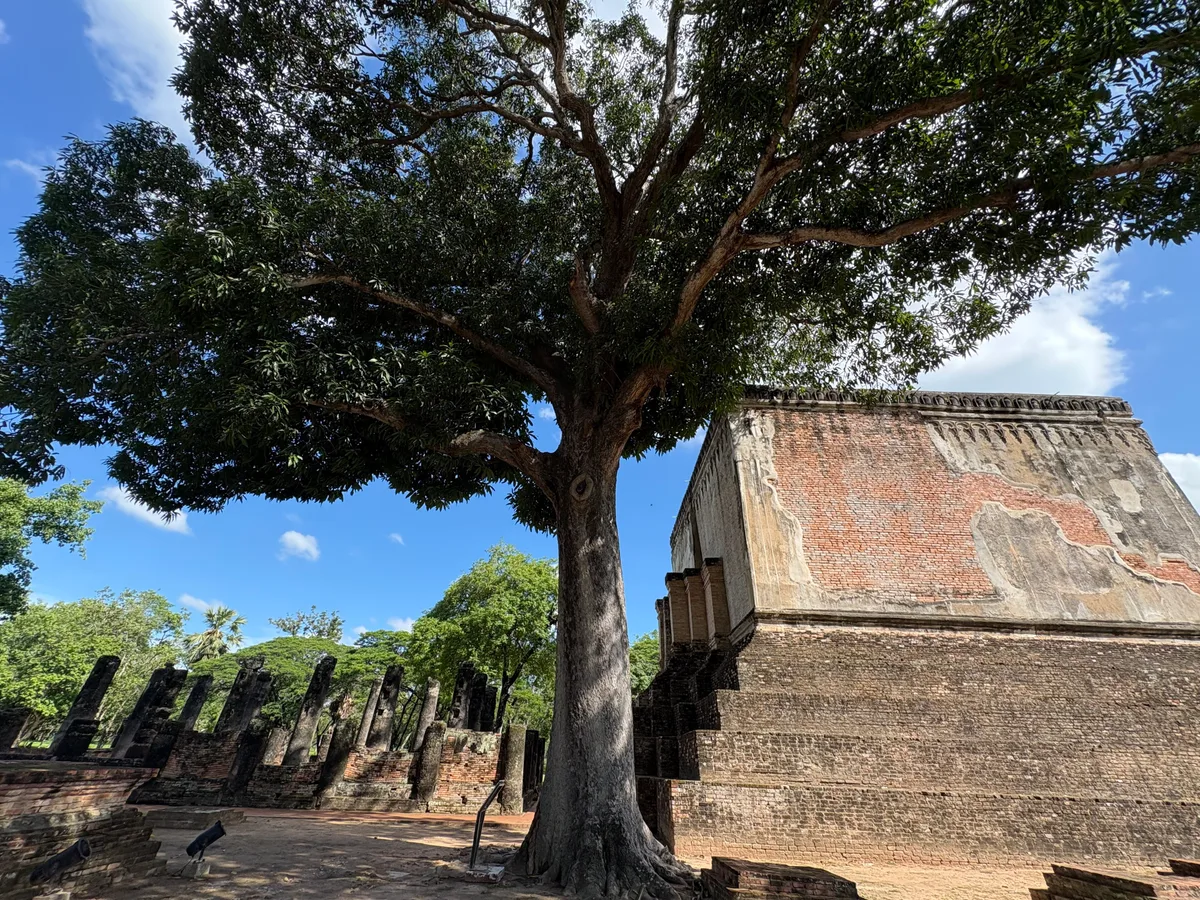
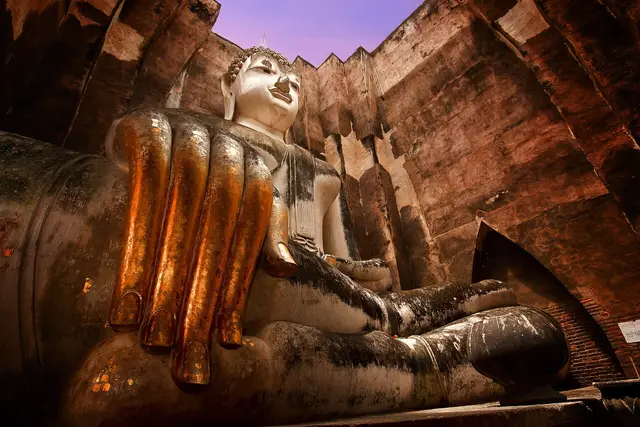
Most of Sukhothai’s temples give you the whole Buddha at once. Wat Si Chum makes you work for it: a slot in a wall, a shaft of light, then gilded fingers and a face that’s fifteen stories of stone looking straight back down at you.
The mondop and the slot in the wall
The temple’s main structure is a square mondop, a boxy stone chamber with walls over three meters thick and a ceiling open to the sky. Inside sits Phra Achana, a seated Buddha roughly 49 feet tall, plastered and gilded, built to fit its housing so exactly that only the hands and a slice of the face are visible from most angles.
That famous slot is a narrow vertical opening in the front wall, deliberately built so pilgrims approaching from outside see the Buddha’s eyes emerge from the darkness before they see anything else. It’s the single most photographed detail in the park, and it reads better in person than in any photo: the eyes seem lit from within, though it’s just the open ceiling doing its work.
Why the roof is missing
Locals and guides will tell you the open ceiling isn’t decay, it’s original design or at least an accepted long-standing feature, since a roof over a 49-foot seated figure this size would need engineering the Sukhothai builders didn’t have. Rain gets in. So does full daylight at midday, which changes how the statue looks hour to hour.
Early morning, low sun angles into the chamber and catches the gilding on the hands first. By midday the light is flat and directly overhead, less flattering, more people underfoot.
The staircase nobody mentions on the ticket
Inside the walls that enclose the mondop, a narrow internal staircase climbs up between the inner and outer wall layers. It was used historically to reach the upper sections of the giant Buddha for maintenance and gilding, and sections of it are visible or partially accessible depending on current park restrictions.
Ask the staff on site whether it’s open the day you visit; access has varied over the years and isn’t something to count on. Even from ground level, looking up at the underside of the statue’s chin from a few feet away gives a sense of scale no wide shot captures.

Getting there and reading the layout
Wat Si Chum sits outside the main walled city of Sukhothai Historical Park, in the north zone, a short ride from the central Wat Mahathat cluster. Most visitors reach it by rented bicycle or the park’s electric tram loop, since walking the full distance from the main entrance in Sukhothai heat is a slog.
- By bike: rent near the historical park entrance; it’s a flat, shaded ride of roughly 15–20 minutes from the central zone
- By tram: the hop-on park tram covers the north zone including Si Chum on its longer loop
- By tuk-tuk or taxi: agree a price for a round trip covering the north zone temples together, since they’re spread out
The site itself is compact: one main mondop, the surrounding stone walls, and a small satellite chedi nearby. Twenty to thirty minutes covers it unless you’re waiting out a crowd for a clear photo through the slot.
When the light and the crowds line up
Wat Si Chum is open every day from 7:30 AM to 5:00 PM, and it draws heavy tour bus traffic because it’s one of the park’s signature images. It’s a very popular stop, not a quiet back corner of the ruins, so treat the crowds as something to route around rather than something to avoid entirely.
Arriving close to opening, before the day-tour buses have worked their way to the north zone, is the simplest way to get a few minutes with the slot view uncrowded. Late afternoon, closer to 4pm, tends to thin out again as groups head back for sunset viewing at Wat Mahathat instead.
Midday brings the worst combination: peak heat, peak light flatness inside the mondop, and peak bus arrivals. If you’re combining Si Chum with other north-zone temples like Wat Phra Phai Luang, doing the loop in the first or last hour of opening works better than squeezing it into a lunchtime circuit.
Standing at the slot without blocking everyone else
The queue for the classic through-the-slot shot isn’t formal, it’s just whoever gets there first standing directly in front of the narrow opening. Basic etiquette here matters more than at wider, open sites.
- Take your photo, step back, then look again; don’t camp in the gap
- Monks and Buddhist visitors may pause to wai (a slight bow with palms together) facing the statue; give them the space to do that without weaving around them
- Dress rules apply as at any active or historic temple in the park: shoulders and knees covered, and footwear off if you cross onto any raised platform marked for that
- Combined park entrance tickets (covering the walled city and outer zones together) are the usual way in; buy at the main gate rather than expecting a separate booth at Si Chum itself
Because the mondop has no roof, there’s no shade break available if you’re stuck waiting for a photo gap. Bring water and a hat rather than counting on shelter once you’re inside the walls.
Pairing it with the rest of the park
Si Chum works best as one stop on a north-zone loop rather than a solo trip, since the ride out there passes little else on its own. Wat Phra Phai Luang, an older Khmer-style temple with a distinctive prang, sits close enough to combine on the same bike or tram leg.
Save the central zone, Wat Mahathat and Wat Sa Si, for either before or after, depending on whether you’re chasing morning or sunset light. The full historical park, spread across walled city and multiple outer zones, generally needs half a day minimum to see properly, and Si Chum’s slot-view Buddha is the one image most people come specifically to get.
Frequently asked questions
What are the opening hours for Wat Si Chum?
Daily from 7:30 AM to 5:00 PM, with no variation by day of the week according to current listed hours. Confirm before visiting since park hours can shift seasonally.
How do I get to Wat Si Chum from the main Sukhothai Historical Park entrance?
It's in the park's north zone, about 15-20 minutes by rented bicycle or via the park's tram loop from the central Wat Mahathat area. A tuk-tuk or taxi round trip covering the north zone temples together is also common.
What is the famous feature inside Wat Si Chum?
A 49-foot seated Buddha, Phra Achana, housed inside a roofless stone mondop. A narrow slot in the front wall frames the statue's face and hands, making it the park's most photographed view.
When is the best time to visit to avoid crowds?
Arrive close to the 7:30 AM opening, before tour buses reach the north zone. Late afternoon, around 4pm, also thins out as groups shift toward sunset viewing at Wat Mahathat. Midday brings the heaviest bus traffic and flattest light.
How long should I spend at Wat Si Chum?
Twenty to thirty minutes is enough for the site itself, longer if you're waiting for a clear shot through the slot. Pair it with nearby Wat Phra Phai Luang to make the trip to the north zone worthwhile.
Plan your trip to Sukhothai
Some links above are affiliate links — if you book through them, Wander Atlas earns a small commission at no extra cost to you. It's how we keep every guide free.
Related guides
 attraction
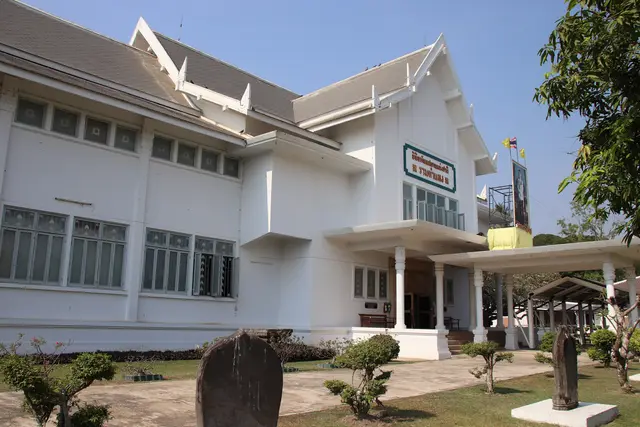
 Ramkhamhaeng National Museum: Sukhothai Travel Guide (4.4★)
 attraction
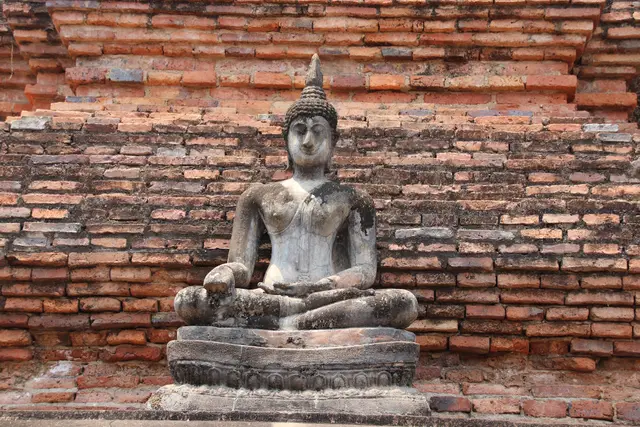
 Sukhothai Buddha Park: Travel Guide (4.5★)
 attraction
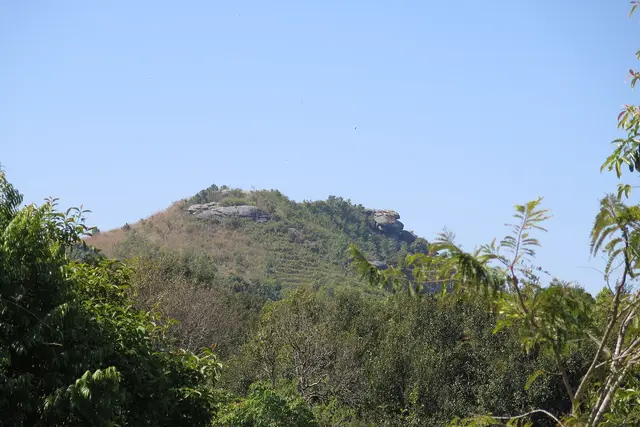
 Ramkhamhaeng National Park: Sukhothai Travel Guide (4.7★)
 hidden gem