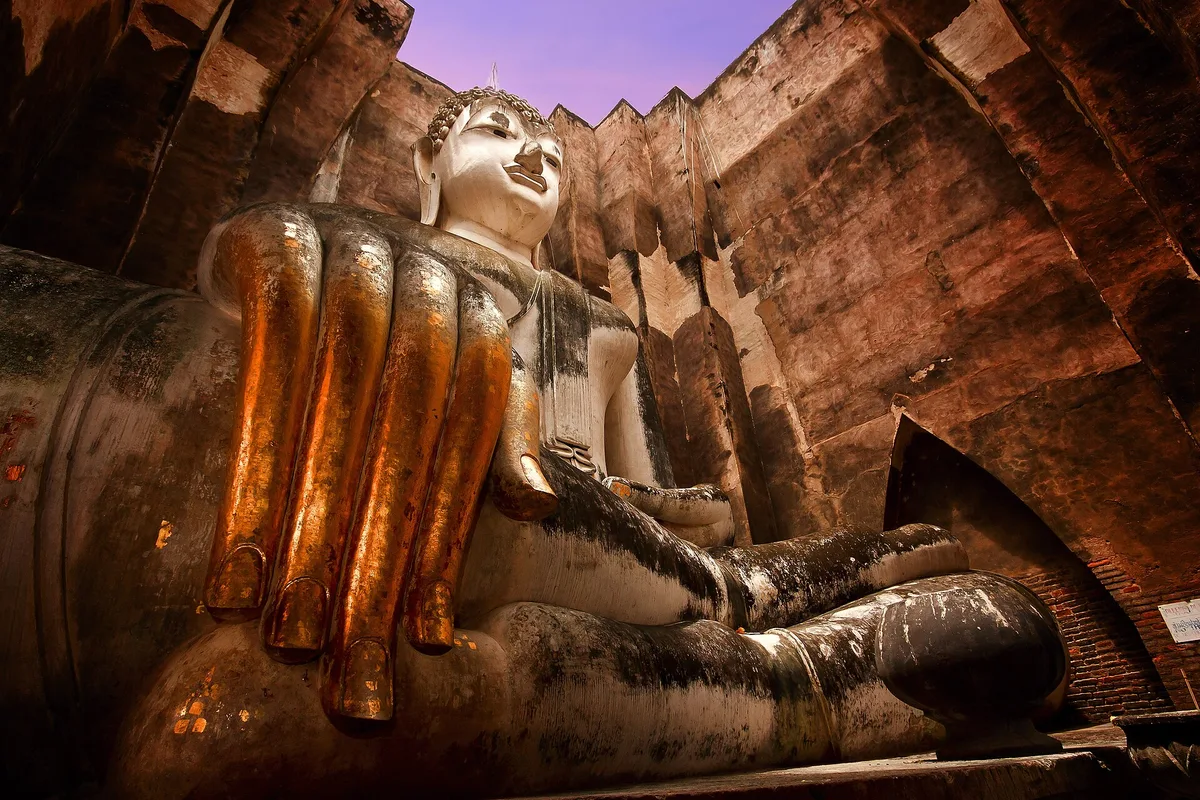
You come around a bend in the path and the tree line opens onto a field of laterite and brick, rows of headless Buddhas seated in rows against a backdrop of low green hills. This is Sukhothai Historical Park, the ruined heart of Thailand’s first independent kingdom, and even at a glance you can tell it isn’t a single monument but an entire vanished city.
Why Sukhothai matters
Founded in the 13th century, Sukhothai was the first capital of a unified Thai kingdom and the birthplace of what became the modern Thai alphabet, commissioned under King Ramkhamhaeng. The park preserves the old royal city: palace foundations, more than twenty temple complexes, moats, and reservoirs spread across a UNESCO World Heritage site.
Architecturally, it’s distinct from Ayutthaya or Bangkok. The lotus-bud chedi, a tapering spire that narrows to a point, originated here, and you’ll see it repeated across the ruins at Wat Mahathat and beyond.
Getting there and getting around
The park sits in Tambon Mueang Kao, about 12km west of modern Sukhothai town, where most travelers base themselves. Songthaews (shared pickup trucks) run regularly between the new town’s bus station and the park entrance for a small fare.
Most people arrive via Sukhothai’s small airport (served mainly from Bangkok and Chiang Mai) or by bus from Bangkok, Chiang Mai, or Phitsanulok, the latter having the nearest train station about an hour away.
Once inside, walking is possible but the site is large, the Central Zone alone spans roughly 70 hectares, with North, West, and East Zones requiring separate short rides. Renting a bicycle at the entrance is the classic way to cover ground; it’s slow enough to stop often, fast enough to see it all in a few hours.

What to see inside the park
Start at Wat Mahathat, the largest and most important temple, its central lotus-bud chedi surrounded by smaller stupas and a huge seated Buddha. Nearby, Wat Si Sawai shows three Khmer-style prang towers, a reminder of Sukhothai’s roots as a Khmer outpost before independence.
Other highlights worth the ride:
- Wat Sa Si, a graceful temple on an island in a lake, one of the most photographed spots in the park
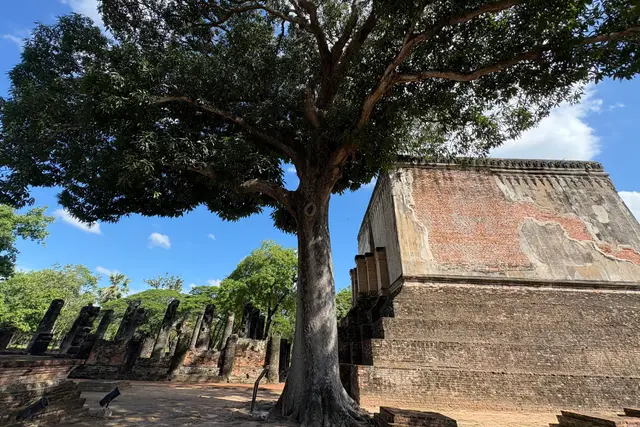
- Wat Si Chum, houses a massive seated Buddha, Phra Achana, visible through a narrow slit in its enclosing wall
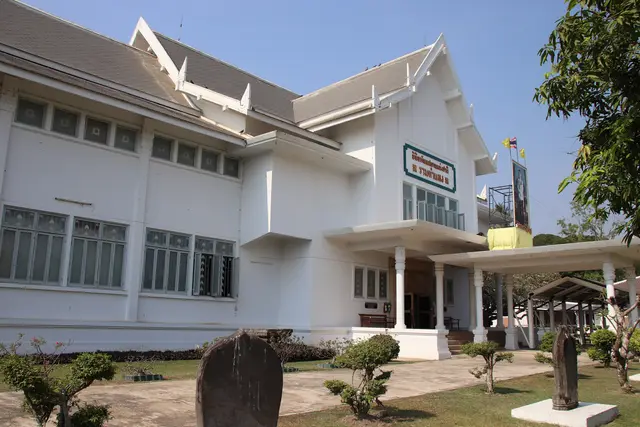
- Ramkhamhaeng National Museum, near the entrance, good for context before or after walking the ruins
Each zone requires a separate small entry ticket, so decide in advance whether you want just the Central Zone or the full spread.
When to go
The park opens at 6:30am and closes at 7:30pm daily, and the cooler months from November to February are the most comfortable for cycling between temples. Midday sun in the dry season gets intense with little shade over the open ruin fields.
Because this is a very popular, heavily visited site, weekday mornings right after opening or the final hour before dusk offer the calmest light and thinnest crowds. Sunset especially transforms the brick against the sky, and the loi krathong festival in November brings a light-and-sound show among the ruins, though it also draws the largest crowds of the year.
How to visit like a local
Buy your zone tickets at the gate in cash and keep them handy, rangers check at each zone entrance. Rent a bicycle just outside the Central Zone gate rather than in town; it saves a hot ride in before you’ve even started.
Given the crowds this site draws, avoid arriving mid-morning on weekends when tour buses cluster near Wat Mahathat. Early light also makes photography easier, since the low sun rakes across the brick and throws long shadows off the chedis.
Dress modestly, as this remains a religious site, cover shoulders and knees, and remove shoes if you step onto any temple platform. Carry water and a hat; shade is scarce once you’re out among the ruins, and vendors near the entrance are your last easy stop before the open fields begin.
Frequently asked questions
How much time should I budget for Sukhothai Historical Park?
Plan at least half a day (3–4 hours) to cover the Central Zone by bicycle, or a full day if you want to see the North, West, and East Zones too.
What's the best way to get around inside the park?
Rent a bicycle right outside the Central Zone entrance — the ruins are spread over roughly 70 hectares, too far to comfortably cover on foot in one visit.
When is the quietest time to visit?
Go right at opening (6:30am) on a weekday or in the last hour before the 7:30pm close — mid-morning and weekends bring the heaviest tour bus traffic.
Do I need separate tickets for each zone?
Yes, the Central, North, West, and East Zones each require their own small entry ticket, payable in cash at each zone's gate.
How do I get from Sukhothai town to the historical park?
Shared songthaews run regularly from the new town's bus station to the park entrance, about 12km away, for a low fare.
Plan your trip to Sukhothai
Thailand eSIM & staying connected →
Some links above are affiliate links — if you book through them, Wander Atlas earns a small commission at no extra cost to you. It's how we keep every guide free.
Related guides
 attraction
 Ramkhamhaeng National Museum: Sukhothai Travel Guide (4.4★)
 attraction
 Wat Si Chum: Sukhothai Travel Guide (4.8★)
 attraction
 Sukhothai Buddha Park: Travel Guide (4.5★)
 attraction