A town square, rebuilt for a modern city
Every Javanese town has an alun-alun. Traditionally it is the open field in front of the regent’s residence, where the town gathered for ceremonies, markets and evening strolls. Surabaya, Indonesia’s second-largest city, went a long time without a proper one. Then it built this square on Jl. Gubernur Suryo, in the Genteng district, right in the old administrative core.
The result sits alongside Balai Pemuda, a white colonial-era building that started life as a Dutch social club. The square is open paving rather than grass, and below ground there is a level used for exhibitions and events. It is one of the most-reviewed public spaces in the city, and consistently well rated, so you won’t have it to yourself.
What you’ll find when you walk in
The square works as a civic stage. Balai Pemuda frames one side, with its tall windows and pale facade, and the city’s traffic runs past on Gubernur Suryo. The space itself is built for walking, sitting and photographs.
What happens here changes with the calendar. On an ordinary day it is a place to stroll and look at the old buildings. On event days the lower level and plaza host art shows, craft and small-business stalls, and performances. Because the programme rotates, check the Surabaya city government’s social channels before you go to see what is on.
Timing your visit around the heat
Surabaya is hot and humid for most of the year. Midday on open paving is hard work, so most people come in the late afternoon and evening, once the sun is lower and the lights come on around Balai Pemuda. That is also when the square feels most like a traditional alun-alun, full of families and friends out walking.
No reliable opening hours are published here, and access to the indoor level may differ from the open plaza. Check before you go, especially on public holidays. Plan roughly 45 minutes to an hour for the square itself. Allow an evening if you add the nearby streets.

Getting there through Genteng
Surabaya has no metro, so ride-hailing is the easiest option. Gojek and Grab both work well across the city. Type “Alun-Alun Surabaya” or “Balai Pemuda” and you will be dropped on Jl. Gubernur Suryo. Taxis know it by the same names.
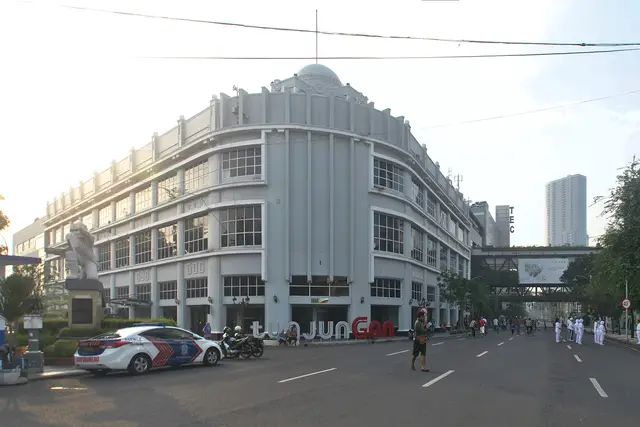
If you are staying around Jalan Tunjungan, you can walk. The square sits in the same compact colonial quarter, so it is easy to fold into a walk on foot. Traffic on Gubernur Suryo is heavy, so cross at signals rather than weaving between motorbikes.
Evenings on the square: how Surabayans use it
A few habits will help you fit in:
- Dress for a public, family space. Shorts and T-shirts are fine, but very revealing clothing stands out in this largely Muslim city.
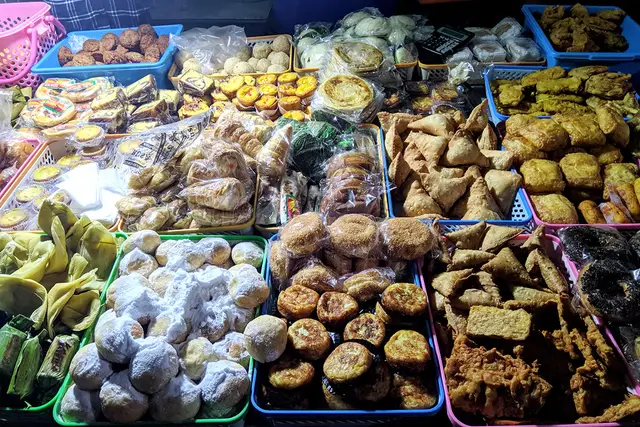
- Pay the local way. Snack and drink sellers around the area take cash, and many display a QRIS code for mobile payment. Carry small notes anyway.
- Keep the paving clean. The city is proud of its parks and public spaces, and litter gets noticed. Use the bins.
- Ask before photographing people, especially performers or families with children. A smile and “boleh foto?” (“may I take a photo?”) goes a long way.
- Take your time. The point of an alun-alun is to linger, sit and watch the evening. Nobody rushes through.
Because it is so popular, evenings and weekends bring crowds, particularly when an event is on. If you want quieter photographs of Balai Pemuda, a weekday visit is the better bet. Come back at night for the atmosphere.
Walking on to Tunjungan and Grahadi
The square is a good starting point for Surabaya’s historic centre. Nearby:
- Gedung Negara Grahadi, the East Java governor’s colonial-era residence, also on Jl. Gubernur Suryo.
- Jalan Tunjungan, the city’s old shopping street, lined with restored colonial shopfronts and cafés and busy at night.
- Hotel Majapahit on Tunjungan, where Indonesian youths tore the blue strip off the Dutch flag in September 1945. The flag-tearing is one of the defining episodes of the city’s revolutionary story.
Together they make an easy evening loop on foot: the square at dusk, then Tunjungan for dinner.
Frequently asked questions
Where exactly is Alun-Alun Surabaya?
On Jl. Gubernur Suryo in Embong Kaliasin, Genteng district, central Surabaya, next to the colonial Balai Pemuda building. Search 'Alun-Alun Surabaya' or 'Balai Pemuda' in Gojek or Grab.
When is the best time to visit?
Late afternoon and evening, when the heat eases and the square fills with families out walking. Opening times for the indoor level aren't published reliably, so check the city government's channels before going.
How long should I spend there?
About 45 minutes to an hour for the square itself. Allow a full evening if you walk on to Jalan Tunjungan and Gedung Negara Grahadi.
Is it a quiet, undiscovered spot?
No. It is one of Surabaya's best-known public spaces and gets busy, especially on weekends and event nights. Weekdays are the better bet if you want calmer photographs.
What else is nearby?
Gedung Negara Grahadi on the same road, Jalan Tunjungan's colonial shopping street, and Hotel Majapahit, site of the 1945 flag-tearing incident. All are within walking distance.
Plan your trip to Surabaya
Some links above are affiliate links — if you book through them, Wander Atlas earns a small commission at no extra cost to you. It's how we keep every guide free.