Pasar Ampel: Surabaya Travel Guide (4.5★)
When to visit Indonesia: month-by-month weather, crowds and holidays →
✓ Facts verified via Google Places · Sep 23, 2026
At a glance
Opening hours
- Monday: 6:00 AM – 4:00 PM
- Tuesday: 6:00 AM – 4:00 PM
- Wednesday: 6:00 AM – 4:00 PM
- Thursday: 6:00 AM – 4:00 PM
- Friday: 6:00 AM – 4:00 PM
- Saturday: 6:00 AM – 4:00 PM
- Sunday: 6:00 AM – 4:00 PM
How this guide is made
Produced with AI assistance and reviewed against live data sources. Facts such as hours, ratings, and location come from Google Places; images are licensed or public domain. Details can change — please verify before visiting. Editorial policy
Ampel is Surabaya’s old Arab quarter, and Pasar Ampel is its commercial spine: a covered market threading off Jalan Nyamplungan toward the Sunan Ampel mosque complex, one of Java’s oldest Islamic pilgrimage sites. You come here for dates, dried fruit, perfume oils, prayer garments and Middle Eastern-style snacks, sold from narrow stalls packed tight enough that shoulders brush as people pass.
The market’s rhythm is tied to the mosque next door. Pilgrims visiting the tomb of Sunan Ampel, one of the nine saints credited with spreading Islam across Java, walk straight through the market lanes to reach the complex, so foot traffic here is part worship, part shopping trip.
The walk from the street to the mosque
Jalan Nyamplungan is where you enter, and the market has no single grand gate; it’s a corridor of shopfronts and stalls that narrows as you go deeper. Sandals and skullcaps hang above head height near the entrance, giving way to food stalls and spice sacks further in.
Keep walking and the lane spills out near the mosque courtyard itself. Locals treat the route less as a market visit and more as a passage, so don’t expect wide aisles or a clear beginning and end. Follow the crowd’s direction and you’ll end up exactly where you need to be.
What’s actually on the stalls
The market’s reputation rests on goods you don’t find elsewhere in Surabaya in this concentration.
- Dried dates, figs and apricots sold loose by the kilo
- Middle Eastern fabrics: batik-adjacent prints alongside imported textiles, kaftans, and prayer robes
- Attar-style perfume oils, often decanted into small bottles at the counter
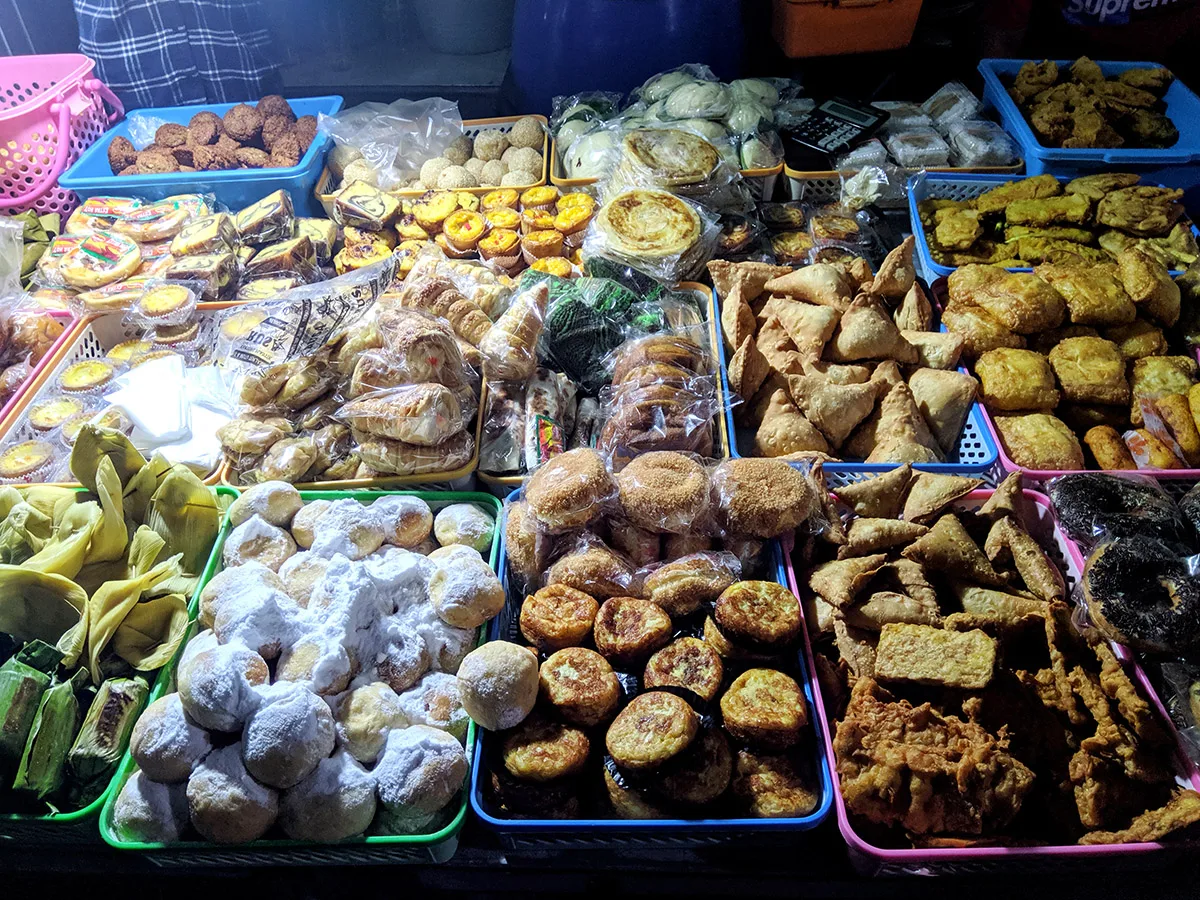
- Arab-influenced street snacks: think kebab, samosa-style pastries, and sweet semolina cakes
- Prayer beads, caps (kopiah), and other items tied directly to mosque visits
Vendors are used to browsers who don’t buy, since pilgrims often stop just to look before or after prayers.
Kurma season and why the dates matter here
Dates, kurma in Indonesian, are the market’s signature good, not an afterthought. Ampel’s Arab-Indonesian merchant families have sold them for generations, and the variety on display, from soft Medjool-style to drier, chewier types, is unusual for an Indonesian market.
Demand spikes hard around Ramadan, when dates are eaten to break the daily fast, so stalls widen their range and prices shift with the season. If you’re not visiting during Ramadan, you’ll still find a decent everyday selection, just less theatrical than the pre-fast rush.
Reading the market by the hour
Pasar Ampel runs 6am to 4pm every day of the week, with no listed day off. Early morning is when stalls are freshest and the covered lanes haven’t yet trapped the day’s heat.
Because the market sits beside an active pilgrimage site, Friday brings a different crowd: worshippers arriving for Friday prayers push through in bigger numbers, especially toward midday. If you want to browse rather than shuffle with a crowd, a weekday morning is the more comfortable choice.
Bargaining and buying without friction
Prices at most stalls are negotiable, particularly for fabrics, perfume oils and bulk dried fruit, though food stalls selling ready-to-eat snacks tend to have fixed, called-out prices. Cash is the standard way to pay; this is a traditional market, not a card-friendly retail strip, so bring small denominations of rupiah.
A few habits make the visit smoother:
- Greet with “Assalamualaikum” before haggling; it’s standard courtesy in this specifically Muslim, Arab-heritage market
- Ask to sample dates before buying in bulk, vendors generally expect this
- Dress modestly, covering shoulders and knees, since you’re steps from a working mosque
- Carry a tote bag; dried fruit and fabric purchases add up in weight fast
Combining it with Sunan Ampel
Almost nobody visits Pasar Ampel in isolation. The market and the mosque function as one stop, so plan for both rather than treating the shopping as the whole trip.
After the market lanes, the mosque courtyard opens up, with the tomb of Sunan Ampel drawing a steady stream of visitors regardless of day. Set aside enough time to walk the market slowly first, then linger at the mosque complex, rather than rushing either.
Getting there and getting around
Pasar Ampel sits in Semampir district, on Jalan Nyamplungan, a short taxi or ride-hail trip from Surabaya’s main train stations. The surrounding streets are narrow and often congested with parked motorbikes, so arriving by car means walking the last stretch on foot regardless.
Once inside, the market is entirely pedestrian; there’s no vehicle access through the covered lanes themselves. Comfortable, closed shoes help, since the ground can be uneven and occasionally wet near food stalls.
Frequently asked questions
How do I get to Pasar Ampel in Surabaya?
It's on Jalan Nyamplungan in the Ampel/Semampir district. The easiest way is a taxi or ride-hailing app to Jalan Nyamplungan; the surrounding lanes are narrow, so expect to walk the final stretch on foot.
What are the opening hours?
Pasar Ampel is open every day of the week, 6am to 4pm, with no listed closing day. Morning visits give you the freshest stock and cooler, less crowded lanes.
When is the best time to visit to avoid crowds?
Weekday mornings are calmer since Friday draws larger crowds heading to Friday prayers at the adjoining Sunan Ampel mosque. It's a well-known market, so expect some company at any time.
How long should I spend there?
An hour is enough to walk the market lanes and browse the stalls; pair it with a visit to the Sunan Ampel mosque and tomb complex next door for a half-morning outing.
What should I buy or try at Pasar Ampel?
Dried dates (kurma) are the signature item, alongside dried fruit, Middle Eastern fabrics, prayer garments, perfume oils, and Arab-influenced snacks like kebab and semolina cakes. Most stalls expect polite bargaining except for ready-to-eat food.
Plan your trip to Surabaya
Some links above are affiliate links — if you book through them, Wander Atlas earns a small commission at no extra cost to you. It's how we keep every guide free.