A lane built for grazing
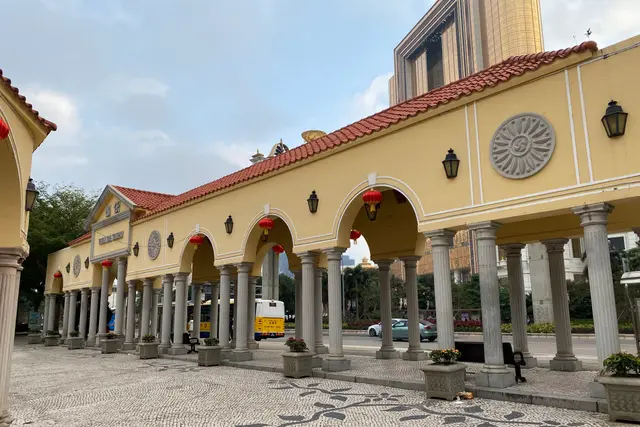
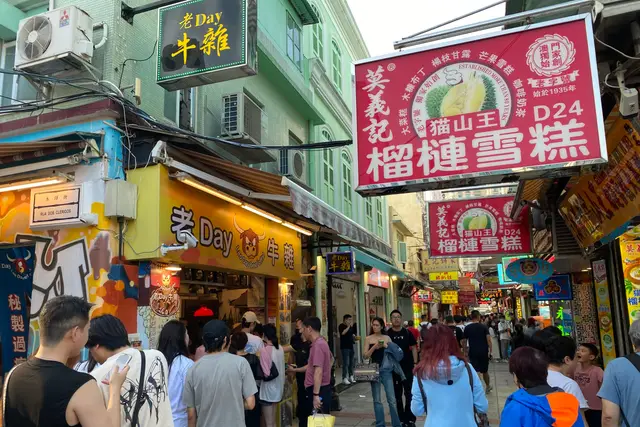
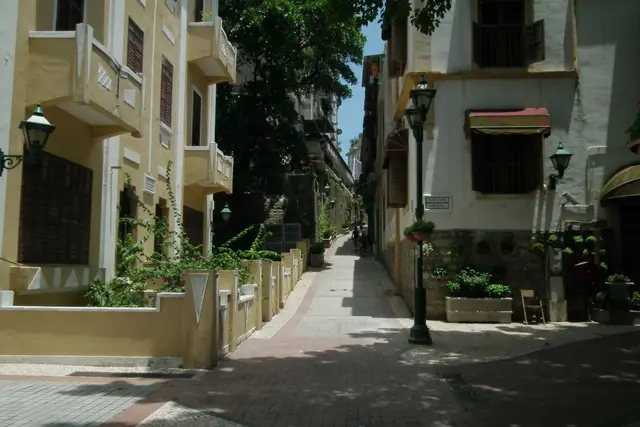
Rua do Cunha is narrow enough to talk across. The street is paved in Portuguese-style stone, the buildings are low and painted in pastel colours, and nearly every ground floor is a counter facing the lane. Shop signs carry Chinese and Portuguese side by side, which is the whole of Macau in one sightline.
Locals call it 官也街 (Gun Yah Gaai). Cars are kept out, so you walk the middle of the street with a paper bag in one hand. The lane is short, and side alleys branch off into the rest of Taipa Village. A full lap takes ten minutes; eating your way along it takes much longer.
What to eat on Rua do Cunha
Most of the lane sells food you hold rather than sit down for. The categories repeat from shop to shop, so you can compare as you go. Look for:
- Pork chop bun (猪扒包): a bone-in marinated chop in a crusty bun, Macau’s signature street sandwich. Tai Lei Loi Kei, the name most associated with it, started in Taipa.
- Almond cookies: crumbly, pressed rounds sold in tins and boxes. Koi Kei and Choi Heong Yuen are the long-standing names here.
- Pork and beef jerky: sheets of sweet, glazed dried meat cut to order with scissors.
- Portuguese egg tarts: flaky pastry with a blistered custard top.
- Serradura: “sawdust pudding”, layers of cream and crushed biscuit, usually served cold in a cup.
- Mango desserts and ice cream: a good reset between savoury stops.
Many counters hand out free samples of cookies and jerky. That is how you decide which shop gets your money, so taste first.
Getting to Taipa Village
Taipa Village sits on the old Taipa side of Macau, just north of the Cotai Strip. From the big Cotai resorts such as The Venetian and Galaxy, it is a walk of around 15 to 20 minutes through the streets behind them. Taxis drop off at the edge of the pedestrian zone.
Public buses from the Macau Peninsula stop near the village on Rua Correia da Silva. Routes change, so check the current bus map before setting out. Coming from Hong Kong on the ferry, Taipa Ferry Terminal is the closer of Macau’s two terminals.

Ordering, paying and sampling on Rua do Cunha
The lane runs on quick counter transactions. Point, order, pay, step aside. A few habits make it easier:
- Currency: both Macau patacas and Hong Kong dollars are widely accepted. Change usually comes back in patacas, so spend small HKD notes rather than large ones.
- Mobile payment: QR wallets such as MPay and Alipay are common at counters. Cards are taken at bigger souvenir shops but less reliably at small stalls.
- Tipping: not expected at counters.
- Ordering: English is understood at the main shops. Pointing at the display works everywhere, and “m goi” (thanks, in Cantonese) is always appreciated.
Share as you go. A pork chop bun split two ways leaves room for egg tarts, serradura and a second round of samples. Buy boxed cookies on your way out, not on the way in, so you are not carrying them all afternoon.
Why it feels quieter than the peninsula
Compared with the crush around Senado Square and the Ruins of St. Paul’s, Taipa Village moves at a slower pace. Tour groups tend to cluster on the peninsula, so this side of Macau often feels easier going, especially away from Rua do Cunha itself.
Weekends and holidays still fill the lane, since it is a short hop for Hong Kong day-trippers. Arriving earlier in the day on a weekday usually means fewer shoulders at the counters. As individual shop hours vary, check them before you plan around a particular stall.
Beyond the food stalls
Walk past the end of the lane and the village opens up. Within a few minutes you reach:
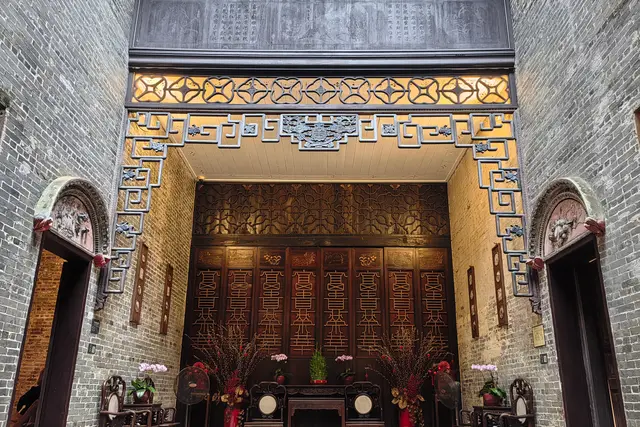
- Taipa Houses-Museum: five mint-green colonial villas along Avenida da Praia, once facing the water and now overlooking wetland.
- Our Lady of Carmel Church: a small yellow church on the hill above the houses, with a garden beside it.
- Pak Tai Temple: a quiet Taoist temple on a small square in the village.
- Rua dos Clérigos and Largo do Camões: side streets of cafés, restaurants and the weekend Taipa Flea Market.
Give yourself 1 to 2 hours for the lane plus a loop of these sights. Then walk south and the Cotai casinos are only minutes away, a complete change of scenery after the village.
Frequently asked questions
Where exactly is Taipa Food Street?
It is Rua do Cunha (官也街), a pedestrian lane in Taipa Village on Macau's Taipa island, just north of the Cotai Strip resorts.
How do I get there from the Cotai hotels?
Walk around 15 to 20 minutes north from The Venetian or Galaxy area, or take a short taxi ride to the edge of the pedestrian zone. Buses from the peninsula stop on Rua Correia da Silva; check current routes first.
What should I eat first?
Start with a pork chop bun, then graze: almond cookies, pork or beef jerky, Portuguese egg tarts and serradura. Use the free samples at cookie and jerky shops to choose.
How long should I spend there?
About 1 to 2 hours covers the lane plus a walk to the Taipa Houses-Museum, Our Lady of Carmel Church and Pak Tai Temple.
Can I pay with Hong Kong dollars or by phone?
Yes. Hong Kong dollars and Macau patacas are both widely accepted, and QR wallets like MPay and Alipay are common. Expect change in patacas.
Plan your trip to Taipa
Macau eSIM & staying connected →
Some links above are affiliate links — if you book through them, Wander Atlas earns a small commission at no extra cost to you. It's how we keep every guide free.