
A lane built for grazing
Rua do Cunha is barely wider than a delivery cart. Low two-storey buildings line both sides, painted in the yellows, greens and pinks of Macau’s Portuguese era. Shopfronts open straight onto the paving, so the street works like one long counter.
Look up at the corner for the street sign. Like most in Macau, it’s blue-and-white tiles carrying both the Portuguese name and the Chinese one, 官也街 (Kun Ya Kai). That pairing of languages sums up the place. It’s a Cantonese food street wearing a Portuguese coat.
Most visitors to Macau never cross from the peninsula to Taipa, and the casino crowds on the Cotai Strip tend to stay indoors. That leaves Rua do Cunha as a quieter, smaller-scale find. It’s a village lane rather than a mall.
What to buy, bite by bite
Rua do Cunha is a street for snacking, not for sit-down meals. These are the things the street is known for:
- Almond cookies: crumbly, pressed rounds sold in tins and boxes. They’re the classic Macau souvenir.
- Pork chop bun (猪扒包): a marinated chop in a crusty roll. It’s Macau’s best-known sandwich.
- Serradura: the Portuguese “sawdust” pudding, layers of cream and crushed biscuit served cold in a cup.
- Portuguese egg tarts: flaky shells with a caramel-scorched custard top.
- Beef and pork jerky: sheets of sweet, glossy dried meat, cut with scissors to order.
- Peanut candy and egg rolls: crisp, packable gifts that survive a flight home.
Many shops also sell durian or mango ice cream. On a hot afternoon these do a lot of business.
Beyond the snack counters
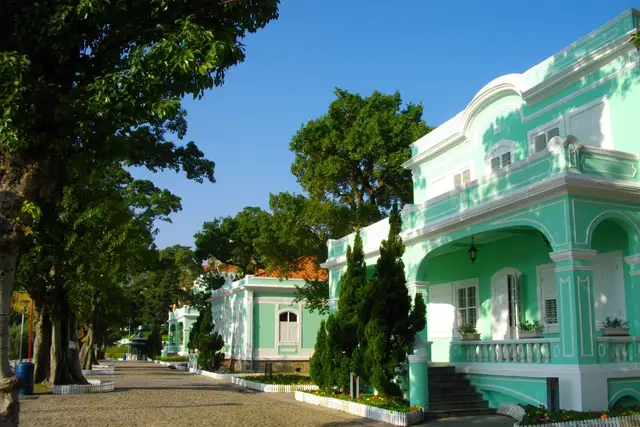
Walk to the end of the lane and keep going, because Taipa Village carries on. The Taipa Houses-Museum (Casas-Museu da Taipa) is a row of five mint-green colonial villas on Avenida da Praia. They face what used to be the waterfront and is now a wetland edge.
The Church of Our Lady of Carmel stands on the slope above the villas. It’s a small yellow church with a garden that’s popular for wedding photos. The village’s backstreets also lead to the little Pak Tai Temple, where incense coils hang from the ceiling.
Getting to Taipa Village
Taipa sits between the Macau peninsula and Cotai. The closest Light Rapid Transit stop is Pai Kok Station on the Taipa Line. From there it’s a short walk downhill into the village.
From the big Cotai resorts, such as Galaxy Macau and The Venetian, Taipa Village is within walking distance. Many visitors combine the two. City buses from the peninsula also stop on the village edge. Check the current route on the Macau transport site before setting off.
Eating your way down Rua do Cunha
The cookie and jerky shops usually put out free tasting trays. It’s normal to take one piece as you browse. Don’t graze the whole tray, and don’t double-dip with the toothpicks.
Paying: prices are posted on the shelves and counters. Shops take Macau patacas, and Hong Kong dollars are widely accepted, though change usually comes back in patacas. Many counters also take mobile wallets. Tipping isn’t expected at takeaway counters.
Queues: these form on the pavement in front of the most popular pork chop bun and tart counters. Join the back, order and pay at the window, then step aside to wait. The lane is narrow, so eat at the edges or in a side alley rather than in the middle of the flow.
Gifts: buy your cookie boxes last. Some shops will vacuum-pack jerky for travel if you ask. Check your home country’s rules on importing meat before you buy.
Timing your visit
The street itself never closes, but the shops on it keep their own hours. A late-night walk means shuttered fronts and very little to eat. Daytime into early evening is when the counters are open and the tasting trays are out.
Weekends and public holidays bring day-trippers from Hong Kong and mainland China. On those days, arriving earlier in the day usually beats the coach groups. Allow an hour for the lane itself, or two to three hours to add the Houses-Museum and the church.
Frequently asked questions
How do I get to Rua do Cunha?
Take the Light Rapid Transit Taipa Line to Pai Kok Station and walk downhill into Taipa Village. If you're staying at a Cotai resort such as Galaxy Macau or The Venetian, you can walk there.
Is Rua do Cunha open at night?
The street is a public lane and is open 24 hours, but each shop keeps its own hours. For food and tasting trays, go during the day or early evening.
What should I eat on Rua do Cunha?
The classics are almond cookies, the pork chop bun, serradura, Portuguese egg tarts and sliced beef jerky. Many shops let you taste before you buy.
How long should I spend in Taipa Village?
Allow about an hour for Rua do Cunha alone. Allow two to three hours if you add the Taipa Houses-Museum, the Church of Our Lady of Carmel and the backstreets.
Can I pay with Hong Kong dollars?
Yes. Hong Kong dollars are widely accepted, though change is usually given in Macau patacas. Many shops also accept mobile payments. Prices are posted in each shop.
Plan your trip to Taipa Village
Macau eSIM & staying connected →
Some links above are affiliate links — if you book through them, Wander Atlas earns a small commission at no extra cost to you. It's how we keep every guide free.
Related guides
 attraction
 Taipa Houses: Taipa Village Travel Guide (4.2★)
 attraction
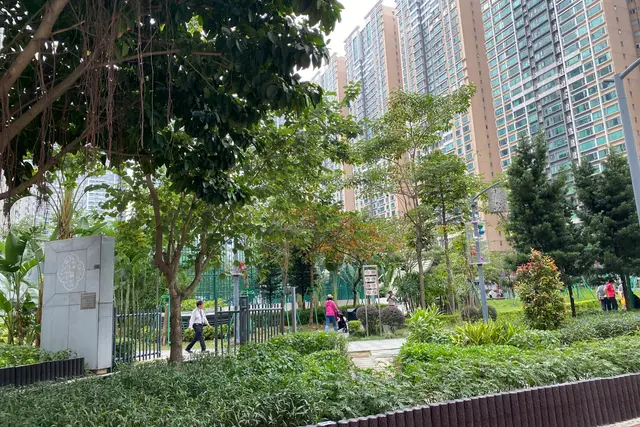
 Taipa Central Park: Taipa Village Travel Guide (4.3★)
 hidden gem
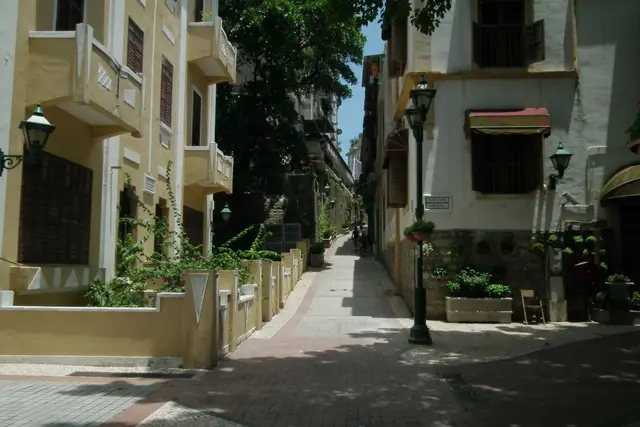
 Lilau Square: Barra Travel Guide (4.2★)
 hidden gem