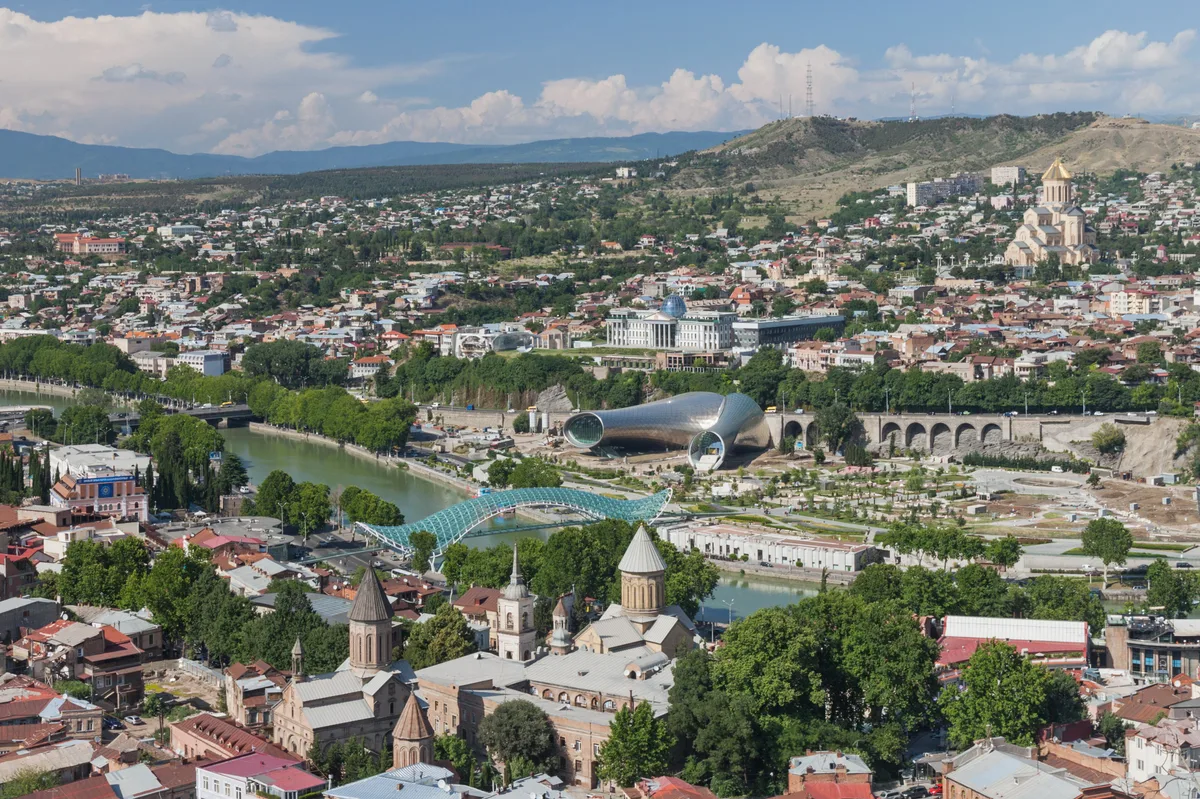
Eight evenings across six weeks
The 2026 dates are November 1 to December 9. This is the festival’s 12th edition. Its eight concerts of baroque music are spread through late autumn instead of being packed into one weekend. A visitor in Tbilisi for a few days usually catches one concert, not the full run.
Baroque covers roughly the 1600s to the mid-1700s, the era of Bach, Handel, Vivaldi, Telemann, Purcell and Corelli. Which composers and performers fill each of the eight evenings is set by the festival’s programme. This page doesn’t guess at them.
Tickets and the hall
Each concert has its own ticket, and its own hall appears on the listing for that evening. Georgian concert tickets are commonly sold online and at the venue’s box office. In Georgian the box office is the salaro, and the word is worth knowing when the signage is only in Georgian script.
Audiences at a series this size tend to be steady regulars, so a single concert doesn’t draw the crush of a stadium show. Travellers usually match one concert to the nights they’re already in town, then build the rest of the trip around it.
November nights in Tbilisi
Late autumn here means cool days, colder evenings and dark by early evening. Concertgoers walk in wearing proper coats, especially by December. The city’s classical life centres on Rustaveli Avenue. The Tbilisi Opera and Ballet Theatre stands on the avenue, and the Tbilisi State Conservatoire is just off it.
Getting around:
- Metro: Rustaveli and Liberty Square stations on Line 1 serve the central avenue. The gates take contactless bank cards.
- Taxi: ride-hailing apps such as Bolt are the usual late-night option once the metro winds down.
- On foot: Liberty Square, Sololaki and the Old Town are all within walking distance of Rustaveli.
Georgian suppers run late, so dinner after the concert is normal. Sololaki and the streets below Liberty Square have plenty of places serving khinkali, khachapuri and Georgian wine well into the night.
Concert manners, Tbilisi style
Halls in Tbilisi follow the old theatre routine:
- Cloakroom: concertgoers hand their coats in at the garderobi (cloakroom) on the way in, and staff expect it. Carrying a heavy winter coat to your seat is the giveaway of a first-timer.
- Dress: the audience is smart-casual. Locals tend to dress a step up for an evening concert.
- Applause: audiences wait until a whole piece ends, not each movement. In multi-movement baroque suites and concertos, the cue is the performers lowering their instruments.
- Phones: they stay silent and dark. Baroque ensembles often play quiet period instruments, and a lit screen shows up in a dim hall.
Paying in Tbilisi: the currency is the Georgian lari. Cards work almost everywhere in the centre. Restaurants often add a service charge to the bill, and diners usually look at the total before leaving a tip on top.
Frequently asked questions
When is the Tbilisi International Baroque Music Festival in 2026?
The 12th edition runs from November 1 to December 9, 2026, in Tbilisi, Georgia.
How many concerts are there?
There are eight concerts of baroque music, spread across the six weeks of the festival. Most visitors attend one or two of them.
Where are the concerts held?
Each concert's hall appears on its own ticket listing in the festival programme. Tbilisi's main classical venues are on or near Rustaveli Avenue, which is served by Rustaveli and Liberty Square metro stations on Line 1.
What is the weather like for the festival?
Late autumn in Tbilisi is cool in the daytime and cold after dark, and it gets dark early. Concertgoers wear warm coats and leave them at the hall's cloakroom (garderobi).
What else is near the concert area?
Liberty Square, the Sololaki district and the Old Town are all walkable from Rustaveli Avenue. Restaurants there serve late Georgian suppers after the concerts.
Plan your trip to Tbilisi
Georgia eSIM & staying connected →
Some links above are affiliate links — if you book through them, Wander Atlas earns a small commission at no extra cost to you. It's how we keep every guide free.
Related guides
 event
China Moses Tbilisi Concert: Dates, Tickets & Venue (Tbilisi)
 event
Feast of the 100,000 Holy Martyrs of Tbilisi: Dates, Tickets & Venue (Tbilisi)
 event
Gutalax Tbilisi: Dates, Tickets & Venue (Tbilisi)
 Ended