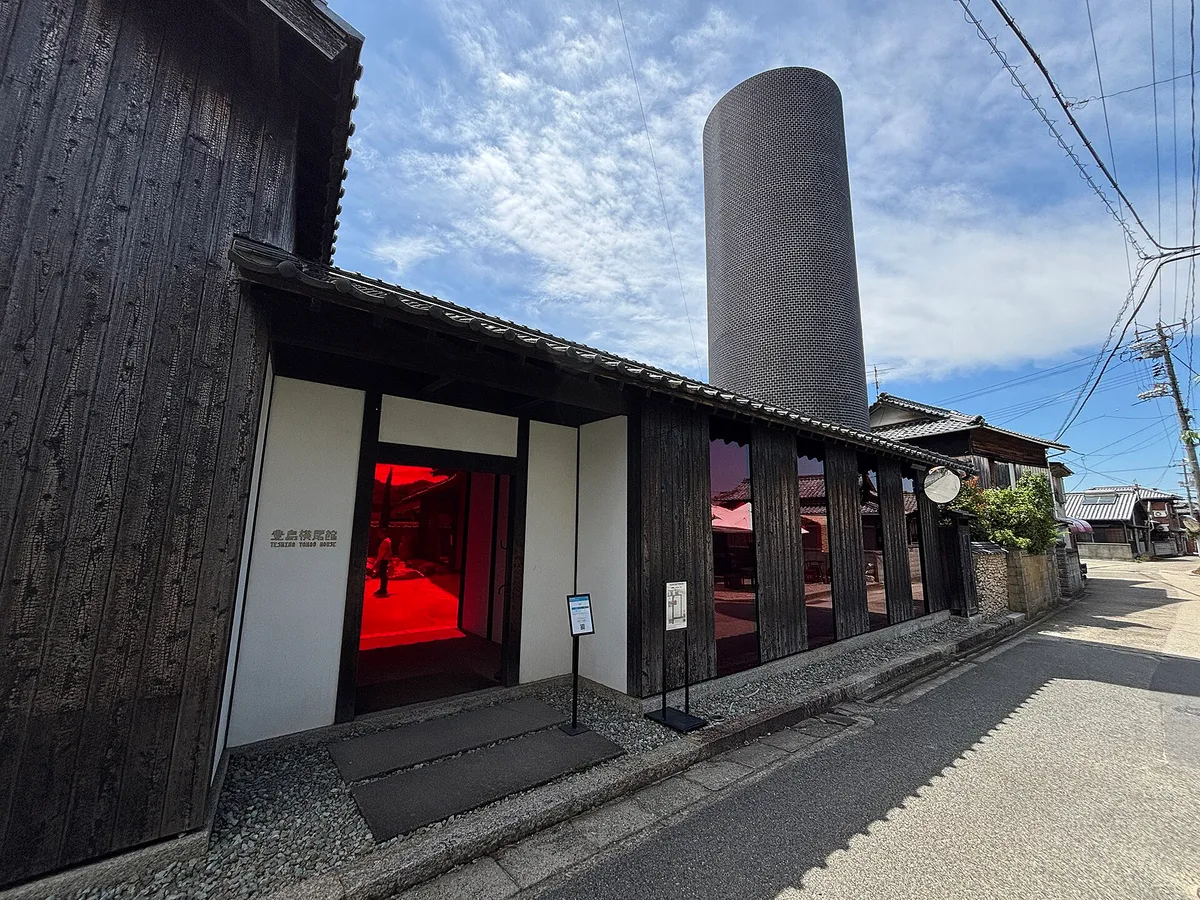
Ieura is a working village of narrow lanes, tiled roofs and small fishing boats tied up at the quay. Most people step off the ferry and go straight to the rental counter or the bus stop. A few minutes up the lanes, one old house has been taken apart and put back together as a painter’s fever dream. That’s Teshima Yokoo House.
A village house turned inside out
The building started out as an ordinary private home. It opened as an art venue in 2013 for the Setouchi Triennale, the art festival held across the Seto Inland Sea islands. It now belongs to the Benesse Art Site Naoshima network, the same group behind the island museums on Naoshima.
Two people made it. Tadanori Yokoo is the Japanese graphic designer and painter, born in 1936, whose posters helped define the look of 1960s Tokyo. The architect Yuko Nagayama reworked the old structures to hold his paintings. The house sits on a residential lane with neighbours on either side, so it doesn’t feel like a museum until you’re standing at the gate.
The site’s own description is short: a former private house with modern artworks, a garden and funky toilets. All three are true, and the third is not a joke.
The tower of waterfalls
This is the part people talk about afterwards. A tall cylindrical tower rises out of the old village roofline, and nothing else in Ieura looks like it. Inside, the walls are covered with Yokoo’s collection of waterfall postcards, thousands of them, gathered over decades.
The tower is lined with mirrors at the top and bottom. Step in and the cascades of postcards seem to fall away forever, above your head and below your feet. It’s small, it’s disorienting, and people with a fear of heights sometimes find it more dramatic than they expected. Give yourself a slow minute in there rather than a quick photo stop.
Paintings, garden and the toilet
The rest of the visit moves through the house’s rooms. Yokoo’s large canvases hang where a family once lived. They are dense, saturated and often about life and death, and the domestic setting makes them stranger.
- The garden: a composition of stone and water that you see partly through coloured glass, so the view changes tone depending on where you stand.
- The paintings: big works hung in the converted rooms, some in spaces that are still clearly old Japanese interiors.
- The toilet: yes, it’s part of the art. Go and look even if you don’t need it.
Expect about 45 minutes to an hour. The site is compact, so a longer visit means looking more closely, not walking further.
Off the ferry at Ieura
Getting here is mostly a matter of the boat timetable. Teshima has two ports, and Yokoo House is in Ieura, the main one on the west side. From the quay it’s an easy walk of a few minutes up into the village.
Boats run to Ieura from:
- Takamatsu (Kagawa), by high-speed boat
- Uno Port (Tamano, Okayama), useful if you come by JR train
- Miyanoura on Naoshima, the usual hop for people island-hopping
- Tonosho on Shodoshima
Departures are few, and the schedule changes with the season. Plan your day around the return boat, not around the art. Missing the last sailing from Teshima is a much bigger problem than missing a gallery.
Shoes, tickets and quiet rooms
A few habits make the visit smoother.
Book through Benesse first. The official Benesse Art Site Naoshima website handles tickets and current hours for the Teshima venues. The Teshima Art Museum across the island generally needs an advance timed ticket. Booking Yokoo House the same way, if online booking is offered for your date, saves you from finding out at the gate. Prices are listed there and at reception.
Be ready to take your shoes off. This is an old Japanese house, and in parts of it you walk in socks. Slip-on shoes help, and socks without holes help more.
Read the photo signs. Benesse venues have their own rules on photography, and they differ from site to site and room to room. Staff will point out what’s allowed. Follow it without arguing.
Keep your voice down outside. The lane is residential. People live next door, so wait quietly at the gate and don’t block driveways.
Timing follows the ferries more than anything else. When a boat comes in, a group of visitors walks up together. If you linger at the port for coffee or pick up a bicycle first, you’ll often get the rooms with fewer people in them.
Building a Teshima day around it
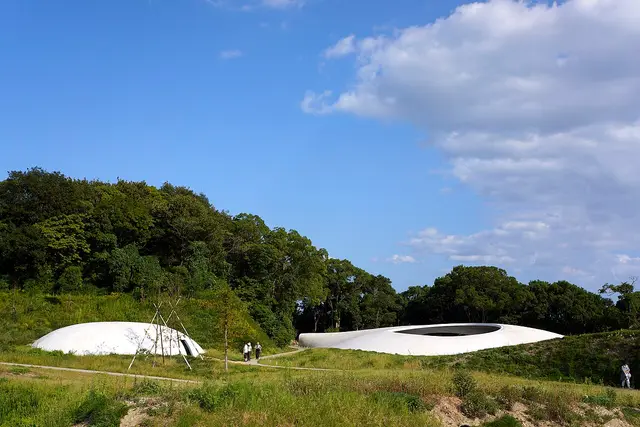
Most visitors come to Teshima for the Teshima Art Museum, the white concrete shell by Ryue Nishizawa and Rei Naito set above rice terraces towards Karato. Yokoo House makes a good pairing because it’s so different. One is silent and almost empty; the other is loud, red and crowded with images.
Electric bicycles are rented near Ieura Port and suit the island’s hills. A community bus connects Ieura with Karato. Near Karato’s shore is Les Archives du Cœur, Christian Boltanski’s archive of recorded heartbeats.
A workable order is Yokoo House on arrival or just before your boat out, since it’s beside the port. Then the Teshima Art Museum and Karato fill the middle of the day.
Days and seasons to watch
Right now it opens 10am to 4pm and closes on Tuesdays. Don’t treat that as fixed. Benesse venues on Teshima change their schedules through the year, and in the colder months several close on more weekdays. They also open specially for the Setouchi Triennale.
Check the official site for the month you’re travelling, and line it up with the closing days of the Teshima Art Museum, because a missed closure can waste the whole crossing. Outside Triennale years, the house stays fairly quiet: a low-key stop that many island-hoppers skip on their way somewhere else.
Frequently asked questions
How do I get to Teshima Yokoo House?
Take a boat to Ieura Port on Teshima from Takamatsu, Uno Port, Miyanoura on Naoshima or Tonosho on Shodoshima. The house is a few minutes' walk from the Ieura quay, up into the village lanes. Departures are few, so check the timetable for your travel date.
Which days is it closed?
At the moment it opens 10am–4pm and closes on Tuesdays. Hours and closing days change through the year, especially in winter and during the Setouchi Triennale, so check the Benesse Art Site Naoshima official website for your month.
How long should I spend there?
About 45 minutes to an hour covers the paintings, the garden, the mirrored waterfall-postcard tower and the toilet installation. Leave extra time for the walk back to Ieura Port before your ferry.
Can I combine it with the Teshima Art Museum in one day?
Yes, and most visitors do. Rent an electric bicycle at Ieura Port or take the community bus towards Karato for the Teshima Art Museum, which usually needs an advance timed ticket. Because Yokoo House is so close to the port, it fits well at the start or end of the day.
Do I need to take my shoes off?
In parts of the house, yes, since it's an old Japanese home. Shoes that slip on and off easily make it simpler. Follow the staff's directions on shoes and photography, as the rules change from room to room.
Plan your trip to Teshima
Japan eSIM & staying connected →
Some links above are affiliate links — if you book through them, Wander Atlas earns a small commission at no extra cost to you. It's how we keep every guide free.