A Shrine Roof Hanging Over a Clay Ring
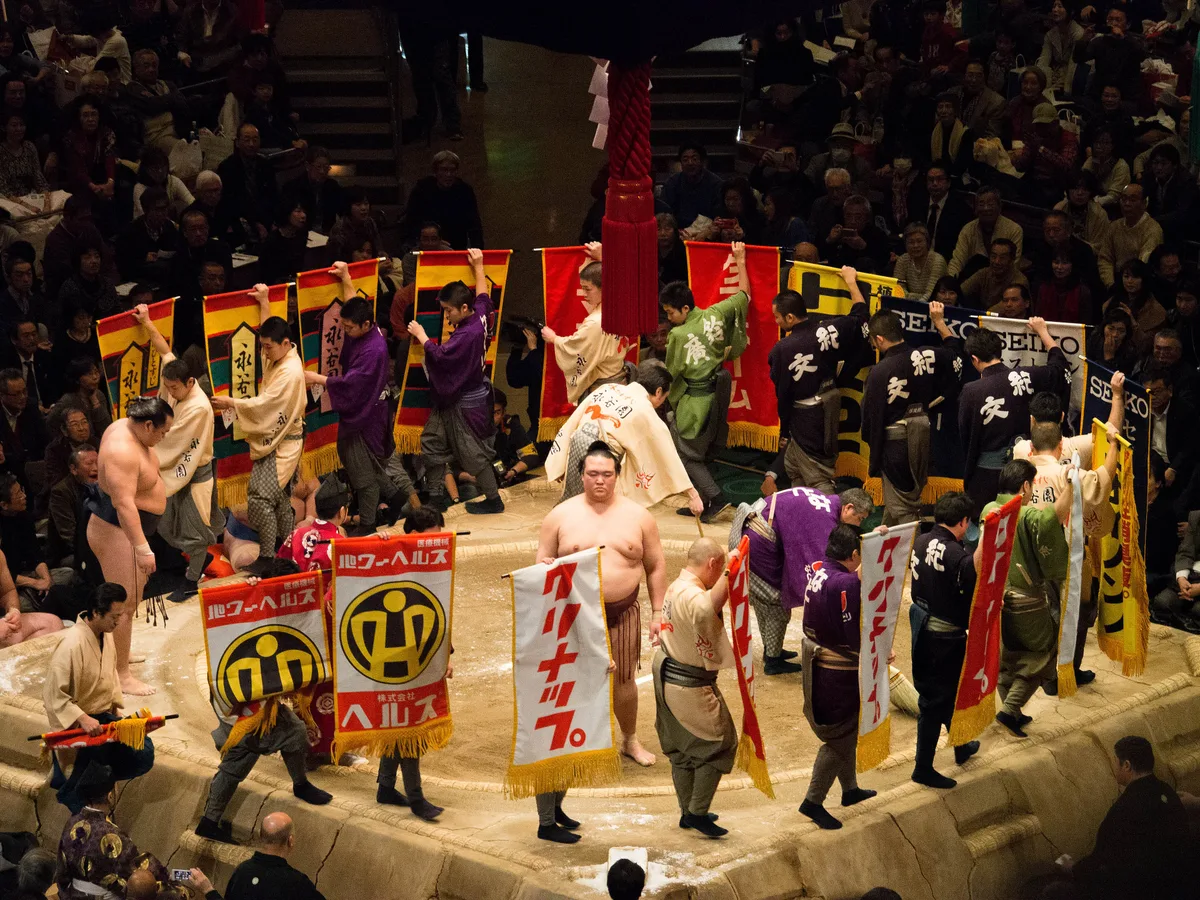
The roof floats over the ring. Inside Ryogoku Kokugikan, a Shinto-style shrine roof hangs on cables above the dohyo, the raised ring of packed clay. Four coloured tassels drop from its corners, one for each season. Everything else in the hall, from the square cushion boxes to the steep upper tier of chairs, points down at that one small circle.
The Hatsu Basho opens the sumo year. It’s the first of Japan’s six annual Grand Sumo Tournaments, and in 2027 it runs for 15 days, from Sunday January 10 to Sunday January 24. Every one of those days has a full programme. Wrestlers from the lowest ranks up to the yokozuna each fight once a day, usually in the top divisions, or on alternate days in the lower ones.
From Morning Drum to the Final Bout
The day starts slowly and finishes loud. In the morning, the lower divisions fight in a mostly empty hall, with young wrestlers in their teens taking turns on the clay. The bouts move fast and you can sit almost anywhere nobody has claimed yet.
The crowd fills in over the afternoon. Things change in the late afternoon, when the top-division wrestlers walk in for the dohyo-iri, the ring-entering ceremony. They wear heavy embroidered aprons called kesho-mawashi, and the yokozuna performs his own separate ritual.
The top-division bouts follow, and the final bout of the day comes at the end of the afternoon. Before each bout, the wrestlers:
- throw handfuls of salt to purify the ring
- crouch, stare each other down and stand back up, sometimes several times
- watch sponsor banners (kensho) being carried around the ring for the bigger bouts
The fight itself often lasts a few seconds. Nearly all of the time goes on the build-up.
Seats: Boxes, Ringside and the Upper Tier
There are three kinds of seat, and the choice decides your day. The organiser is the Japan Sumo Association (Nihon Sumo Kyokai), which sells tickets through its official ticketing site. That’s also where the tournament dates and seating plans appear.
- Tamari-seki (ringside): floor cushions right beside the dohyo. You get a close view and a real chance that a wrestler lands in your lap. Eating, drinking and photography aren’t allowed here.
- Masu-seki (box seats): square floor boxes with cushions, sold as whole boxes, usually for four. They’re cramped for long legs, but they’re where most of the eating, drinking and conversation happens.
- Isu-seki (chairs): tiered seating on the upper level. The back rows are far from the ring, but you get the full view of the hanging roof.
Weekend days and the final days usually draw the biggest demand. Opening day and the closing Sunday both fall on weekends this year. The Sumo Association has sold a limited batch of same-day upper-tier tickets at the venue box office in past tournaments. Whether it does so for any given tournament is the association’s decision.
Getting to Ryogoku
The hall sits right next to the station. Ryogoku Station on the JR Sobu Line is a short walk from Ryogoku Kokugikan: leave by the west exit and the hall is on your right. Two stops along the line is Akihabara, so the Sobu Line is the simplest route from central Tokyo.
The Toei Oedo Line also has a Ryogoku Station, a few minutes’ walk from the hall’s other side. That helps if you’re coming from Shinjuku, Roppongi or Tsukiji. Colourful nobori banners line the street outside, each one printed with a wrestler’s name, and they mark the way.
Sumo stables (heya) are dotted around Ryogoku, and wrestlers in yukata and topknots on bicycles are a normal sight here. Nearby, the Kyu-Yasuda Garden is a small landscaped pond garden next to the Kokugikan. The Sumida Hokusai Museum is a short walk east.
Box-Seat Manners and the Wrestlers’ Walk-In
Sumo fans have their own routines. In the afternoon, fans usually stand along the path to the hall’s side entrance to watch the wrestlers arrive. The top-ranked men come in dressed in formal kimono, often with attendants. People watch, take photos and sometimes call out names. Grabbing at the wrestlers isn’t done.
In the boxes, everyone takes their shoes off and leaves them on the edge of the box, not the cushions. A box seats four people sitting cross-legged or kneeling, and people stretch out once the person next to them leaves.
Fans shout a wrestler’s ring name (shikona) as he steps up. They clap at a good win and stay quiet during the crouch. When a yokozuna loses to a lower-ranked wrestler, people sometimes throw their seat cushions at the ring. The association discourages it, but it still happens.
Many visitors drift in and out during the morning. They step out to the museum or to eat, then settle in for good once the top-division ring-entering starts.
Chicken, Chanko and the Hall’s Own Kitchen
Food is part of a day at the Kokugikan. The hall’s best-known snack is its yakitori, grilled chicken sold boxed and eaten cold in the seats. Chicken is the traditional sumo food for a simple reason. A bird stands on two legs, and a wrestler who touches the clay with his hand has lost.
During tournaments, the basement serves chanko-nabe, the hot-pot stew wrestlers eat in their stables. Fans eat it at long tables. Bento boxes and beer go back up to the box seats.
The ground floor also holds the Sumo Museum, a small gallery of woodblock prints, banzuke ranking sheets and wrestlers’ ceremonial gear. Outside the tournament, Ryogoku’s chanko restaurants serve the same hot-pot, and several of them are run by retired wrestlers.
Senshuraku: Sunday 24 January
The last day has its own name: senshuraku. In 2027 it falls on Sunday January 24, and it’s the fullest, loudest day of the tournament. The title is often still undecided going into the final bouts. If two wrestlers finish level, a playoff bout settles it.
After the last bout comes the award ceremony. The champion receives the Emperor’s Cup, a huge silver trophy that takes real strength to lift, and the hall sings the national anthem. The ceremony is slow and formal, a contrast with the short bouts before it. Many fans stay in their seats for all of it.
Then the January banzuke goes into the record books, and the next ranking list is based on these 15 days. Ryogoku’s restaurants fill up as the crowd spills out.
Frequently asked questions
When is the Hatsu Basho 2027?
It runs for 15 days, from Sunday January 10 to Sunday January 24, 2027. It's the first of Japan's six annual Grand Sumo Tournaments.
Where is the January sumo tournament held, and how do I get there?
It's held at Ryogoku Kokugikan in Ryogoku, Tokyo. From the west exit of Ryogoku Station on the JR Sobu Line, the hall is a short walk. The Toei Oedo Line's Ryogoku Station is also a few minutes away.
Who sells Hatsu Basho tickets?
The Japan Sumo Association, the tournament organiser, sells tickets through its official ticketing site. Seat types are ringside (tamari-seki), floor boxes for four (masu-seki) and upper-tier chairs (isu-seki).
How long should I stay on the day?
Bouts run from morning to the end of the afternoon. Many visitors come in after lunch and stay through the top-division ring-entering ceremony and bouts, which take up the late afternoon.
Can I eat in my seat?
Yes, in the box seats and chairs, and the hall's yakitori and bento are standard. Ringside tamari seats don't allow food, drink or photography.
Plan your trip to Tokyo
Japan eSIM & staying connected →
Some links above are affiliate links — if you book through them, Wander Atlas earns a small commission at no extra cost to you. It's how we keep every guide free.