A summer tour on the winter bay
The tour title is a joke that works in Tokyo. On December 3, 2026, Khalid brings the It’s Always Summer Somewhere tour to Tokyo Garden Theater, on reclaimed land in Ariake on Tokyo Bay. Outside, it is early winter and a dry wind comes off the water. Inside, you get a room full of people singing “Location” back at the stage.
It is a single date on a Thursday night. The Tokyo show is also Khalid’s first in the city in eight years, so a lot of the crowd will have spent close to a decade waiting for it.
Eight years between Tokyo shows
Khalid grew up partly in El Paso, Texas, and broke through as a teenager with his 2017 debut album American Teen. The songs from that era made his name: “Location”, “Young Dumb & Broke” and “Talk”. His voice is low and unhurried, and it carries a big room without much strain.
Since then his catalogue has added “Better”, “Love Lies” with Normani and “Eastside” with Benny Blanco and Halsey. There are also the albums Free Spirit and Sincere. The setlist is the tour’s business and nobody here can predict it. Still, an eight-year absence means a whole catalogue’s worth of songs that Tokyo has never heard him sing live.
Inside Tokyo Garden Theater
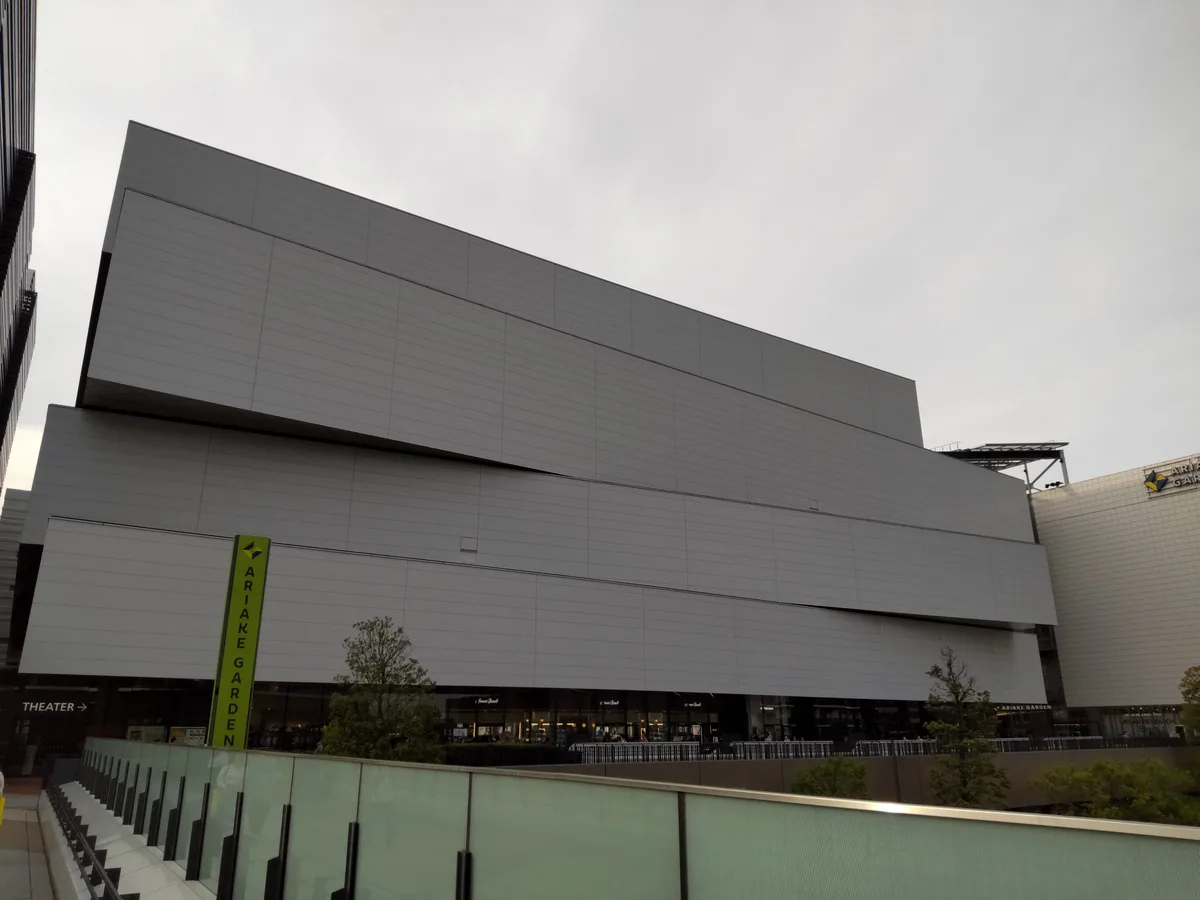
The theatre is part of the Ariake Garden complex. It sits next to a shopping mall and a hotel, so a concert night here feels less like a trip out to an arena car park. You walk in along broad pedestrian decks at first-floor height, and the waterfront district’s wide, planned streets run below you.
The hall is indoor, with seating that rises steeply in tiers from the floor up through the upper levels. The steep rake is the reason people like the venue. Even the higher seats look down onto the stage rather than across a long flat floor.
Name-matched tickets and the merch line
Japanese concert routines are stricter than many visitors expect. Most of them come down to tickets and order.
- Tickets are usually electronic and tied to a name. Big Japanese shows commonly use app-based tickets, and staff can ask for photo ID at the gate. Fans carry a passport or residence card so the name can be matched.
- Resale is tightly controlled. Buying from strangers outside the gate or on unofficial sites risks a ticket that won’t scan. Overseas fans generally stick to the official sale channels for the Tokyo date.
- Merchandise has its own queue. Merch stands at Japanese concerts often open hours before the show, and the queue forms in neat single file. Many fans buy their shirt first and then go for dinner in the mall.
- Phones stay down unless the artist says otherwise. Filming is generally not allowed at Japanese shows. Staff do enforce it, and the people around you notice.
- Start times are taken seriously. Japanese shows tend to begin close to the printed time. The crowd is usually seated well before the lights drop.
The Japanese promoter and Khalid’s official channels hold the ticket links and door times for this date.
The Yurikamome crush after the encore
Getting home is the part that catches visitors out. Ariake-Tennis-no-mori Station is on the Yurikamome, an automated, driverless train on rubber tyres with fairly small carriages. When the hall empties, platform staff hold people back in waves and the queue snakes along the decks outside the station.
People who know the area often take the alternative instead. Kokusai-Tenjijo Station on the Rinkai Line is roughly a ten-minute walk away. Its trains are full-size and run straight through to Osaki, and some continue on the JR Saikyo Line towards Shinjuku and Shibuya. If you are heading for Toyosu, the Yurikamome also runs the other way from the bay.
Some attendees simply wait it out. They browse the mall for half an hour and walk onto a quieter train once the first surge has gone.
Getting to Ariake on a weeknight
From central Tokyo there are two main routes:
- Yurikamome from Shimbashi crosses the Rainbow Bridge loop through Odaiba to Ariake-Tennis-no-mori. It is slow but the views are good, and the station is closest to the venue.
- Rinkai Line to Kokusai-Tenjijo, linked with the JR Saikyo Line from Shinjuku, Shibuya and Osaki. It is faster from the west side of the city.
- Toyosu is at the far end of the Yurikamome and connects to the Yurakucho subway line, which suits anyone staying around Ginza or Ikebukuro.
December 3 is a working Thursday, so the trains into the bay mix concertgoers with office commuters heading home. Suica and Pasmo IC cards work on both lines. Tapping through the gates saves you queuing at ticket machines in the evening rush.
Making a December evening of it
Ariake is a newer, rather quiet district, and that suits a concert night. The Ariake Garden mall next to the theatre has restaurants and a food court, and plenty of ticket holders eat there so they never have to leave the building.
Nearby, Tokyo Big Sight’s upside-down pyramids stand by Kokusai-Tenjijo Station. Ariake Arena is a short walk inland. Odaiba’s waterfront and the Rainbow Bridge are a few Yurikamome stops away.
Early December evenings in Tokyo are cold and clear, and the bay-front decks get windy. A warm layer that folds into a bag makes sense, because coin lockers near large venues fill up on show nights. Visitors who would rather skip the late train often stay in Ariake or Toyosu and walk home along the water.
Frequently asked questions
When and where is Khalid's It's Always Summer Somewhere Tour in Tokyo?
It takes place on Thursday, December 3, 2026, at Tokyo Garden Theater in the Ariake Garden complex in Ariake, on Tokyo Bay. It is Khalid's first Tokyo show in eight years.
What is the nearest station to Tokyo Garden Theater?
Ariake-Tennis-no-mori Station on the Yurikamome line is the closest, a short walk away. Kokusai-Tenjijo Station on the Rinkai Line is about ten minutes on foot and has through trains to Osaki, Shibuya and Shinjuku.
How do people get home after the show without the queue?
The Yurikamome has small carriages and queues build fast as the hall empties. Many attendees walk to Kokusai-Tenjijo for the full-size Rinkai Line trains, or wait in the Ariake Garden mall until the first rush has passed.
Do I need ID for concert tickets in Japan?
Large Japanese concerts usually use electronic, name-registered tickets, and staff may ask for photo ID at the entrance. Overseas fans normally carry their passport and buy only through the official sale channels.
What is there to do near the venue?
The Ariake Garden mall beside the theatre has restaurants and shops. Tokyo Big Sight and Ariake Arena are within walking distance, and Odaiba and the Rainbow Bridge are a few stops away on the Yurikamome.
Plan your trip to Tokyo
Japan eSIM & staying connected →
Some links above are affiliate links — if you book through them, Wander Atlas earns a small commission at no extra cost to you. It's how we keep every guide free.