Where the Ghats Begin
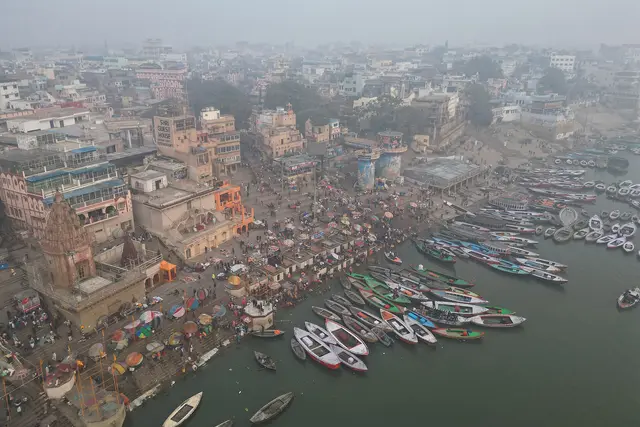
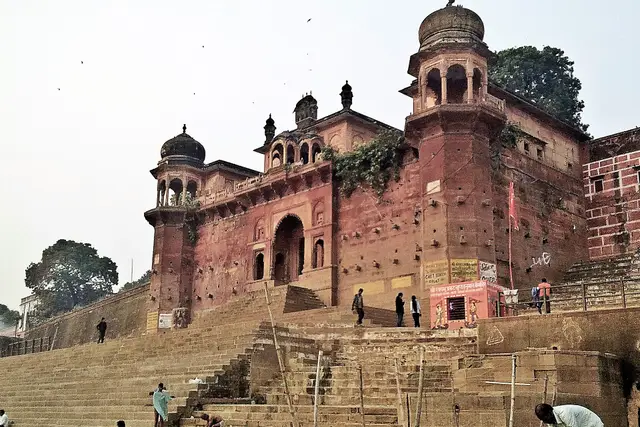
Wide stone steps run down to the Ganges here, and this is where the city’s long chain of ghats starts. The ghat takes its name from the Assi, a small stream that meets the river at this point. Pilgrims traditionally bathe at the meeting of the two waters.
Under a peepal tree near the top stands a large shivling, the Asisangameshwar lingam. Visitors pour water over it and leave flowers. Below it, rowing boats tie up along the waterline, and chai sellers set up on the landings between the flights of steps.
This is not the place for silent contemplation. It’s one of the most-reviewed spots in Varanasi, and the steps work as a public square: students, sadhus, yoga groups and families all share them.
Dawn, Dusk and Everything Between
The day here has two set pieces.
- Subah-e-Banaras: a pre-dawn programme of Vedic chanting, a morning aarti, classical music and yoga on the steps. It begins before sunrise, and the time shifts with the season.
- Evening Ganga aarti: priests swing brass lamps in unison as bells ring. It’s smaller than the one at Dashashwamedh Ghat, but the crowds are still thick at weekends.
Between the two, a boat ride north takes you past Tulsi Ghat, where the poet Tulsidas lived. You then pass Harishchandra Ghat, a cremation ghat, and continue to Dashashwamedh and Manikarnika. You can also walk the riverfront north on foot, which takes roughly an hour to reach Dashashwamedh.
For a proper visit, allow 1–2 hours. A dawn session plus a boat ride fills a morning.

Reaching Shivala
Assi is in the south of the city, about 2 km from the main gate of Banaras Hindu University. Your options:
- Auto-rickshaw or e-rickshaw: tell the driver “Assi Ghat”. Most will stop at Assi crossing, from where you walk a short way down to the river.
- Rail: Banaras station is the closest railhead. Varanasi Junction is farther north, so allow a longer road trip in traffic.
- Car: the lanes near the river are narrow and congested, so drivers usually drop you off on the main road.
Plan on visiting between October and March. Summer middays are brutally hot. Dev Deepawali, the full moon of Kartik in November, lights every ghat with oil lamps and draws huge crowds.
Getting On the Steps Without Getting Played
Most ghats have their fixers, and Assi is no exception.
- Agree the boat fare before you step in. Ask “kitna?” (how much) and settle the route and duration. Nothing is posted, so the price is whatever you both agree.
- Decline the unsolicited tilak. A forehead mark or “blessing” is often followed by a request for money. A firm “nahin, dhanyavaad” (no, thank you) works.
- Shoes off near the shrine. Cover your shoulders and knees if you join the rituals.
- Don’t photograph cremations. If your boat passes Harishchandra or Manikarnika, keep the camera down.
- Donations at the aarti are optional. Small notes work best.
Timing matters more than anything else here. Crowds are usually thinnest on weekdays from 10am to 2pm. That’s the window for photographing the steps or talking with the boatmen without pressure. Try not to arrive on a weekend between 5pm and 11pm unless you want the aarti crowd. If you do, get there early and take a step close to the water before the space fills up.
Frequently asked questions
When is the quietest time to visit Assi Ghat?
Weekdays from 10am to 2pm are usually the quietest. The busiest stretch is weekends from 5pm to 11pm, when the evening aarti crowd arrives.
How do I get to Assi Ghat?
Take an auto-rickshaw or e-rickshaw to Assi crossing in Shivala, then walk a short way to the river. It's about 2 km from Banaras Hindu University. Banaras station is the nearest railhead.
Is Assi Ghat open at night?
Yes. At the moment it's listed as open 24 hours, and the evening aarti and weekend nights draw the biggest crowds.
What time does the morning ceremony start?
Subah-e-Banaras starts before sunrise, so the time shifts with the season. Check locally the day before.
What's near Assi Ghat?
Tulsi Ghat is the next ghat north. Further along the river are Harishchandra, Dashashwamedh and Manikarnika ghats, reachable by boat or a riverside walk of about an hour. Banaras Hindu University is roughly 2 km inland.
Plan your trip to Varanasi
India eSIM & staying connected →
Some links above are affiliate links — if you book through them, Wander Atlas earns a small commission at no extra cost to you. It's how we keep every guide free.