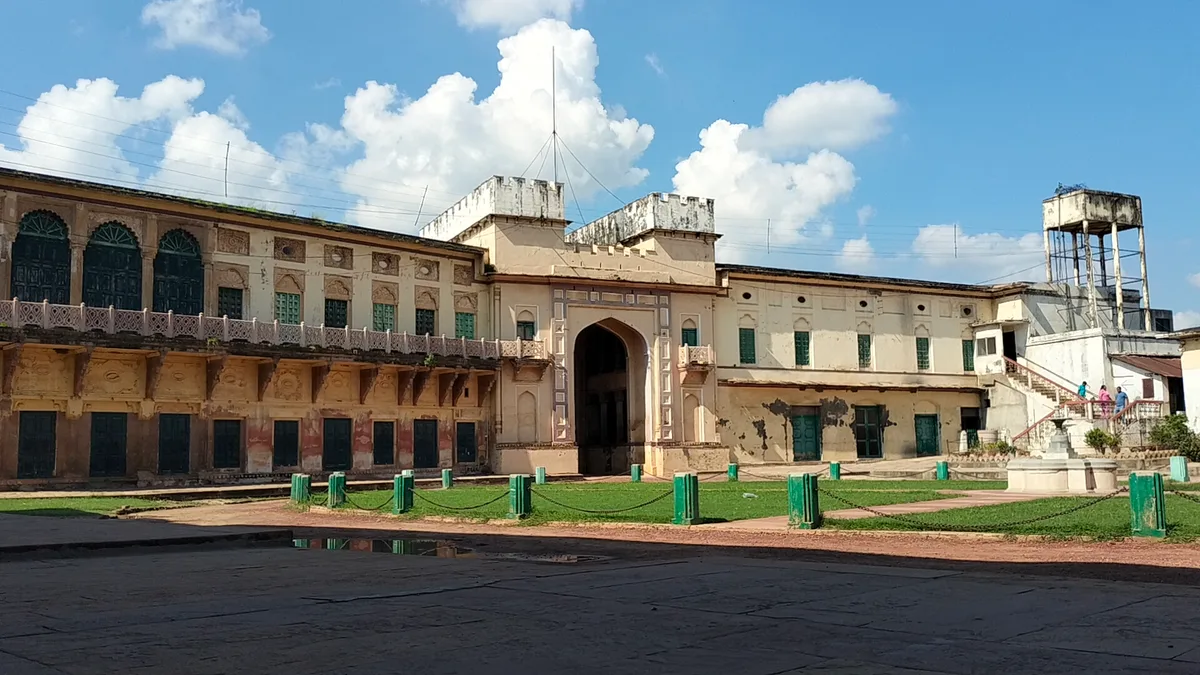
Across the river from the ghats
Every ghat in Varanasi faces east, so what they look at is the far bank. Ramnagar Fort is the big pale building on that bank, upstream of Assi Ghat. It is built from cream-red Chunar sandstone, with courtyards, carved balconies and walls that go straight down to the water.
Raja Balwant Singh built it around 1750. It is still the ancestral home of the Kashi Naresh, the hereditary Maharaja of Benares, so part of the fort is a private residence. Visitors see the museum wing, the courtyards and the riverside terrace.
Inside the museum
The museum is called Saraswati Bhawan. It is a series of halls with old glass cases, and it feels more like a family attic than a curated gallery. Look for:
- Vintage cars from the royal garage, including early imported models
- Palanquins and howdahs, the seats once carried by men and elephants
- The armoury: swords, shields, matchlocks and hunting guns
- Costumes and textiles worn by the royal household
- The astronomical clock, a 19th-century mechanism showing time, date and planetary positions
Inside the grounds there is also a temple to Ved Vyasa, author of the Mahabharata. Local tradition says he lived at Ramnagar for a while.

Getting across and timing it
Ramnagar is on the opposite bank, south of Banaras Hindu University. By road, take an auto-rickshaw or taxi from Lanka or the BHU gate over the Samne Ghat bridge. The ride is short, but traffic near Lanka can make it longer. You can also hire a rowing boat or motorboat from Assi Ghat, which lets you see the fort from the water first.
Currently the fort opens 10:00 AM – 5:00 PM every day of this week. Museum hours can change with the season and on holidays, so check before you cross. Aim to be through the gate by early afternoon. Then you won’t be rushing the riverside terrace at the end, and that terrace is the best view of the city’s ghats from this bank.
The fort’s biggest event is the Ramnagar Ramlila. It is a month-long open-air performance of the Ramayana around Dussehra (September–October), backed by the Maharaja since the 19th century. Scenes move between sets spread across the town. Plan an autumn trip around it if you can.
Visiting the Maharaja’s house
The fort is one of Varanasi’s most-visited sights, so expect school groups and day-trippers rather than quiet halls. Getting in early, soon after opening, usually beats the groups that come over once the morning boat rides on the ghats finish.
- Tickets are sold at the counter by the gate, where the current price is posted. Small notes make things easier.
- Photography rules inside the museum have changed over the years. Read the signs at the entrance and follow what the guards say.
- Dress modestly. The fort is a royal home with a temple inside, so covered shoulders and knees are the norm.
- Guides wait near the entrance. Agree what they will cover before you start.
- Ramnagar’s market lanes outside the gate are known for lassi served in clay cups (kulhads). Stop there before heading back over the bridge.
Frequently asked questions
How do I get to Ramnagar Fort from Varanasi?
The fort is on the east bank of the Ganges. Take an auto-rickshaw or taxi from Lanka or BHU over the Samne Ghat bridge, or hire a boat from Assi Ghat to cross the river.
What are the opening hours of Ramnagar Fort?
At the moment it opens 10:00 AM to 5:00 PM daily. Hours can change with the season and on holidays, so check before you go.
How long should I spend at Ramnagar Fort?
Plan on 1.5 to 2 hours for the museum, the Ved Vyasa temple and the riverside terrace. Add more time if you want to walk the Ramnagar market.
What is in the Ramnagar Fort museum?
The Saraswati Bhawan museum has vintage royal cars, palanquins and howdahs, an armoury of swords and guns, royal costumes and a 19th-century astronomical clock.
When is the best time of year to visit?
October to March has the most comfortable weather. Around Dussehra (September–October), the town hosts the month-long Ramnagar Ramlila, which is the year's biggest event here.
Plan your trip to Varanasi
India eSIM & staying connected →
Some links above are affiliate links — if you book through them, Wander Atlas earns a small commission at no extra cost to you. It's how we keep every guide free.
Related guides
 hidden gem
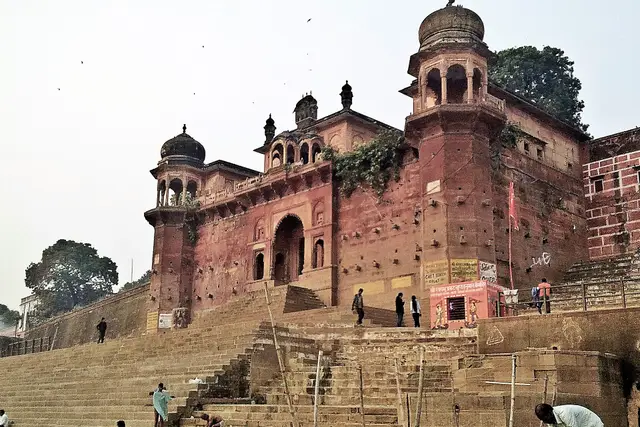
Chet Singh Ghat, (Varanasi): Travel Guide
 attraction
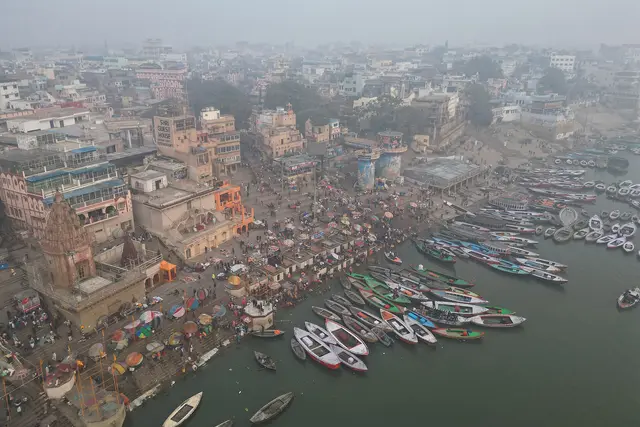
Dashashwamedh Ghat: Varanasi Travel Guide (4.6★)
 attraction
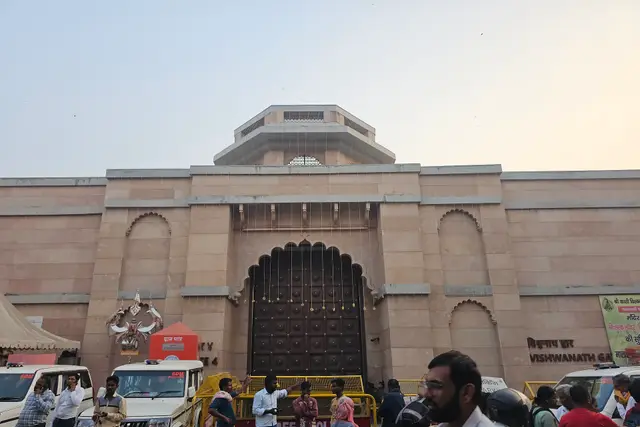
Shri Kashi Vishwanath Temple: Varanasi Travel Guide
 event