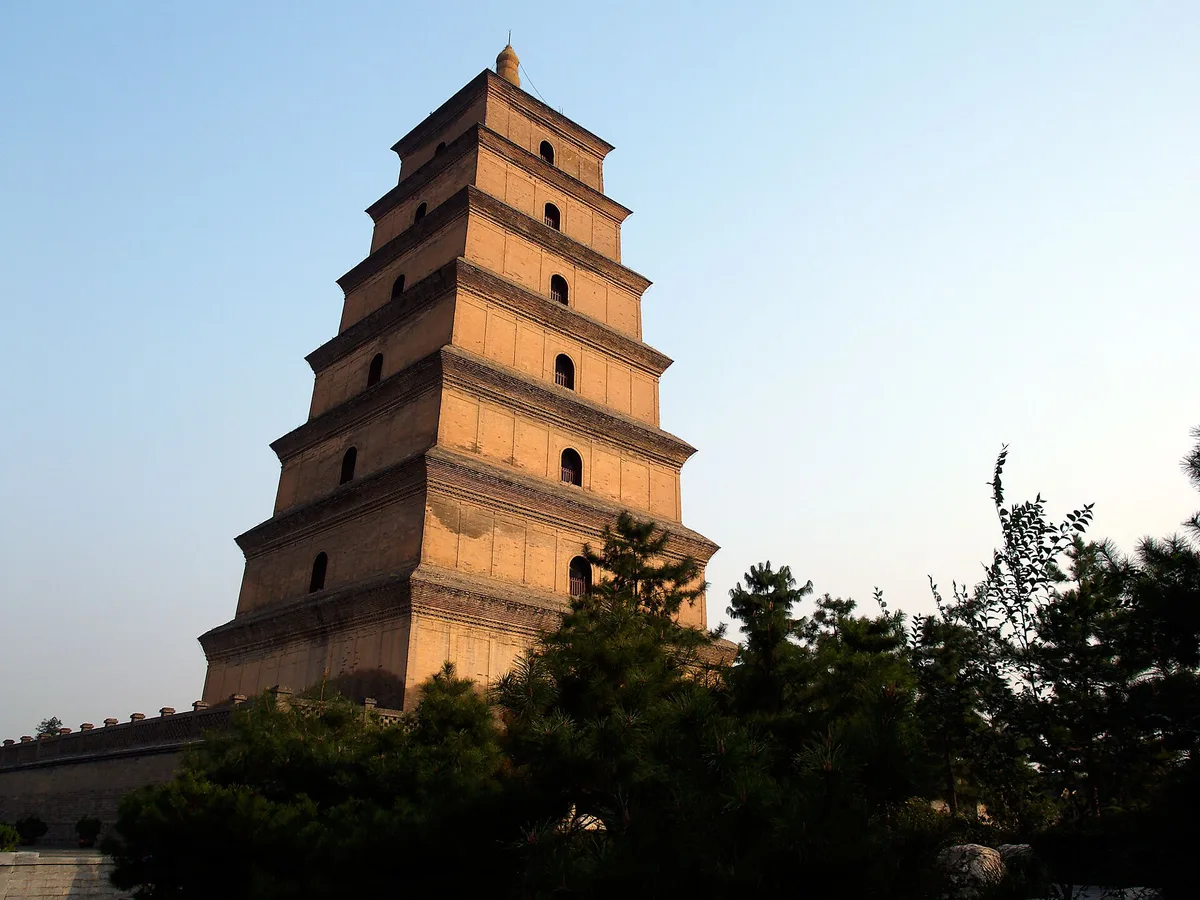
Seven storeys of Tang brick
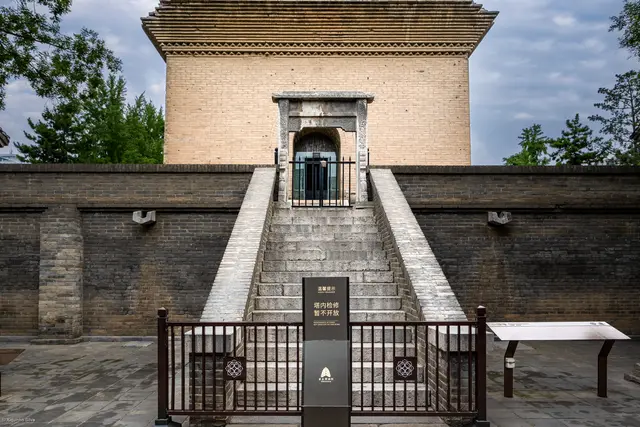
The square tower looks heavier than it is tall. Its seven tiers of grey-brown brick step inward as they rise, and each one is cut with arched windows on every face. Altogether it stands about 64 metres high.
It was built in 652 under the Tang emperor Gaozong to house the Buddhist scriptures the monk Xuanzang carried back from India. Xuanzang’s journey later became the basis for Journey to the West. His bronze statue faces you in the South Square, robed and holding a staff, with the pagoda rising behind him.
Inside Da Ci’en Temple
The pagoda isn’t a standalone monument. It sits at the back of Da Ci’en Temple, which still has working monks. The temple is laid out as a straight north–south axis:
- Bell and drum towers flanking the entrance courtyard
- Mahavira Hall, with incense burners smoking out front
- Dharma Hall, then the pagoda itself at the rear
- Xuanzang Memorial Hall behind, with murals of his route
Climbing the pagoda is ticketed separately from temple entry; the gate booth lists both. Inside, a narrow wooden stair winds up through each level. From the window openings at the top you look straight down Yanta Road toward the city wall, and south over the Datang Everbright City avenue.

Getting there and what’s around it
Take the Metro to Dayanta Station, which is served by Lines 3 and 4. The temple’s South Square is a few minutes’ walk from the station. Opening hours shift through the year, so check the official listing before you go.
Nearby:
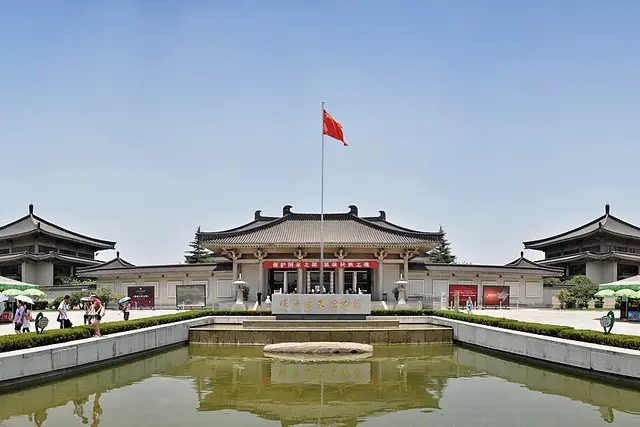
- Shaanxi History Museum, about 1 km northwest. Tang tomb murals and gold work make it the best background for the pagoda.
- North Square, home to a huge musical fountain. The show runs on a set schedule, so check times locally.
- Datang Everbright City, a pedestrian avenue of Tang-style facades that runs south from the temple and is lit up after dark.
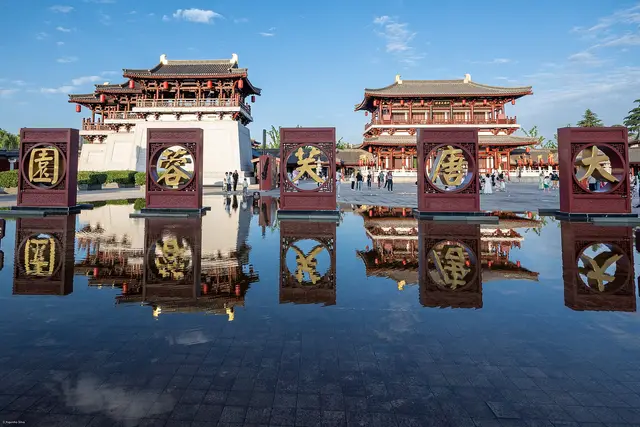
- Tang Paradise (Datang Furong Yuan), a reconstructed imperial garden just to the east.
One good plan is the museum in the morning, the temple in the afternoon, and the fountain and avenue at dusk. Together they fill a full Xi’an day without a taxi.
Temple manners at Da Ci’en
This is an active monastery, and the behaviour that fits is simple:
- Walk around the pagoda clockwise, as worshippers do.
- Step over thresholds, never on them. The raised wooden sills at each hall door are meant to be crossed.
- Incense is lit at the outdoor burners, not inside the halls. Hold the sticks at forehead height, bow and plant them in the sand.
- Photos are fine in the courtyards. Inside the halls, look for signs, and don’t point a lens at monks during chanting.
- Payment is mostly by Alipay or WeChat Pay, both of which now accept foreign cards. Carry a little cash as a backup.
- Bring your passport. Chinese ticket offices often ask for ID with real-name bookings.
Getting there at opening time usually puts you ahead of the tour groups, which tend to arrive mid-morning. If the queues are long by then, start with the courtyards and the Xuanzang hall, and climb later.
The pagoda leans slightly; it has tilted gradually over the centuries. Stand at the far side of the South Square and you can see it against the straight edge of the gate.
Frequently asked questions
How do I get to the Giant Wild Goose Pagoda by metro?
Take Line 3 or Line 4 to Dayanta Station. The temple's South Square is a short walk away.
How long should I spend there?
Allow 1.5–2 hours for the temple halls, the Xuanzang Memorial Hall and the climb. Add time in the evening if you want to see the North Square fountain and walk Datang Everbright City.
Can you climb the pagoda?
Yes. A wooden stair goes up through all seven levels. The climb is ticketed separately from temple entry, and the booth at the gate shows current prices.
What is the best time of day to visit?
Arriving at opening usually beats the tour groups. Late afternoon also works well because you can stay on for the fountain and the lit avenue. Hours change with the season, so check the official listing first.
What else is nearby?
Shaanxi History Museum is about 1 km northwest. Tang Paradise is just east, and the Datang Everbright City pedestrian avenue runs south from the temple.
Plan your trip to Xi'an
China eSIM & staying connected →
Some links above are affiliate links — if you book through them, Wander Atlas earns a small commission at no extra cost to you. It's how we keep every guide free.