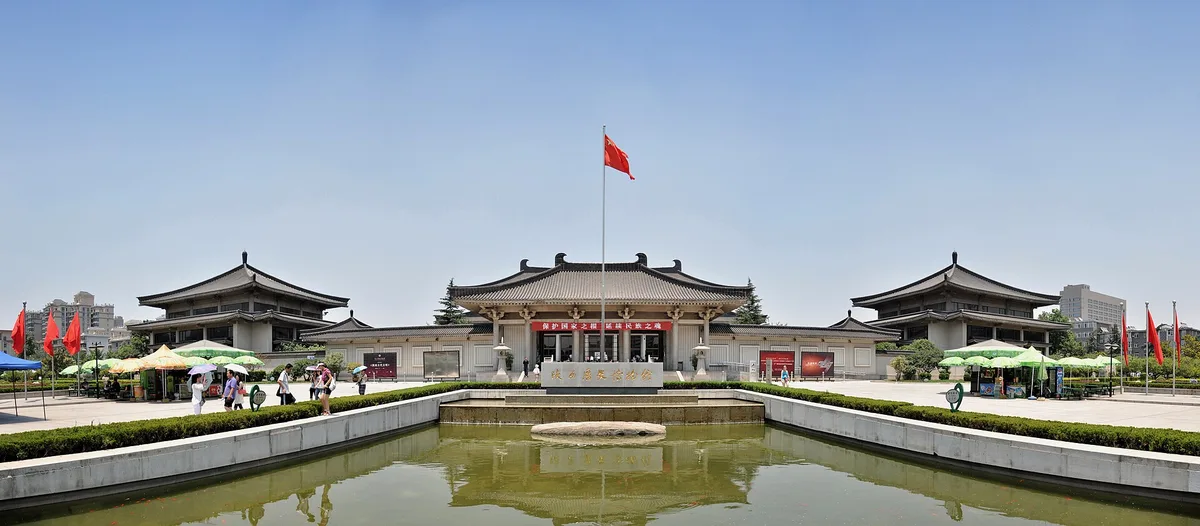
A palace roofline on Xiaozhai East Road
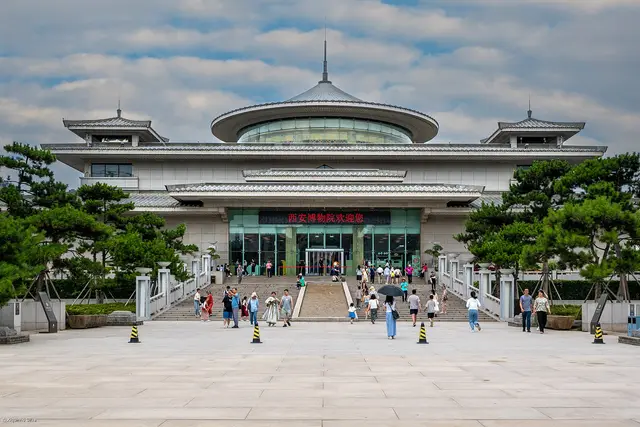
Look up before you go in. The building copies Tang dynasty palace architecture: broad grey-tiled roofs, deep eaves and a central hall flanked by lower wings around a courtyard. It was purpose-built as a museum in the early 1990s, and the design deliberately echoes the city that stood here when Xi’an was Chang’an, capital of the Tang.
Inside, the scale changes. Most foreign visitors spend their one big museum day at the Terracotta Army, so this place gets less attention from them. That leaves room for one of the deepest collections of early Chinese material anywhere, laid out in rough chronological order from prehistory to the Tang.
Walking the dynasties in order
The permanent galleries move forward in time as you walk. They start with fossils and Neolithic pottery from the Wei River valley, then pass through Zhou bronzes, Qin and Han material, and finally the Tang. Following the sequence matters here, because Shaanxi was the seat of power for so many of these dynasties.
Look out for these pieces:
- Zhou dynasty bronzes: ritual vessels with cast inscriptions, the oldest writing many visitors will ever see up close.
- Qin material: a few terracotta figures, a useful preview or follow-up to the pits at Lintong.
- The Hejiacun hoard: Tang gold and silver buried in the 8th century, including the gilded silver flask decorated with a dancing horse.
- The agate rhyton: a drinking horn carved as an ox head, showing Central Asian influence along the Silk Road.
- Tang tomb figures: glazed sancai camels, horses and foreign merchants, often in the three-colour glaze of green, amber and cream.

The Tang murals, behind a separate door
The museum’s other treasure is its collection of Tang tomb murals. These are painted walls lifted from imperial tombs around Xi’an, showing court ladies, polo players, guards and foreign envoys. They are kept in a separate climate-controlled gallery.
This hall needs its own ticket on top of the general reservation. The current price is posted at the museum’s ticket counter and on its official booking channel. If your interest is Tang court life, it is the best part of the visit.
Getting there and how long to stay
Metro is the simplest route. Take Line 2 or Line 3 to Xiaozhai Station, then walk east along Xiaozhai East Road; the museum is at number 91. The walk is roughly ten to fifteen minutes.
Give it at least three hours for the main galleries, and more if you add the murals. The museum is closed on Mondays. At the moment it opens 8am–6pm Tuesday to Sunday, but museum hours shift through the year and around holidays, so check the official site for this month’s times. Last entry falls before closing.
Getting past the door: reservations and passports
Here, walking up without a booking doesn’t work. Entry to the main galleries runs on timed reservations with a daily quota, and slots for weekends and Chinese holidays go quickly.
- Book ahead: reservations go through the museum’s official WeChat channel or website. Foreigners register with a passport number.
- Bring that same passport: it is checked at the gate against your booking.
- Expect a security check: bags go through a scanner, and large luggage is a problem. Leave suitcases at your hotel.
- Pay digitally: Alipay and WeChat Pay are the norm in Xi’an, and both apps now accept foreign cards.
- Rent the audio guide or hire a licensed guide inside: the English labels are short, and the stories behind the objects are the point.
The morning opening rush is mostly Chinese school and tour groups, and they tend to flood the prehistory rooms first. A simple way to avoid them is to start from the Tang end and work backwards.
Pairing it with the Big Wild Goose Pagoda
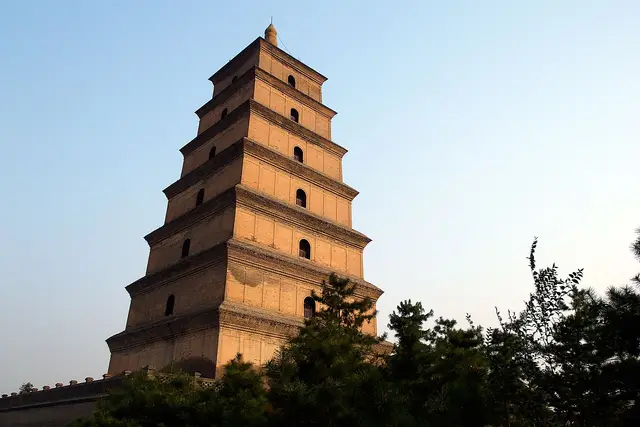
The museum fits neatly into a Yanta District day. Walk south for roughly fifteen to twenty minutes and you reach the Big Wild Goose Pagoda, the brick tower built for the monk Xuanzang’s sutras in the 7th century. Da Ci’en Temple surrounds it.
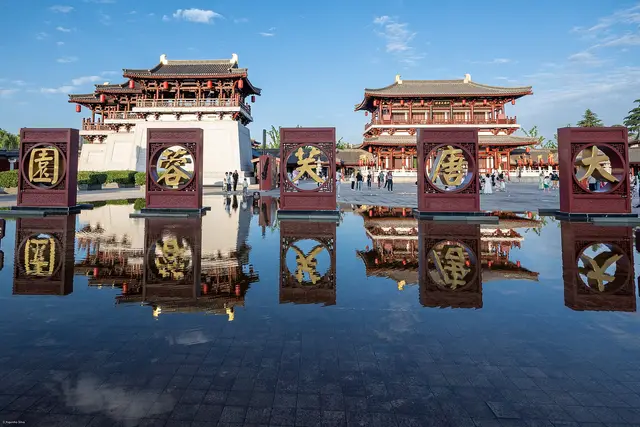
In the evening, the fountain show on the pagoda’s north square and the Tang-themed Great Tang All Day Mall pedestrian street draw crowds. The order works well: the museum’s Tang galleries in the morning, then the architecture they describe in the afternoon.
Frequently asked questions
Do I need to book the Shaanxi History Museum in advance?
Yes. Entry runs on timed reservations with a daily quota, made through the museum's official WeChat channel or website. Foreign visitors register with a passport and must show it at the gate.
How do I get to the Shaanxi History Museum by metro?
Take Line 2 or Line 3 to Xiaozhai Station, then walk east along Xiaozhai East Road to number 91. The walk takes about ten to fifteen minutes.
Is the museum open on Mondays?
No, it is closed on Mondays. It currently opens 8am–6pm Tuesday to Sunday, but hours can change by season and around holidays, so check the official site before going.
How long should I spend there?
Allow at least three hours for the main chronological galleries. Add extra time if you buy a separate ticket for the Tang tomb mural gallery.
What is nearby?
The Big Wild Goose Pagoda and Da Ci'en Temple are about a 15–20 minute walk south. The Great Tang All Day Mall pedestrian street and the pagoda's north square fountains are next to them.
Plan your trip to Xi'an
China eSIM & staying connected →
Some links above are affiliate links — if you book through them, Wander Atlas earns a small commission at no extra cost to you. It's how we keep every guide free.