Why go
Jeollanam-do is widely regarded as South Korea’s most food-obsessed province, and Yeosu, a port city on the southern coast, inherits that reputation with seafood-heavy tables loaded with banchan (side dishes). Bokchun Restaurant, tucked into the Gyodong neighborhood in Yeosu’s older downtown core, has built a solid local following over the years, reflected in its 4.2 rating across 941 reviews.
It’s the kind of place where the cooking style leans traditional rather than trendy: think stews, grilled or braised fish, and a generous, ever-refilled spread of shared side dishes rather than a single showpiece plate.
Getting there
The restaurant sits at 5-8 Gyodongnam 1-gil, in the Gyo-dong area of central Yeosu, walkable from the old Yeosu city center rather than the newer Yeosu Expo Station side of town. If you’re coming from Yeosu Expo Station (the KTX/train terminus near Yeosu Ocean Park and the Expo grounds), plan on a short taxi ride (roughly 10–15 minutes) or a bus into the older downtown, since this neighborhood predates the Expo-era development.
Gyodong is a historic residential and market district, so expect narrow streets, small parking, and a more local, unpolished streetscape than the waterfront tourist strip.
What to see / eat
Expect the meal to center on a main fish or seafood-based dish, commonly a stew (jjigae or maeuntang-style) built around whatever is fresh that day, accompanied by a wide array of banchan typical of the region: seasoned greens, pickled vegetables, dried and fresh seafood preparations, and rice. Jeollanam-do restaurants are famous nationally for over-delivering on side dishes, and Bokchun’s reputation and price level (mid-range, priced as a “2” on a typical 1–4 scale) suggest a table-filling, home-style experience rather than an à la carte one.
Because portions and banchan are often meant for sharing, this is a better fit for two or more diners than a solo quick bite.
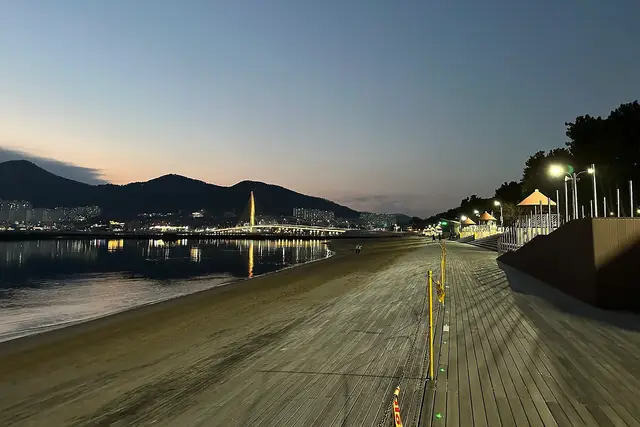
Afterward, walk off the meal in the surrounding Gyodong/Jongpo area, where Yeosu’s older market streets and residential lanes give a more authentic sense of the city than the reconstructed Expo waterfront. Yeosu’s famous night view, the illuminated Dolsan Bridge and Odongdo Island, is a short taxi ride away and pairs naturally with an earlier dinner here.
When to go
Lunch on a weekday is the easiest time to get a table without a wait, and it lets you see the banchan freshly set rather than picked over from an earlier dinner service. Yeosu draws heavy domestic tourist traffic in summer (July–August) for its coastal scenery and night views, and around the Yeosu International Fireworks Festival dates, so a restaurant like this in an older neighborhood can still see spillover crowds during those peaks. Spring and autumn are calmer, with milder weather for the walk to and from the restaurant.
How to visit like a local
Order is typically taken by the table rather than at a counter, and payment is almost always settled at the end of the meal by card or cash at a small front register (tipping is not expected or practiced in Korean restaurants, so don’t leave extra. If you’re unsure what to order, saying “오늘 뭐가 좋아요?” (oneul mwoga joayo) “what’s good today?”) to staff is a normal way locals defer to the day’s fresh catch rather than picking blind from a menu.
The most common visitor mistake here is under-ordering: banchan is refillable and included, so it’s fine to ask for “더 주세요” (deo juseyo (“more, please”) on a side dish you like rather than assuming portions are fixed. Because this is a residential neighborhood restaurant rather than a tourist-zone one, don’t expect an English menu or staff) having the address or restaurant name saved in Korean on your phone to show a taxi driver makes arrival far smoother. Come hungry and ideally with a companion or two, since the banchan-heavy format rewards sharing over solo dining.
Frequently asked questions
How do I get to Bokchun Restaurant without a car?
Take a taxi from Yeosu Expo Station or central Yeosu into the Gyo-dong neighborhood; it's a short, inexpensive ride (around 10–15 minutes) from the main train/bus terminals. Public bus routes also serve the older downtown, but a taxi is simplest if you don't read Korean bus signage.
How much does a meal cost?
It's priced at a mid-range level (roughly a '2' out of 4 on standard price tiers), typical for a Korean home-style seafood restaurant. Expect set meals or shared dishes priced per person rather than steep à la carte pricing, but confirm current menu prices on arrival since they can shift.
What's the best time to visit to avoid a wait?
Weekday lunch is the quietest window. Dinner service and weekends, especially during Yeosu's summer tourist season and the fireworks festival period, tend to be busiest.
How long should I plan for the meal?
Budget about 45–60 minutes for a full sit-down meal with banchan, longer if you're sharing several dishes across a larger group.
What's nearby to combine with a visit?
The Gyodong and Jongpo old market streets are within walking distance, and Yeosu's landmark night views at Dolsan Bridge and Odongdo Island are a short taxi ride away, making this a good early-dinner stop before heading to the waterfront in the evening.
Plan your trip to Yeosu
South Korea eSIM & staying connected →
Some links above are affiliate links — if you book through them, Wander Atlas earns a small commission at no extra cost to you. It's how we keep every guide free.