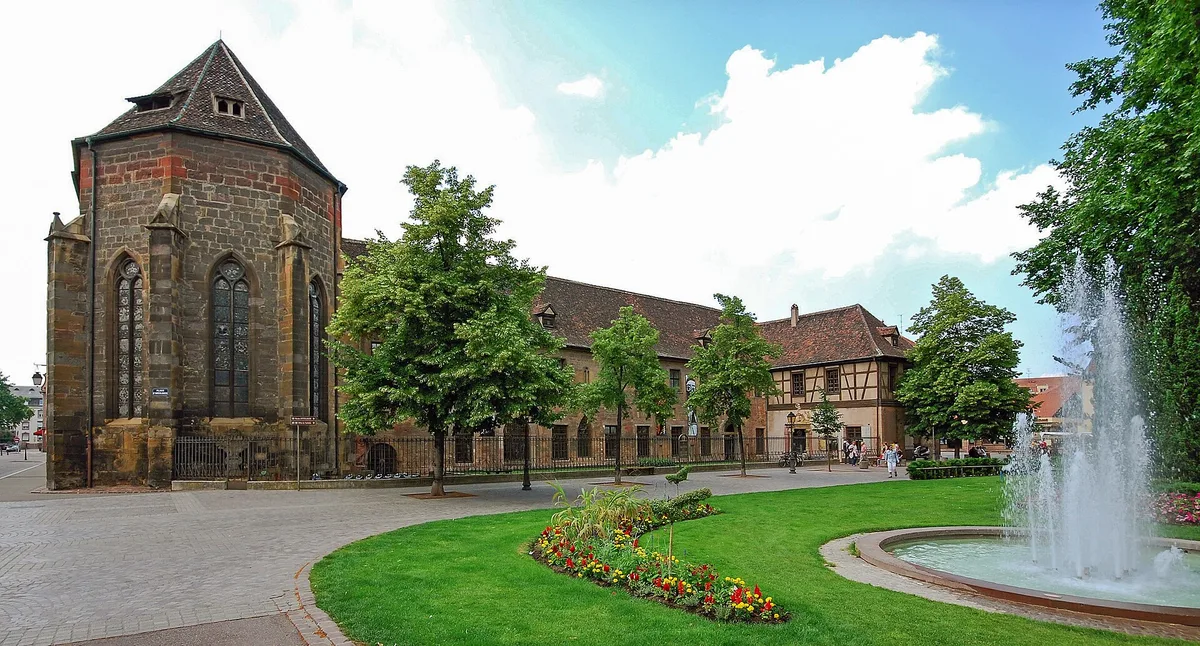
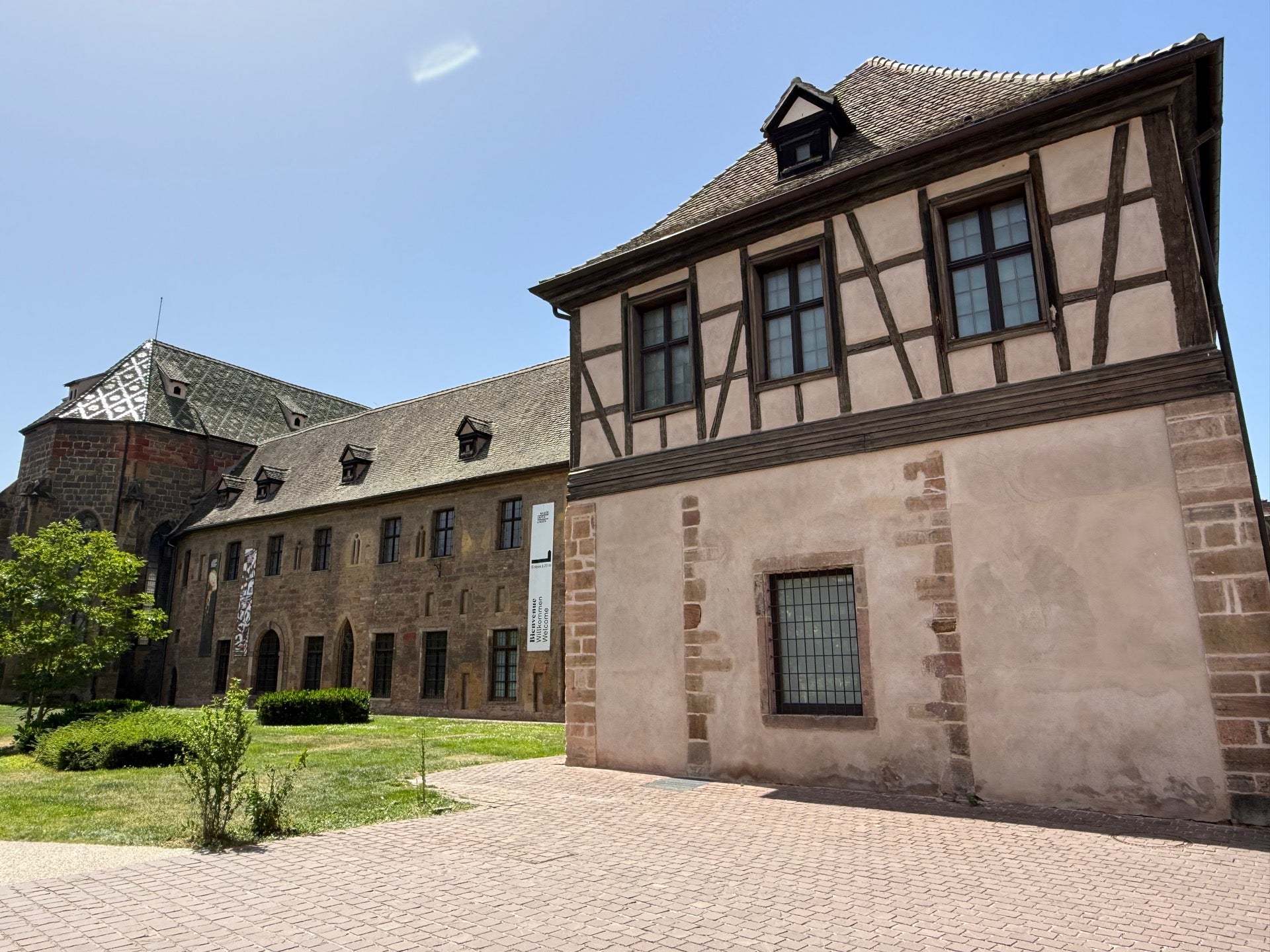
The building itself tells you what kind of museum this is before you’ve bought a ticket. Musée Unterlinden occupies a former Dominican convent founded in 1232, and the cloister at its centre, a square of stone arcades around a plain garden, still has the hush of an enclosed religious space even with a few hundred visitors passing through on a Saturday.
The Issenheim Altarpiece, and why you came
Everyone in this building is ultimately heading for the same room. The Issenheim Altarpiece, painted by Matthias Grünewald in the early 1500s for a monastery hospital outside Colmar, is displayed as a sequence of hinged panels that used to open and close depending on the liturgical calendar.
The crucifixion panel is not a polite image: distorted limbs, grey-green flesh, a body clearly diseased, because the original altarpiece was meant to comfort patients dying of ergotism and skin disease at the Antonite hospital. Give it real time. Reading the small explanatory panels on how the wings folded is the difference between seeing a painting and understanding what it was for.
Old convent, new wing
In 2015 the museum roughly doubled in size with a modern extension by Herzog & de Meuron, built partly underground and linked to the old convent by a footbridge over the Quai des Bateaux. The contrast is deliberate: bare stone vaults and pointed Gothic arches give way to concrete galleries with better climate control and space for the museum’s post-war and contemporary collection.
Don’t skip the new wing because the altarpiece already delivered your money’s worth. It’s where the collection moves from Rhenish religious art into Alsatian folk objects, Picasso, and a run of 20th-century works that most day-trippers walk past because they’ve already spent their attention upstairs.
What else fills the galleries
Beyond the altarpiece, the museum’s holdings span a long stretch of history in one building:
- Medieval and Renaissance religious sculpture and stained glass from the Upper Rhine region
- Local archaeology, including Gallo-Roman finds from around Colmar
- Alsatian decorative arts: painted furniture, ceramics, traditional costume
- 19th and 20th-century painting, with a smaller but real cluster of modern names
- Rotating temporary exhibitions, usually installed in the new wing
The breadth means the museum rewards a slow walk rather than a sprint to one masterpiece, even though most people arrive for exactly that masterpiece.
Beating the Saturday crowd
This is not a quiet find anyone stumbles on by accident; it’s one of the most-visited museums in Alsace, and the ticket hall shows it most weekend mornings. The measured quiet window is 9am to 10am on weekends, right at opening, before the 11am-to-6pm stretch when it fills up.
If you’re visiting on a Saturday or Sunday, get to the entrance on Place des Unterlinden as close to 9am as you can manage. Weekday mornings are calmer by nature of tour-bus scheduling, since most coach groups build Colmar into an afternoon stop after Strasbourg or Riquewihr.
Buying tickets and moving through
Tickets can be bought online in advance or at the desk inside; on busy weekends, pre-booking saves standing in the entrance hall while a queue backs up toward the door. The museum doesn’t require silence the way a church would, but the cloister and older galleries carry sound easily, so conversations tend to drop to a murmur without anyone asking.
Photography without flash is generally tolerated in the permanent collection, though flash and tripods are typically restricted in front of the altarpiece to protect the pigment. Bag and coat storage is available near the entrance, worth using if you’re carrying anything bulky, since some of the older rooms have narrow doorways between galleries.
Timing your visit around Colmar
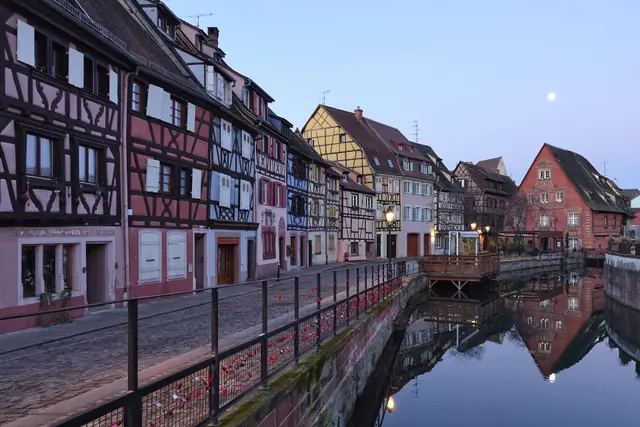
Give the museum a minimum of two hours if you only want the highlights, closer to three if you’re working through the new wing’s temporary exhibition as well. It sits directly on Place des Unterlinden, an easy walk from the canals of Petite Venise and the half-timbered houses of the old town, which makes it simple to fold into a single day on foot.
Remember the museum is closed on Tuesdays, a detail that catches visitors mid-week trip planning more than any other. If Tuesday is your only free day in Colmar, this has to shift to another slot, since the closure isn’t partial, it’s the full day.
Late afternoon, after the weekend crowds have thinned from their midday peak, is a reasonable fallback if a 9am start doesn’t fit your schedule. The light in the cloister changes noticeably by then, and the later hour tends to filter out the tour groups working strictly to a bus timetable.
Plan your trip to Colmar
France eSIM & staying connected →
Some links above are affiliate links — if you book through them, Wander Atlas earns a small commission at no extra cost to you. It's how we keep every guide free.