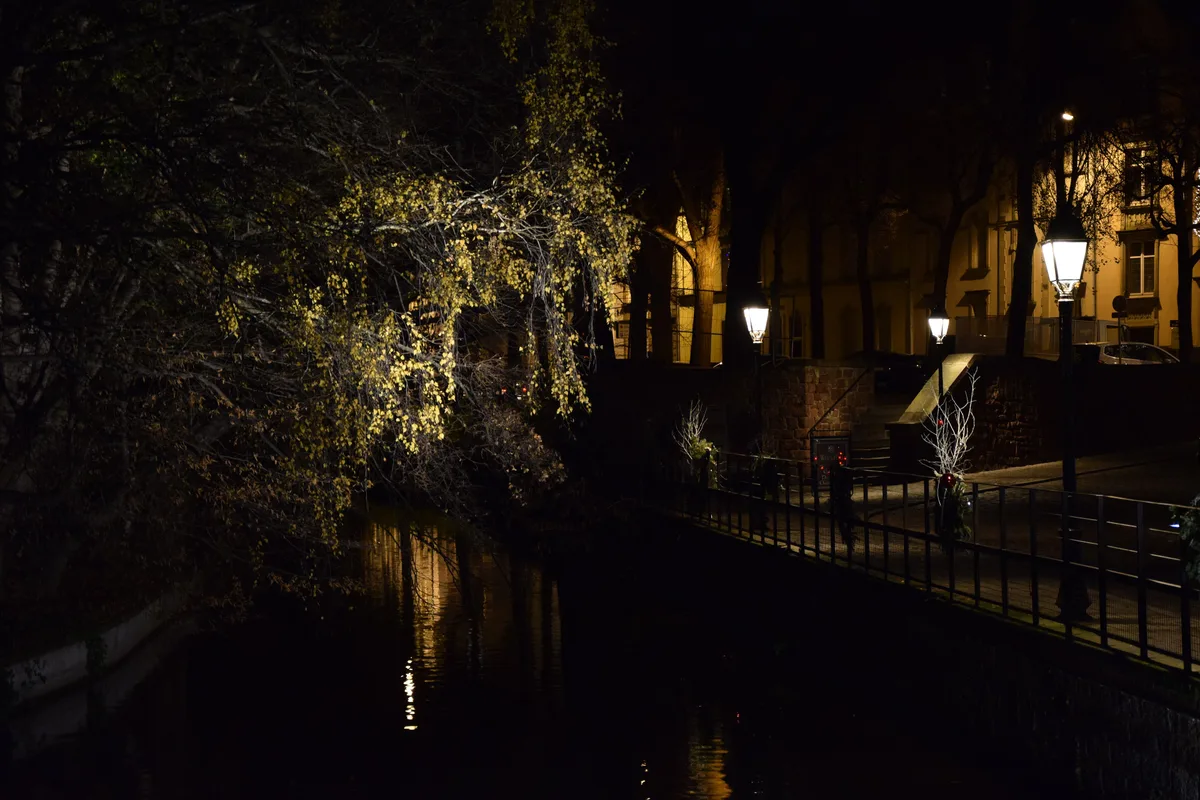
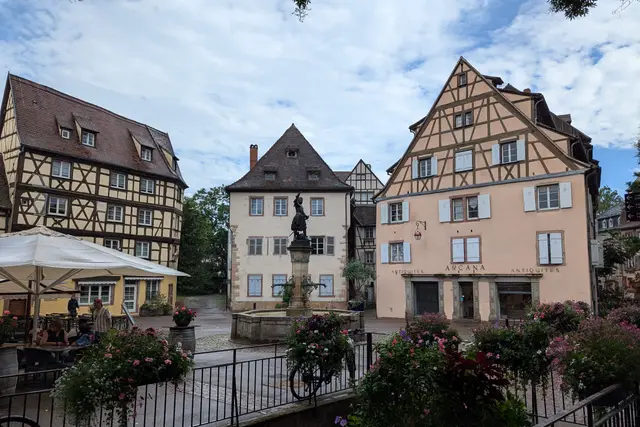
Colmar’s old town isn’t a single monument you tick off; it’s a district you wander through, block by block of half-timbered houses in ochre, pink and green, their upper floors leaning slightly into the street the way medieval construction always did when builders wanted to save on ground-floor tax space.
Rue des Tanneurs is a good anchor point. This was the tanners’ quarter, and the tall, narrow houses here have wide, open attics under steep roofs, originally built to hang and dry hides. Walk from there toward the water and you reach Petite Venise, the “Little Venice” stretch of the Lauch river lined with the same timber-frame facades, now reflected in the canal instead of hanging over a tannery yard.
Finding your way through the old town
Start at Place de l’Ancienne Douane, the old customs house square, and let the streets pull you toward the water rather than following a fixed route.
- Rue des Tanneurs for the tanners’ houses with their open drying attics
- Quai de la Poissonnerie, the former fishmongers’ street, for the most photographed row of canal-side houses
- Rue des Marchands for the Maison Pfister, a merchant’s house from 1537 with a wooden gallery and painted panels
- Petite Venise for a slow loop along the Lauch, either on foot or by flat-bottomed boat
None of this requires planning a route in advance. The old town is small enough that getting slightly lost costs you ten minutes, not an afternoon.
When the streets are calmest
This is one of the most visited corners of Alsace, and it earns that reputation, which also means it gets crowded. Coach groups tend to arrive mid-morning and cluster around Petite Venise and the Quai de la Poissonnerie through the early afternoon.
Coming right at opening, before the day-trip buses from Strasbourg and Basel arrive, generally means having the canal-side streets close to yourself. Late afternoon, once groups head back to their buses, is the other quiet window. Weekday mornings beat weekend ones by a wide margin, especially from June through August.
The boat ride, and when to skip it
Small flat-bottomed boats run short guided trips along the Lauch through Petite Venise, departing from a landing near Quai de la Poissonnerie. It’s a pleasant way to see the canal-facing sides of houses you can’t fully appreciate from the street, since many were built with the water, not the road, as their real front door.
Lines for the boats build fast once tour groups are in town, and on a hot afternoon the wait can outlast the ride itself. If you’d rather walk, the towpaths along both banks let you see almost the same views for free, just from a slightly different angle.
Eating and drinking without wasting the view
Restaurants directly on Quai de la Poissonnerie and around Petite Venise charge for the location as much as the food, which is fair enough given what you’re looking at while you eat. For a coffee or an early dinner, side streets one or two blocks back from the water tend to be quieter and less expensive, without losing much of the atmosphere.
Alsace tarte flambée (flammekueche) and choucroute are the dishes to look for on most menus here. Most sit-down places expect you to wait to be seated rather than take a table yourself, and card payment is standard practice throughout the old town.
Making the most of a short visit
Two to three hours covers the core streets at an unhurried pace; a full morning or afternoon lets you add the boat ride and a proper meal. The old town is pedestrian-heavy and mostly flat, paved in cobblestone, so comfortable shoes matter more than a fixed itinerary.
If you’re here in late November or December, the Christmas markets fill the same streets and squares, which makes for a striking scene but pushes crowd levels well above the summer daytime peak. Outside that season, early starts remain your best tool for having Colmar’s most photographed corners mostly to yourself.
Frequently asked questions
Where exactly is the old town and what's a good starting point?
It's centered around Rue des Tanneurs, 68000 Colmar, with Place de l'Ancienne Douane a convenient starting square before you head toward the Petite Venise canals.
How long should I plan to spend there?
Two to three hours covers the main streets; a half or full day lets you add the boat ride on the Lauch and a sit-down meal.
When is the best time to visit to avoid crowds?
Go right at opening in the morning or in the late afternoon, before or after the day-trip coach groups from Strasbourg and Basel; weekday mornings are quieter than weekends, especially in summer.
Is the boat ride on the canal worth it?
It's a nice way to see the water-facing sides of the houses, but queues get long once tour groups arrive; walking the towpaths gives similar views for free if you'd rather skip the wait.
Do I need a car to see the old town?
No, the entire district is compact and pedestrian-friendly with cobblestone streets, so it's best explored entirely on foot.
Plan your trip to Colmar
France eSIM & staying connected →
Some links above are affiliate links — if you book through them, Wander Atlas earns a small commission at no extra cost to you. It's how we keep every guide free.
Related guides
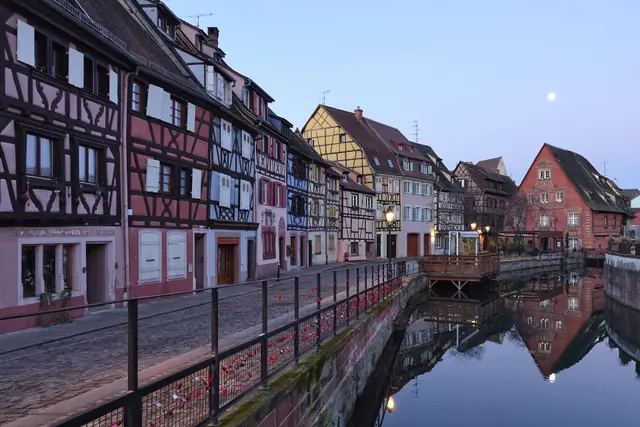 attraction
 La Petite Venise: Colmar Travel Guide (4.7★)
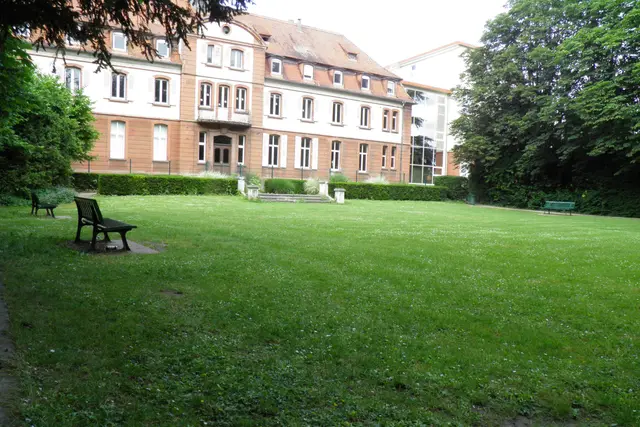 attraction
 Parc Saint François-Xavier: Colmar Travel Guide (4.5★)
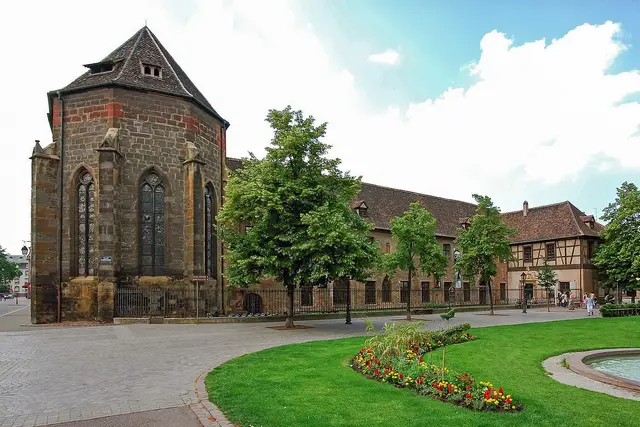 attraction
 Musée Unterlinden: Colmar Travel Guide (4.6★)
 hidden gem