
The Quieter Twin of Erdene Zuu
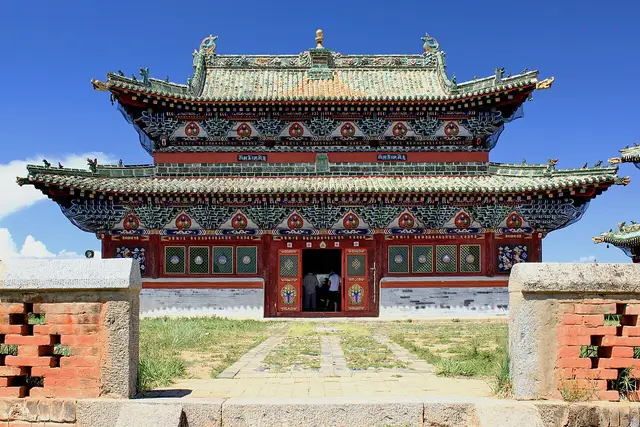
Most visitors to Kharkhorin never get this far. They spend a morning inside the 108-stupa wall of Erdene Zuu, then head north or west and miss the monastery that once matched it. Shankh stands in a small village south of town, where the steppe opens out toward Khujirt.
There are no tour-bus car parks and no rows of souvenir stalls. You get a walled compound, a working temple and a monastic community that is still rebuilding after the 20th century. It suits anyone who wants to see Mongolian Buddhism as a living practice rather than a museum exhibit.
The West Monastery and the Black Banner
This history is the reason to make the detour. Shankh was traditionally called Baruun Khüree, the West Monastery. That name paired it with Erdene Zuu, the eastern counterpart in old Karakorum.
Tradition credits its founding in the 1640s to Zanabazar. He was the first Jebtsundamba Khutughtu, Mongolia’s highest Buddhist figure and its best-known sculptor. The monastery is also said to have held Chinggis Khaan’s black sülde, the war banner believed to carry the spirit of the warrior khan. Treat that as revered tradition rather than documented fact. Locals still tell it with pride.
At its height Shankh was home to well over a thousand monks. Then came the Stalin-era purges of 1937. Mongolia’s communist government closed the monastery, arrested its lamas and tore down most of its buildings, as it did at hundreds of monasteries across the country.
Shankh reopened after the democratic changes of 1990. What you see today is a mix of surviving structure and restoration, and it is still very much a work in progress.
Inside the Compound
Expect something modest. The site centres on a main temple inside a perimeter wall, with open ground around it where the old monastic town once stood. Restoration has gone slowly, so some parts look finished and others are clearly still under repair.
Inside the temple you’ll find the standard fittings of Mongolian Gelug Buddhism:
- painted thangka scrolls and images of deities
- low benches where monks sit for chanting
- offerings left on the altar: butter lamps, bowls, folded khadag silk scarves
- prayer wheels, which visitors turn clockwise
The village is the point. Families drive in to light lamps, ask a lama for a blessing or have a text read for a sick relative. Arrive while prayers are going on and the deep, rhythmic chanting is the main event. Monasteries usually hold prayers in the morning, so an early stop gives you the best chance of catching them.
Getting South of Kharkhorin
Shankh lies on the road south from Kharkhorin toward Khujirt, about 25 km from town. Public transport is not something you can plan around. Nearly everyone comes with a private driver or as part of a tour from Kharkhorin or Ulaanbaatar.
If you already have a driver for the Orkhon Valley, ask them to stop here. Locals know it as Shankh Khiid (Шанх хийд). It costs you very little time on the way to the Khujirt area or back from it. Ulaanbaatar to Kharkhorin is a long day’s drive west, so most people base themselves in Kharkhorin for a night or two and fit Shankh into a half day.
Google lists no opening hours, and the temple can be locked when the monks are away. Ask your driver or guesthouse to check that someone will be there, or be ready to find the caretaker in the village.
Temple Manners at Shankh
This is a working place of worship in a small community. A few habits go a long way:
- Walk clockwise. Go around the temple, the stupas and the prayer wheels clockwise, the direction pilgrims follow.
- Step over the threshold, never on it. Treading on a doorframe is a long-standing Mongolian taboo, at temples and in gers alike.
- Ask before photographing inside. Many Mongolian temples restrict photos of the altar. A gesture at your camera, with a nod back, settles it.
- Hats off, and keep your feet down. Don’t point the soles of your feet at the altar or at monks when you sit.
- Leave something. There is usually a donation box. Small notes in Mongolian tögrög are normal, and the money goes toward the restoration you’re looking at.
- Keep your voice low during prayers. Visitors are welcome to sit quietly at the back while the monks chant.
If you’d like to make an offering the local way, bring a blue khadag scarf. Hold it in both hands and leave it at the altar.
Building a Day Around It
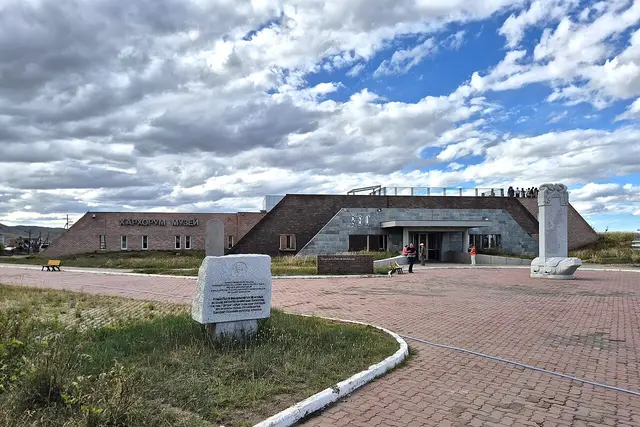
Shankh is a short stop, not a full outing, so pair it with other sights. For a sensible loop, spend the morning at Erdene Zuu Monastery and the Kharkhorin Museum. Then drive south to Shankh in the afternoon to see the other half of the old east–west pairing.
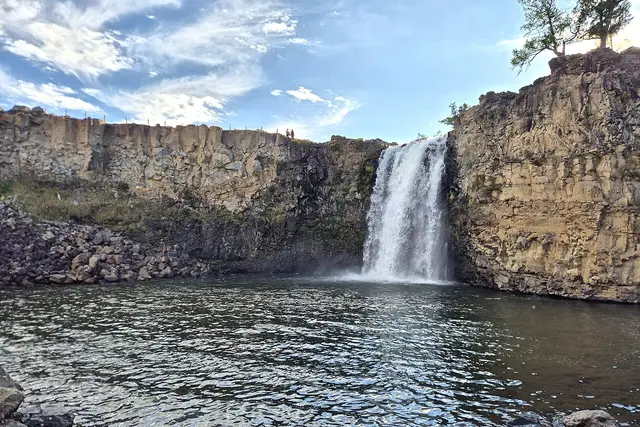
From Shankh, the Khujirt area is known for its hot springs. The wider Orkhon Valley Cultural Landscape, a UNESCO World Heritage Site, spreads out around Kharkhorin with its river meadows and nomad camps. Tövkhön Monastery, Zanabazar’s hilltop retreat, makes a longer trip into the Khangai foothills.
The best season runs from June to early September, when roads are firm and the steppe is green. Winter visits are possible, but Övörkhangai gets bitterly cold and village temples may keep shorter, less predictable hours.
Frequently asked questions
How far is Shankh Monastery from Kharkhorin?
About 25 km south, in Shankh village on the road toward Khujirt. Most visitors get there by private driver or as part of a tour, because there is no public transport you can rely on.
How long should I spend at Shankh Monastery?
30–60 minutes is enough for the temple and the grounds. Stay longer if prayers are going on and you'd like to sit quietly and listen.
What are the opening hours?
No official hours are published, and the temple can be locked when the monks are out. Ask your driver or Kharkhorin guesthouse to check before you go, or look for the caretaker in the village.
Why is Shankh Monastery significant?
Tradition says Zanabazar founded it in the 1640s as Baruun Khüree, the West Monastery, a partner to Erdene Zuu. It is also said to have held Chinggis Khaan's black banner. It was closed during the 1937 purges and reopened after 1990.
What else can I combine with a visit?
Erdene Zuu Monastery and the Kharkhorin Museum in town, the Khujirt area to the south, and the Orkhon Valley UNESCO landscape. Tövkhön Monastery is a good add-on if you have a longer day.
Plan your trip to Kharkhorin
Mongolia eSIM & staying connected →
Some links above are affiliate links — if you book through them, Wander Atlas earns a small commission at no extra cost to you. It's how we keep every guide free.
Related guides
 attraction
 Kharakhorum Museum: Kharkhorin Travel Guide (4.5★)
 attraction
 Erdene Zuu Monastery: Kharkhorin Travel Guide (4.5★)
 attraction
 Orkhon Waterfall: Kharkhorin Travel Guide (4.7★)
 attraction