A lighthouse for a city with no sea
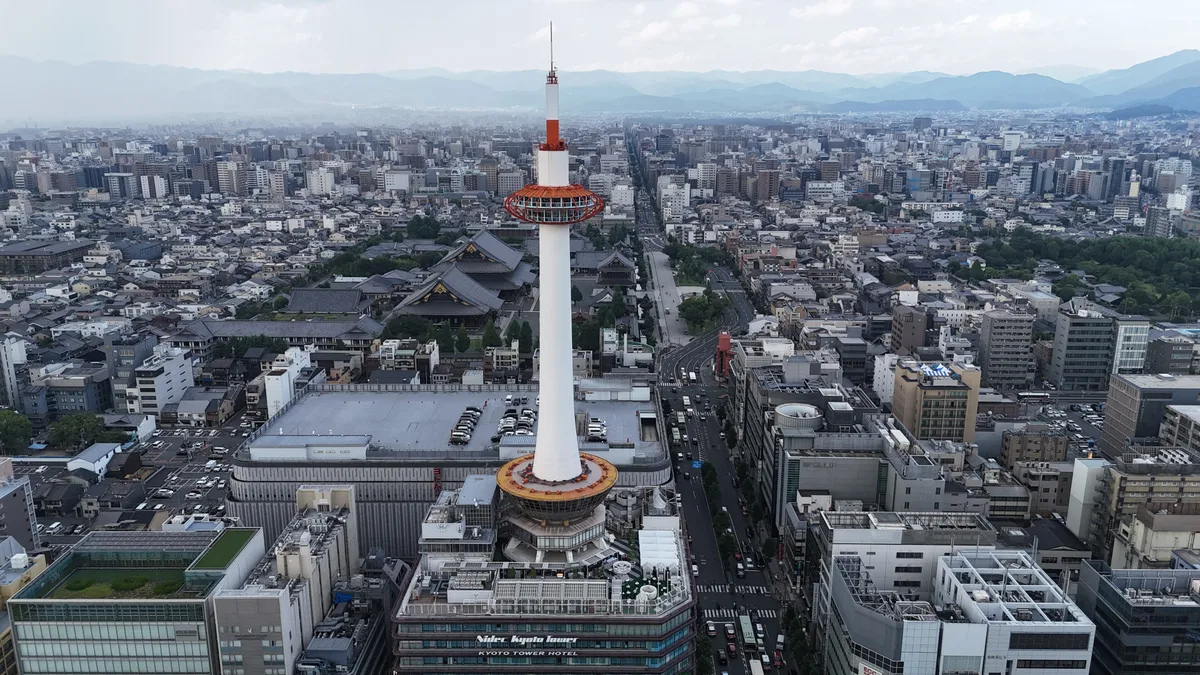
At first it looks out of place. A slim white cylinder rises from a boxy office-and-shop building, in a city better known for tiled temple roofs and wooden townhouses. Architect Mamoru Yamada designed it for 1964 as a lighthouse. Kyoto has no harbour, so the idea was a tower that lights up the old capital instead.
The structure is unusual too. There is no steel skeleton inside. The tower is a monocoque shell of welded steel plate rings that carries its own weight. At 131 metres to the tip, it is still the tallest structure in Kyoto.
It caused a row when it opened, because many people thought it spoiled the skyline. Decades later it is the first thing most rail travellers see when they come out of Kyoto Station. Its full name now carries the Nidec sponsorship, but on signs and in conversation it is mostly just Kyoto Tower, or Kyōto Tawā.
Straight out of Kyoto Station
You can hardly miss it. Leave Kyoto Station by the Karasuma Central Exit on the north side, and the tower is right in front of you across Shiokōji-dōri. The street address is 721-1 Higashishiokōjichō, Shimogyo Ward.
Every rail line into the station gets you here: JR trains, the Kintetsu line and the Karasuma subway line (Kyoto Station stop). The main city bus terminal sits on the plaza between the station and the tower. That makes this a natural first or last stop of any trip.
What you see from 100 metres
The deck is a ring of windows that goes all the way around. Binoculars and touch-screen guides along the glass name what you are looking at, which helps a lot in a city where temples blur into the hills. Take it slowly and walk the full circle.
Things to pick out:
- Higashi Hongan-ji, whose huge grey roofs fill the view just to the north
- Kyoto Station’s long glass-and-steel roof directly below you
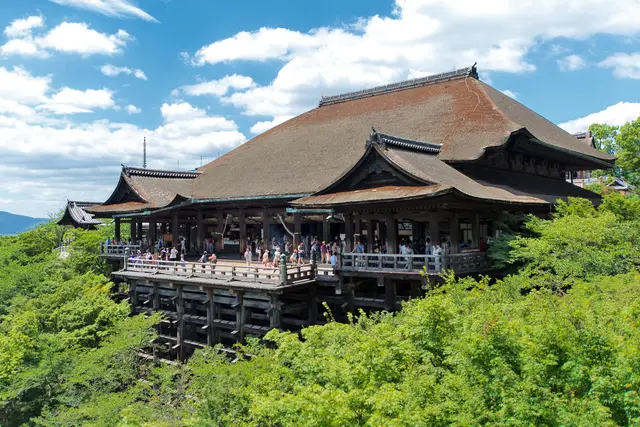
- Kiyomizu-dera on the wooded slopes of Higashiyama to the east
- Tō-ji’s five-storey pagoda to the southwest
- The street grid running north toward the mountains that close in the basin on three sides
That grid is the real lesson. From above you can see how Kyoto was laid out as a planned capital, with streets crossing at right angles and mountains on three sides. Once you have seen it, finding your way at street level gets easier.
Timing your ascent
Crowds here follow a clear pattern. It’s usually calmest from 10am to 12pm on weekdays and 10am to 11am at weekends. Weekend crowds usually build from 1pm to 8pm. Turn up then and you will likely queue for the lift and wait your turn at the best windows.
At the moment the tower opens 10am–9pm every day of the week. Observation decks change their hours with the season and around holidays, though, so check the official site for this month’s times and the last entry.
Sunset and the first hour of darkness are the most popular times. At night the street grid shows up in lines of lights, and the temple roofs turn into dark gaps between them. On a weekend, sunset falls inside the busy 1pm–8pm window. If dusk is what you want, a weekday evening is the better bet.
Tickets, lifts and the queue
This part works in a fairly predictable way.
- Buy at the counter inside the tower building. The current price is posted there and on the official site.
- Queue in single file for the lift. Staff send people up in batches, so you won’t need to push forward.
- Leave big suitcases in the coin lockers at Kyoto Station before you cross the road. The lift and the deck are not built for luggage.
- Don’t tip. Japan doesn’t have a tipping culture, and staff may try to give the money back.
- Look for event lighting. At night the tower itself is lit, and the colour sometimes changes for special occasions.
At the windows, regulars move around slowly and step aside after a few minutes of photos. If you want a long look in one direction, use the binoculars and leave the best glass free for others.
Below the deck
You don’t have to go straight back to the station. The tower building has a food court, which is handy if you have just arrived and want to eat before checking in.
Kyoto Station across the road has much more. Kyoto Ramen Kōji on the station building’s upper floor serves regional ramen styles from all over Japan. The station’s long stepped atrium also climbs to a rooftop terrace. It’s lower than the tower and the view is different, but you can see the tower itself, lit up, from there.
Fitting it into a Kyoto day
Allow 45–90 minutes in total, including the queue. The tower works best as orientation: go on arrival day and get a feel for the city’s layout before you head into the side streets.
Within walking distance:
- Higashi Hongan-ji, about five minutes north, with one of the largest wooden temple halls in the world
- Shōsei-en, the temple’s walled garden a little further east
- Nishi Hongan-ji, a UNESCO-listed temple a short walk northwest
- Tō-ji, whose pagoda you will have seen from the deck, a walk or short ride southwest
Going up early and then walking to Higashi Hongan-ji while the morning is still quiet makes an easy first half-day in Kyoto.
Frequently asked questions
How do I get to Nidec Kyoto Tower from Kyoto Station?
Leave by the Karasuma Central Exit on the north side of Kyoto Station. The tower is directly opposite, across Shiokōji-dōri, about a two-minute walk. It's also beside the main city bus terminal and the Karasuma subway line's Kyoto Station stop.
When is the quietest time to visit?
It's usually calmest from 10am to 12pm on weekdays and from 10am to 11am at weekends. Try to avoid weekend afternoons and evenings from 1pm to 8pm, when it's typically busiest.
Is it open in the evening?
At the moment it opens 10am–9pm every day, so evening visits are possible. Observation deck hours change with the season and around holidays, so check the official site for current times and last entry.
How long should I spend at Kyoto Tower?
Plan on 45–90 minutes including the lift queue. That gives you time to walk the whole deck, use the binoculars and touch-screen guides, and pick out landmarks like Higashi Hongan-ji, Kiyomizu-dera and Tō-ji.
What is near Kyoto Tower?
Higashi Hongan-ji is about five minutes' walk north, and its Shōsei-en garden is a little further east. Nishi Hongan-ji and Tō-ji are also close by. Across the road, Kyoto Station has Kyoto Ramen Kōji and a rooftop terrace with a free, lower view.
Plan your trip to Kyoto
Japan eSIM & staying connected →
Some links above are affiliate links — if you book through them, Wander Atlas earns a small commission at no extra cost to you. It's how we keep every guide free.