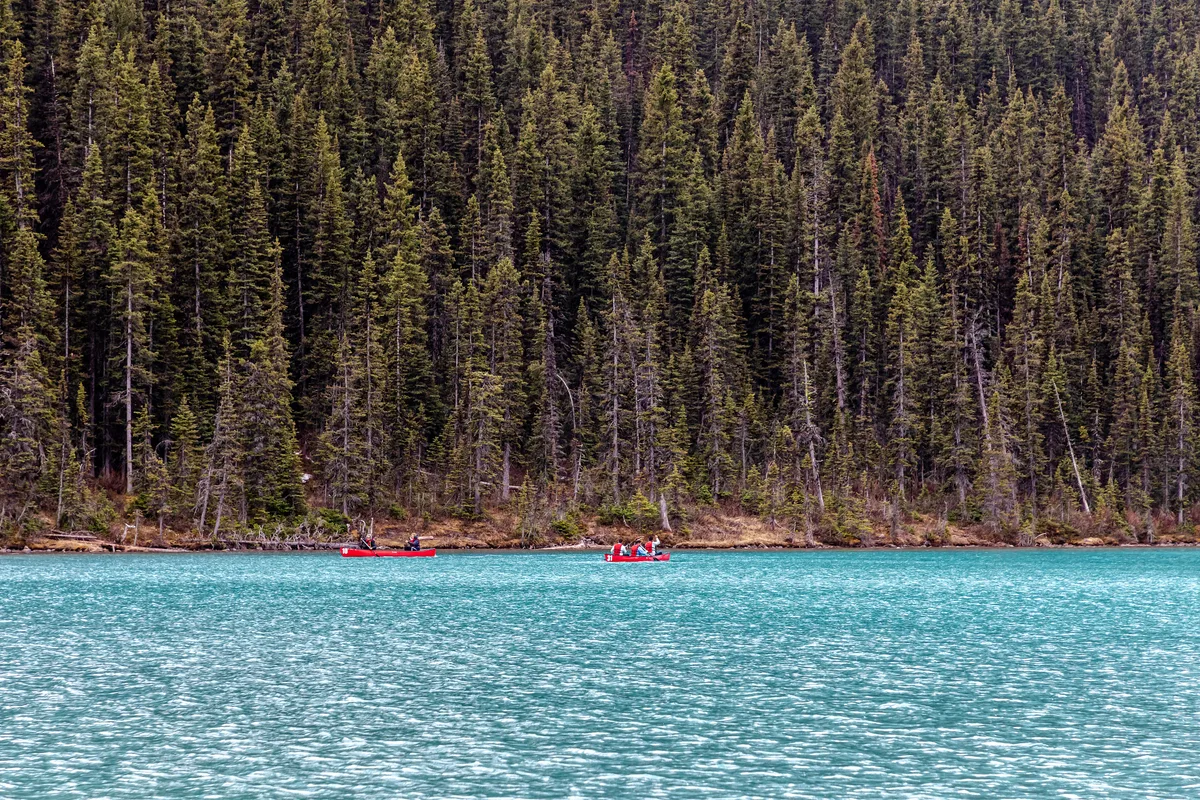
Standing at the water’s edge
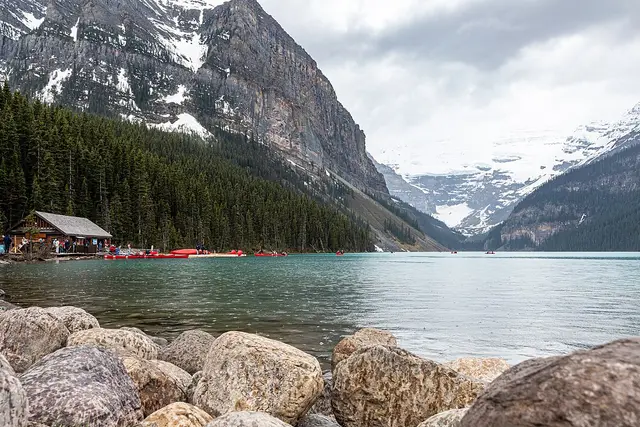
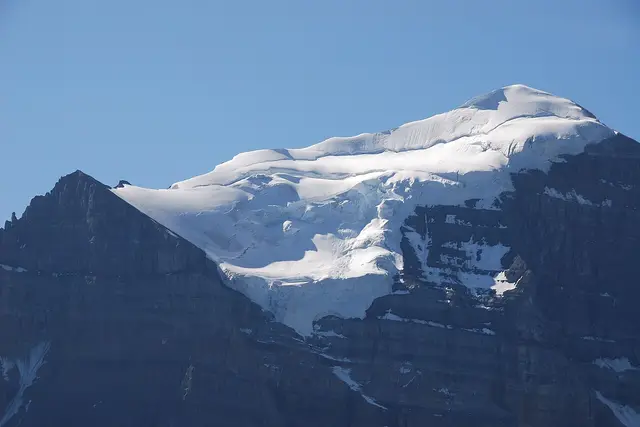
At the lake, the trees stop and the ground flattens into a strip of shoreline. Beyond it is water the colour of a swimming pool painted by someone who had never seen one. Mount Victoria fills the far end, with the Victoria Glacier draped across its shoulder. The Fairmont Chateau Lake Louise stands behind you, so close that its lawns run down to the path.
The lake is about 2.4 km long and sits at roughly 1,750 m. The colour comes from rock flour: glacial meltwater carries finely ground silt that hangs in the water and reflects blue-green light. It is a geology lesson you can photograph. Most people stay right here on the rocks by the boathouse, and that is the main reason the lakeshore gets so packed.
Getting to the lakeshore
Lake Louise sits just off the Trans-Canada Highway (Highway 1), about 57 km west of Banff town and roughly two hours’ drive from Calgary. The hamlet of Lake Louise, with its small shopping centre and gas station, is down in the Bow Valley. The lake itself is about 4 km uphill from there.
Before you go, sort out:
- A park pass. Everyone entering Banff National Park needs a Parks Canada pass. Prices are posted on the Parks Canada site and at the park gates.
- Parking. The lakeshore lot is paid and often full early in summer. The current rate is posted at the lot and online.
- The shuttle. Parks Canada runs a Park and Ride service to the lake in summer. Seats are reserved online, and it saves you from circling the lot.
Tea above the lake: Lake Agnes and the Six Glaciers
Lake Louise has a ritual of its own: hiking uphill for a pot of tea. Two historic tea houses sit on trails that start from the lakeshore, and for many visitors they’re the reason to come.
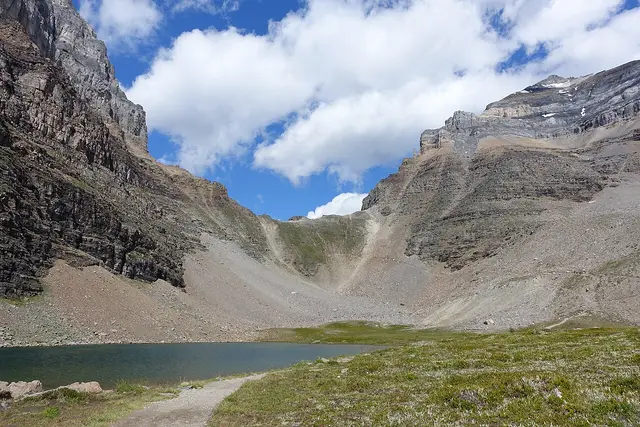
The Lake Agnes Tea House is about 3.5 km from the shore, with around 400 m of climbing on switchbacks through spruce forest. You pass the small Mirror Lake on the way. The log tea house overlooks Lake Agnes, a cold tarn tucked into a cirque, and it gets busy around midday in summer. Above it, the Big Beehive viewpoint looks straight down onto Lake Louise.
The Plain of Six Glaciers Tea House is a longer, flatter walk along the lakeshore and up the valley toward the Victoria Glacier. The trail ends beside moraines, and avalanches off the ice are often heard here in early summer. Allow a full half-day for either hike. The tea houses keep seasonal opening times, so check before you count on lunch up there.

When the turquoise shows up
The famous colour depends on the season. The lake usually stays frozen from around November into late May or June. Even in early summer you may find ice slabs at the far end instead of open water. The deepest turquoise tends to come from July into September, when glacial melt is at its strongest.
Winter is a different place entirely. The lake freezes hard enough for skating near the Chateau, and cross-country trails run along the shore. Lake Louise Ski Resort is across the valley. Snow can close higher trails well into summer, so check Parks Canada trail reports before you go.
Timing the shoreline and the car park
This is one of the busiest viewpoints in the Canadian Rockies, and the crowd follows a pattern. On weekends, try not to arrive 7am–8am, 9am–10am, 11am–12pm, 2pm–6pm or 9pm–11pm. Those are the usual busy windows, so a “beat the crowds” sunrise trip is not empty on a Saturday. The calmest weekend stretch is typically 7pm–9pm, when tour coaches have gone and the evening light hits the glacier.
Some habits that help on the ground:
- Walk five minutes. The flat lakeshore trail to the far end of the lake thins the crowd almost immediately.
- Book the shuttle, don’t gamble on the lot. Lot attendants turn cars away once it is full.
- Carry bear spray and know how to use it. Grizzlies and black bears use the trails around the lake, and some trails carry seasonal group-hiking restrictions.
- Tip as Canadians do. At the Chateau’s restaurants and cafés, 15–20% on table service is standard, and cards are accepted almost everywhere.
- Leave wildlife alone. Feeding animals, including the bold ground squirrels on the Lake Agnes trail, is prohibited in national parks.
Canoes, the Chateau and what’s on the shore
The boathouse at the lakeshore rents the red canoes you have seen in every photo of the lake. It works on a walk-up basis in summer, and the line forms quickly on fine days. Rates are posted at the boathouse. The water is glacier-cold, so wear something warm even on a hot afternoon.
The Chateau’s lakeside grounds and paths are open to everyone, not just hotel guests. Its lobby has cafés and restaurants if you want a coffee with a view of the glacier. For a quieter meal, the hamlet down in the valley has more casual options.
Beyond Lake Louise
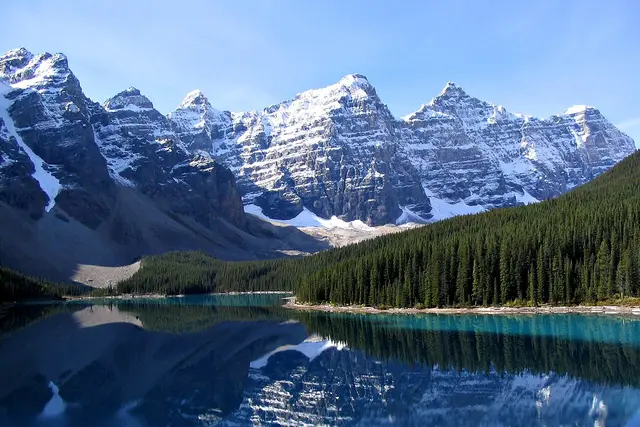
The lake is one stop on a much bigger map. Moraine Lake, in the Valley of the Ten Peaks, is about 14 km away by road. Access to Moraine Lake Road has changed in recent seasons, so check Parks Canada for current shuttle and vehicle rules before you plan to drive it.
In summer, the Lake Louise Gondola on the ski hill gives you a wide view back across the valley to the lake and the Victoria Glacier. Just north of the lake, the Icefields Parkway (Highway 93 North) begins its run toward Jasper. It passes Bow Lake and Peyto Lake within the first hour.
Frequently asked questions
When is the quietest time to visit Lake Louise?
On weekends the quietest window is typically 7pm–9pm. Avoid 7am–8am, 9am–10am, 11am–12pm, 2pm–6pm and 9pm–11pm, which are usually the busiest weekend periods.
How do I get to Lake Louise from Banff or Calgary?
Take the Trans-Canada Highway (Highway 1). The lake is about 57 km west of Banff town and roughly two hours' drive from Calgary. In summer, the Parks Canada Park and Ride shuttle is the most reliable way to get to the lakeshore, because the lot fills early.
When is Lake Louise turquoise rather than frozen?
The lake is usually frozen from around November into late May or June. The strongest turquoise colour typically shows from July to September, when glacial meltwater carries the most rock flour.
How long should I spend at Lake Louise?
An hour covers the shoreline and the lakeshore walk. Allow a half-day to hike to the Lake Agnes Tea House or the Plain of Six Glaciers, and a full day if you add Moraine Lake or the gondola.
Do I need a pass to visit Lake Louise?
Yes. Lake Louise is inside Banff National Park, so every visitor needs a Parks Canada pass, and the lakeshore parking lot charges separately. Current prices are posted on the Parks Canada website and at the park gates.
Plan your trip to Lake Louise
Canada eSIM & staying connected →
Some links above are affiliate links — if you book through them, Wander Atlas earns a small commission at no extra cost to you. It's how we keep every guide free.