Motegi’s grandstands back onto cedar-covered hills, and a disused concrete oval loops around much of the road course. Engines echo between the trees for three days. In 2026 the MotoGP World Championship comes here on October 2-4, and the round opens the Asia-Pacific leg of the season.
The weekend at a glance
Three days, three different moods. Friday is practice, and the stands are thin enough to wander between viewing points. Saturday brings qualifying and the Sprint, a half-distance race that turns the afternoon into a proper contest. Sunday is the Grand Prix itself.
Moto2 and Moto3 share the bill on all three days. Their races fill the gaps between MotoGP sessions, so the track is rarely quiet for long. Most fans who travel from abroad commit to at least Saturday and Sunday. Two days is the minimum to see the Sprint and the main race.
A circuit built by Honda
The venue opened in 1997 as Twin Ring Motegi. The name came from its two layouts: a 4.8 km road course and a Japanese copy of an American speedway oval. Honda built it, and Honda’s leisure arm still runs it. In 2022 it was renamed Mobility Resort Motegi.
The oval hosted CART and later IndyCar races. It was damaged in the 2011 Tōhoku earthquake and is no longer raced on. The banking is still there, and the road course runs beneath it on the back straight. That makes this the home race for Honda and Yamaha, and you see it in the paddock merchandise and in the flags in the stands.
The 90-degree corner and the brake zones
Riders think of Motegi as a stop-start track. It is short on long sweepers and full of hard stops into slow corners, and it is known as one of the toughest circuits on the calendar for brakes. For spectators, that means the overtaking happens in the braking zones.
The most famous of them is at the end of the back straight. Bikes come out from under the oval bridge at top speed and drop downhill. Then they brake for the tight right-hander everyone calls the 90-degree corner. Late lunges, run-wide moments and the occasional crash all happen here, which is why the grandstands there fill so heavily on Sunday.
Elsewhere, the main straight seats give you the start, the pit lane and the podium. Seats around the middle of the lap look onto the S-curves and the V-corner, where you can follow a bike through several direction changes in one look.
Getting to a track with no station
Motegi is a farming town, and the circuit sits in the hills outside it. No train runs to the gate. Fans arrive in three main ways:
- By Shinkansen and bus: Take the Tōhoku Shinkansen from Tokyo to Utsunomiya, then a bus to the circuit. Extra buses usually run on race weekends.
- Via Mito: Take the JR Jōban Line to Mito, then a bus. This works best if you are coming from the Ibaraki coast.
- By car: The Kita-Kantō Expressway brings you closest, and the circuit has large car parks. The last few kilometres are two-lane country roads, and on Sunday evening the traffic leaving the track is the slowest part of the trip.
Motegi Station, on the small Mooka Railway, is the town’s own station. It is not walking distance from the circuit. It is mainly worth a visit for the SL Mooka steam train that runs on the line.
Where the crowd sleeps
Rooms near the circuit are scarce. The Hotel Twin Ring sits inside the grounds and is the most convenient bed of the weekend. It is also the hardest to get. The circuit’s Hello Woods forest area adds a nature-park side to the site.
Most international visitors stay in Utsunomiya, a city with plenty of business hotels around the Shinkansen station. It is also the city that made its name on gyoza. Mito is the other base. Some fans stay in Tokyo and do long day trips, which is possible but makes for very early mornings and late returns.
Finding your feet in the stands
Japanese race crowds have their own habits, and fitting in is easy:
- Rubbish goes home with you. Bins are few and are split by type. Fans pack small bags and carry their empty cans and wrappers out.
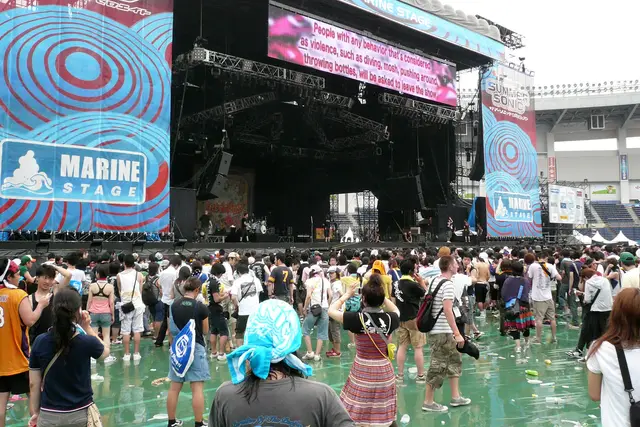
- Cheering is organised. Fans of Honda, Yamaha and the Japanese riders wave team flags and towels in unison. Nobody minds if you join in for a rival.
- Cash still matters. Card and IC-card payment is common, but some food stalls and smaller vendors prefer yen notes. Convenience stores in Motegi town and Utsunomiya have ATMs that take foreign cards.
- Bus queues are orderly. After the race, people line up in marked lanes and board in turn. Pushing ahead is noticed.
- Chairs and tarps: In general admission areas, fans spread ground sheets and take their shoes off before stepping on someone else’s.
Autumn weather in the hills of northern Kantō changes quickly. Rain and fog have disrupted sessions here in recent years: qualifying was delayed in 2022, and the 2023 race was stopped early for heavy rain. Regulars pack a rain poncho rather than an umbrella, since umbrellas block the view of the people behind.
Beyond the paddock
The Honda Collection Hall, inside the circuit grounds, earns time of its own. It holds Honda’s racing motorcycles and cars, including the Grand Prix machines that won world titles, alongside road bikes and production cars. On a race weekend it is the natural place to go between sessions.
Mashiko, a short drive away, is a pottery town famous for Mashiko-yaki stoneware, with kilns and shops along its main street. Fans with a spare day often add Nikko, the shrine town in the mountains of western Tochigi. It is an easy trip from Utsunomiya by JR or Tōbu train.
Frequently asked questions
When is the 2026 MotoGP Japanese Grand Prix?
It runs October 2-4, 2026 at Mobility Resort Motegi in Tochigi Prefecture. Friday is practice, Saturday has qualifying and the Sprint, and the Grand Prix is on Sunday. Moto2 and Moto3 race on the same weekend.
How do I get to Mobility Resort Motegi from Tokyo?
No train runs to the circuit. Most people take the Tōhoku Shinkansen to Utsunomiya and then a bus, or the JR Jōban Line to Mito and then a bus. Extra buses usually run on race weekends. By car, the Kita-Kantō Expressway is the closest route, and the circuit has large car parks.
Where is the best place to watch at Motegi?
The 90-degree corner at the end of the downhill back straight is the main overtaking spot and the most popular viewing area. Seats on the main straight cover the start, the pit lane and the podium. The S-curves and the V-corner let you watch bikes change direction.
Where do fans usually stay?
The Hotel Twin Ring is inside the circuit grounds but has very few rooms. Most visitors stay in Utsunomiya, which has many business hotels near its Shinkansen station. Mito is the other common base.
What else is there to see near the circuit?
The Honda Collection Hall in the circuit grounds displays Honda's racing and road machines. Mashiko, a pottery town, is a short drive away. Nikko's shrines are an easy rail trip from Utsunomiya.
Plan your trip to Motegi
Japan eSIM & staying connected →
Some links above are affiliate links — if you book through them, Wander Atlas earns a small commission at no extra cost to you. It's how we keep every guide free.