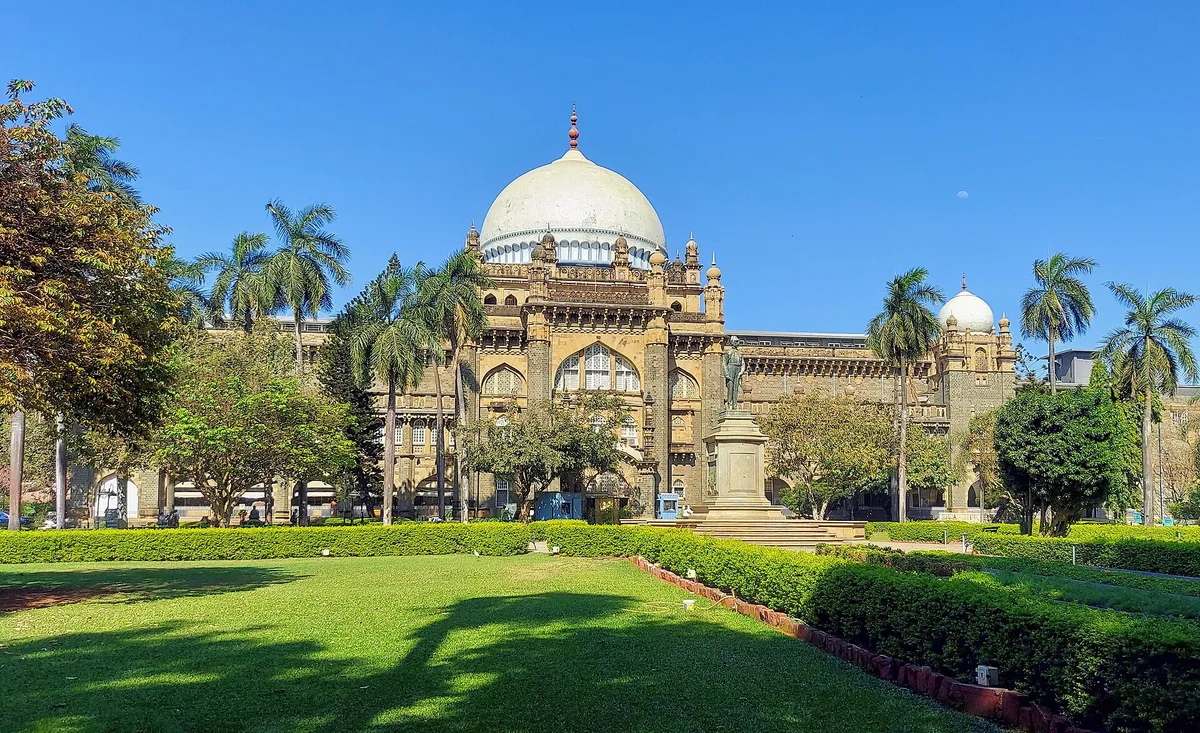
You spot the museum before you reach it, a honey-coloured dome rising above the palm trees and monsoon-stained stone of Fort, looking more like a maharaja’s palace than a repository of pottery shards and miniature paintings. That’s deliberate. The building was designed in the early 1900s in the Indo-Saracenic style, stitching together Mughal arches, Rajput turrets, and British civic grandeur into one confident, slightly showy structure.
Walk the perimeter first, before you even buy a ticket, and you’ll notice how the corner towers, jaali screens, and the central dome all quote different regional traditions at once. It’s practically a lecture on colonial-era architectural politics before you’ve seen a single artifact.
Getting there
The museum sits on Mahatma Gandhi Road near Lion Gate in Fort, South Mumbai’s old commercial and administrative core. Chhatrapati Shivaji Terminus (CST) station, on both the Central Line suburban rail and the heritage-listed main terminus building, is about a 10-minute walk away. If you’re coming by road, the Gateway of India and Colaba Causeway are both within easy walking distance afterward, making this a natural mid-morning stop on a Fort/Colaba heritage walk that might also take in the Asiatic Society Library and Kala Ghoda’s art precinct.
What’s inside
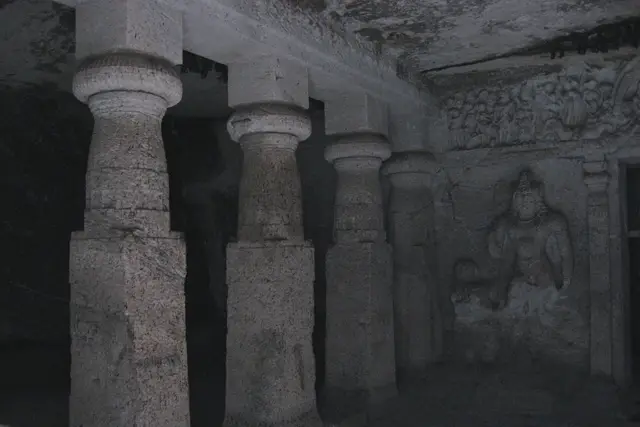
The collection is organized loosely by theme across three sections: art (miniature paintings, Company School works, textiles, decorative arts), archaeology (stone and bronze sculpture spanning centuries, including notable Gandhara-era pieces), and natural history (a somewhat old-fashioned but atmospheric gallery of taxidermy and dioramas). The sculpture galleries on the ground floor are the strongest reason to visit, carved figures and temple fragments arranged so you can walk around them, catching the way the light from the tall windows changes the shadows across the stone.
Upstairs, the miniature painting rooms reward slow looking: these are small-format works meant to be studied inches from the glass, not glanced at from across a room. Budget 1.5 to 2 hours if you’re selective, closer to 2.5 if you want to read the wall text in each wing.

Why it draws crowds
With a 4.6 rating across nearly 40,000 reviews, this is firmly one of Mumbai’s headline cultural sites, not an under-the-radar stop. Expect school groups, international tour parties, and weekend family outings sharing the galleries with you. That popularity is earned: the combination of architecture, collection depth, and central location makes it a natural first- or second-day stop for visitors to the city. Don’t expect solitude here, but do expect the scale and quality to justify the footfall.
When to go
Mornings, right after opening, are consistently calmer than afternoons, when tour buses from hotels along Marine Drive and Colaba tend to arrive in clusters. Weekdays are quieter than weekends. Mumbai’s cooler months, November through February, make the walk over from CST and the unshaded courtyard outside far more pleasant than the humidity of April through June or the heavy rain of July and August.
How to visit like a local
Buy your ticket at the counter rather than lingering at the entrance gate, queues build fast once a tour bus unloads, so arriving within the first hour of opening is the single best way to avoid a scrum at the ticket window and in the first gallery. Locals and regular visitors generally pay by card or UPI at the counter rather than carrying large cash sums, though it’s sensible to have some small notes for the cloakroom, where bags and large backpacks usually need to be checked before you enter.
Photography rules and camera fees have shifted over the years, so ask at the desk rather than assuming; the same goes for admission prices, which you should confirm on the day rather than trust to an old blog post. The most common visitor mistake is treating this as a quick 20-minute photo-op because of the exterior. The real value is in the sculpture and miniature painting galleries, which need unhurried time to register.
If you only have energy for one wing, prioritize the ground-floor sculpture court over the natural history section, which is the weakest part of the collection. Pair the visit with the Kala Ghoda art district a few minutes’ walk north, where several smaller galleries make a natural, low-crowd follow-on after the museum’s grander halls.
Frequently asked questions
How do I get to the museum by train?
Take a suburban local or long-distance train to Chhatrapati Shivaji Terminus (CST) on the Central Line, then walk about 10 minutes south along Mahatma Gandhi Road to Lion Gate in Fort.
How much time should I set aside?
Plan on 1.5 to 2.5 hours: enough to cover the ground-floor sculpture galleries and the upstairs miniature painting rooms without rushing.
When is the least crowded time to visit?
Weekday mornings shortly after opening are calmest; afternoons and weekends see heavier footfall from tour groups and families, given this is one of Mumbai's most-visited museums.
What does it cost to enter?
Ticket prices are revised periodically, so check the official rate at the counter or the museum's current listings before you go rather than relying on older sources.
What else is nearby?
The Gateway of India, Colaba Causeway, and the Kala Ghoda art district are all within easy walking distance, making this museum a good anchor for a half-day South Mumbai heritage walk.
Plan your trip to Mumbai
India eSIM & staying connected →
Some links above are affiliate links — if you book through them, Wander Atlas earns a small commission at no extra cost to you. It's how we keep every guide free.