Leopold Cafe: Mumbai Travel Guide (4.2★)
✓ Facts verified via Google Places · Sep 14, 2026
At a glance
Opening hours
- Monday: 7:30 AM – 12:30 AM
- Tuesday: 7:30 AM – 12:30 AM
- Wednesday: 7:30 AM – 12:30 AM
- Thursday: 7:30 AM – 12:30 AM
- Friday: 7:30 AM – 12:30 AM
- Saturday: 7:30 AM – 12:30 AM
- Sunday: 7:30 AM – 12:30 AM
Live foot-traffic data via BestTime.app
How this guide is made
Produced with AI assistance and reviewed against live data sources. Facts such as hours, ratings, and location come from Google Places; images are licensed or public domain. Details can change — please verify before visiting. Editorial policy
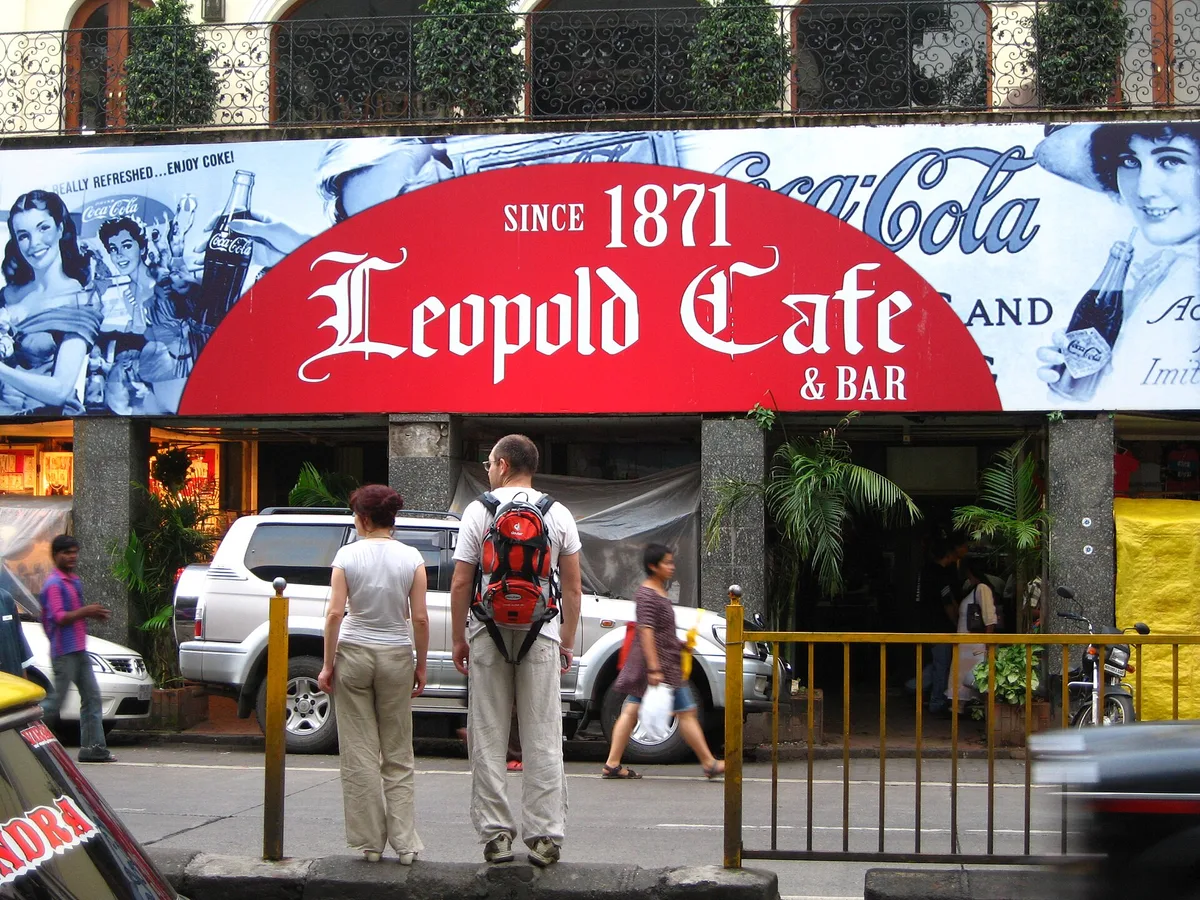
You smell Leopold Cafe before you fully clock its sign (toasted bread, frying batter, the sweetish tang of Kingfisher on tap) drifting out onto Colaba Causeway where taxi horns and tailors touting “good price, sir” compete for your attention. Push through the door and the street noise drops half a register. Inside it’s high-ceilinged and cavernous, all wood-paneled booths, ceiling fans turning lazily overhead, and mirrors that have watched three generations of Mumbai regulars, backpackers, and off-duty sailors argue over the check.
Why it’s worth the stop
Leopold has been pouring drinks since 1871, which makes it older than most nations currently sending it tourists. The menu is a time capsule of colonial-era Bombay cosmopolitanism: Continental grills sit next to Chinese-style chili chicken and Parsi-inflected Indian classics, and the bar pours everything from fresh lime soda to whisky and cocktails. It’s not subtle and it’s not trying to be. It’s a working cafe that happens to be historic, not a museum piece.
Bullet-hole scars in the wall and a small plaque are quiet reminders of the 2008 terror attacks, which Leopold survived and reopened from within days, and that resilience is part of why Mumbaikars still hold it in real affection alongside the tourist crowds.
Getting there
Leopold sits on Shahid Bhagat Singh Road right on Colaba Causeway, a five-minute walk from the Gateway of India and the Taj Mahal Palace hotel, and an easy stroll from the Prince of Wales Museum (CSMVS). If you’re coming by train, Churchgate and CST (Chhatrapati Shivaji Maharaj Terminus) stations are both roughly a 15–20 minute taxi or auto ride away, Colaba itself has no train station of its own.
Most visitors fold it into a Colaba walking loop: Gateway of India, Colaba Causeway’s market stalls, then Leopold for a break.
What to order
Come hungry for the classics: the mutton or chicken cutlets, the club sandwich, chili chicken or chicken Manchurian if you want the Chinese-Indian side, and butter chicken with rumali roti if you want the Indian side. Breakfast runs to omelettes and toast, and the bar list covers cold beer, cocktails, and fresh juices. Expect mid-range to slightly above-average Mumbai prices given the location and history, not a budget dive. Portions are generous enough to share, which is exactly what the long communal-feeling tables encourage.
When to go
Leopold opens at 7:30am and stays open until 12:30am, every day of the week (that long window is part of its charm, working equally as a breakfast counter, a lunch stop, and a late-night bar. If you want to actually get a seat without hovering near the door, aim for the 7:30am–12pm stretch, on a weekday or weekend) that’s the quiet patch before the crowds build.
Weekends turn heavy from 3pm through 11pm, when tour groups, date-night couples, and the after-dinner bar crowd all stack up at once; if you’re set on an evening visit, arrive right at the start of that window or expect a wait.
How to visit like a local
Leopold is firmly on the tourist trail now (it’s one of the most-visited cafes in the city, not a hidden find), so the real local move is timing, not secrecy. Regulars who want a relaxed sit go early, order breakfast or a mid-morning coffee, and leave before the lunch rush builds. Payment is overwhelmingly by card or UPI mobile payment these days, though cash still works fine; a modest rounding-up or small tip left on the table is standard, not a fixed percentage.
There’s no real reservation system for casual visits, you queue at the door during peak hours and are seated as tables free up, so a party of two moves faster than a party of six. The etiquette mistake most first-timers make is treating it purely as a photo-op tied to the 2008 attacks; locals see it first as a functioning, century-and-a-half-old cafe, so read the small memorial plaque respectfully, then settle in and order like everyone else. Say “Leopold” and any cab or auto driver in South Mumbai knows exactly where to drop you.
Frequently asked questions
How do I get to Leopold Cafe from Mumbai's train stations?
It's about a 15–20 minute taxi or auto-rickshaw ride from both Churchgate and CST stations, since Colaba itself isn't on the suburban rail network. It's a short walk from the Gateway of India and Taj Mahal Palace hotel.
When is the quietest time to visit?
Between 7:30am and 12pm, whether on a weekday or weekend, based on measured foot-traffic patterns. Avoid weekend afternoons and evenings, roughly 3pm to 11pm, when it's consistently busiest.
How much time should I plan for a visit?
Budget 45–90 minutes for a meal or drinks. It works well as a breakfast stop, a lunch break mid-sightseeing, or a longer evening sit with cocktails.
What's nearby that I can combine with a visit?
The Gateway of India, the Taj Mahal Palace hotel, the CSMVS (Prince of Wales) Museum, and the shops and market stalls along Colaba Causeway are all within a five- to ten-minute walk.
Is Leopold Cafe expensive?
It sits in the mid-range to slightly pricier bracket for Mumbai dining, reflecting its location and history rather than being a budget eatery — expect to pay more than at a local dhaba but less than at a five-star hotel restaurant.
Plan your trip to Mumbai
Some links above are affiliate links — if you book through them, Wander Atlas earns a small commission at no extra cost to you. It's how we keep every guide free.
Related guides

More Mumbai guides: Paradox Museum 1.5 kmHanging Garden 4.7 kmJogeshwari Caves 24 kmKanheri Caves 33 kmAmmakai