Kanheri Caves: Mumbai Travel Guide
✓ Facts verified via Google Places · Sep 14, 2026
At a glance
Opening hours
- Monday: Closed
- Tuesday: 8:00 AM – 5:30 PM
- Wednesday: 8:00 AM – 5:30 PM
- Thursday: 8:00 AM – 5:30 PM
- Friday: 8:00 AM – 5:30 PM
- Saturday: 8:00 AM – 5:30 PM
- Sunday: 8:00 AM – 5:30 PM
Live foot-traffic data via BestTime.app
How this guide is made
Produced with AI assistance and reviewed against live data sources. Facts such as hours, ratings, and location come from Google Places; images are licensed or public domain. Details can change — please verify before visiting. Editorial policy
Why go
You come around a bend in the park road and the traffic noise of Mumbai simply stops. In its place: teak and mango trees, the whoop of langurs somewhere up in the canopy, and then, rising out of a basalt hillside, dozens of dark doorways cut straight into the rock. Kanheri isn’t one cave. It’s a small monastic city, more than a hundred chambers carved between roughly the 1st century BCE and the 10th century CE, when Buddhist monks used this hill as a retreat and teaching centre on the old trade route between the coast and the Deccan plateau.
Stone benches, water cisterns, and sleeping cells are still visible, along with worn reliefs of the Buddha and bodhisattvas and faint traces of painted plaster on a few ceilings. The scale is what stays with you, you keep climbing and there’s another courtyard, another chapel, another row of cells cut into the cliff.
Getting there
Kanheri sits well inside Sanjay Gandhi National Park (formerly Borivali National Park), and reaching the caves is its own small expedition. The easiest route for most visitors is the suburban train to Borivali station on the Western Line, then an auto-rickshaw or the park’s own shuttle bus to the entrance gate, followed by another shuttle or a roughly 6-kilometre walk/drive from the gate to the caves themselves.
If you’re coming from South Mumbai or Bandra, allow at least an hour each way given traffic. Many visitors also arrive by taxi or app-cab directly to the park’s main gate on the Western Express Highway. Pack water and snacks, options thin out fast once you’re inside the forest.
What to see
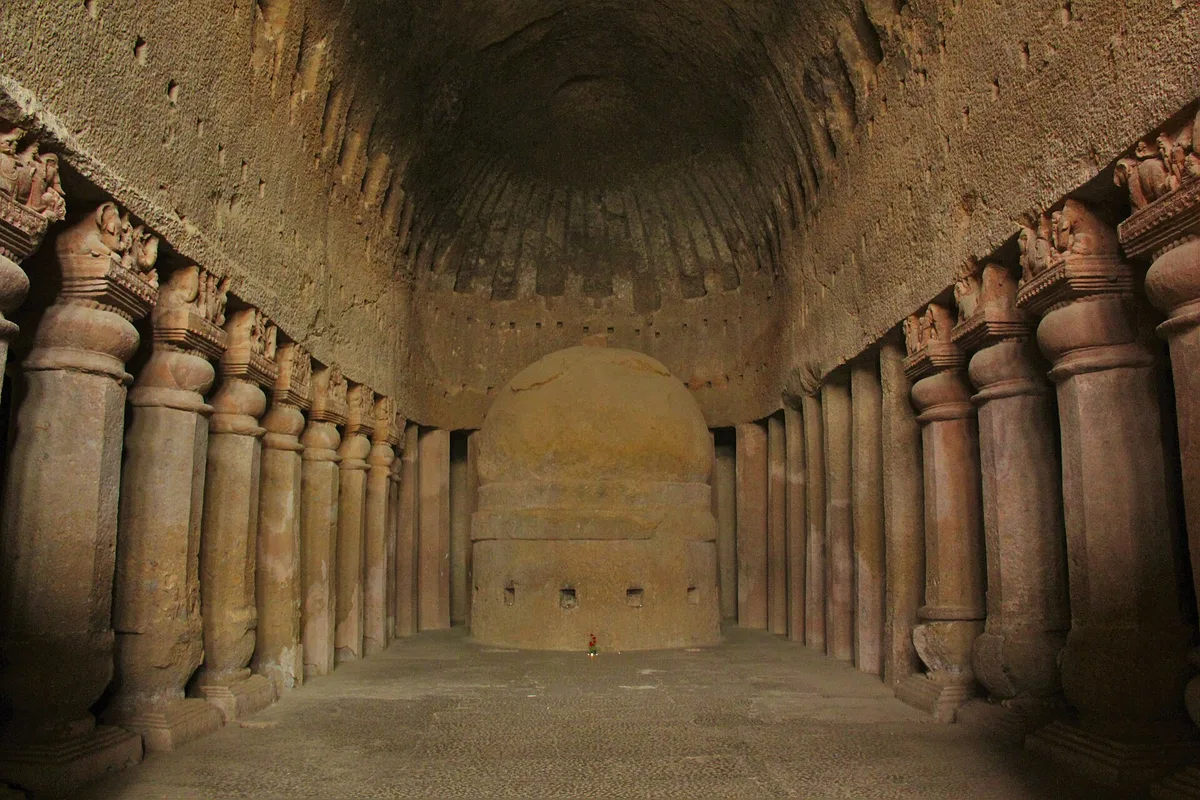
The must-see is Cave 3, the great chaitya (prayer hall), with its rows of thick octagonal pillars and a stupa at the far end lit by a single opening. It’s the closest thing Kanheri has to a cathedral, and its scale alone justifies the hike up. From there, a network of stone-cut stairs and paths connects viharas (monastic dwelling caves) scattered across the hillside, some barely a single cell, others multi-room complexes with carved doorframes and stone “beds.”
Look for the reliefs flanking cave entrances depicting the Buddha in different postures, along with fragments of Brahmi inscriptions recording donations from ancient merchants and guilds. Climb high enough and you get a genuinely good view over the park’s forest canopy, a rare, wide green gap in a city known for concrete.
When to go
The site keeps standard daytime visiting hours, with a weekly closing day, so it’s worth checking current timings before you set out. Go early on a weekday morning: the crowds build steadily through the day, and arriving soon after opening is your best chance to have the stone still cool and the forest quiet around you. Weekends run busy essentially all day, from opening until closing, so if you have flexibility, aim for a weekday morning.
The cooler months, roughly November through February, are the most comfortable for the climbing involved, the monsoon (June–September) turns the park lush and green but the stairs get slippery, and the pre-monsoon months (April–May) can be punishingly hot for a shadeless uphill walk.
How to visit like a local
Because Kanheri is genuinely one of Mumbai’s most-visited heritage sites, not a hidden pick, the smart move is timing, not secrecy. Arrive right at opening on a weekday if you can; you’ll have entire cave courtyards to yourself before the tour buses catch up. Buy your park entry and any camera fee in cash at the gate, and expect a small separate ticket for the caves themselves further inside, carry small denominations, since change can be slow at the counters.
Wear shoes with grip: the paths and stairs are uneven stone, often shaded and slightly damp even in dry season. There’s no real dress code, but modest clothing is appreciated given the site’s religious origins. The single biggest mistake visitors make is underestimating the distance from the park gate to the caves and the amount of climbing once there, treat this as a half-day outing with a proper walk, not a quick photo stop, and you’ll actually see the place instead of rushing it.
Frequently asked questions
How do I get to Kanheri Caves from central Mumbai?
Take a Western Line suburban train to Borivali station, then an auto-rickshaw or the park's shuttle bus into Sanjay Gandhi National Park to the caves entrance. By road, it's roughly an hour from South Mumbai or Bandra depending on traffic.
What are the opening hours?
Tuesday to Sunday, 8:00 AM to 5:30 PM. The caves are closed every Monday.
When is it least crowded?
Weekday mornings between 8am and 9am are the quietest window. Weekends stay busy from opening (9am) right through to closing, so weekday visits are much calmer overall.
How long should I plan to spend there?
Budget at least 2–3 hours: the walk in from the park gate, the climb between cave groups, and time to explore Cave 3's great chaitya hall and the surrounding viharas.
Is there anything else to see nearby?
Since the caves are inside Sanjay Gandhi National Park, you can combine the visit with the park's lion and tiger safari sections, boating at the park's lake, or simply extra time walking the forest trails around the caves.
Plan your trip to Mumbai
Some links above are affiliate links — if you book through them, Wander Atlas earns a small commission at no extra cost to you. It's how we keep every guide free.
Related guides
More Mumbai guides: Chhatrapati Shivaji Maharaj Vastu Sangrahalaya 32 kmLeopold Cafe 33 kmFlintMokaiRameshwaram Cafe