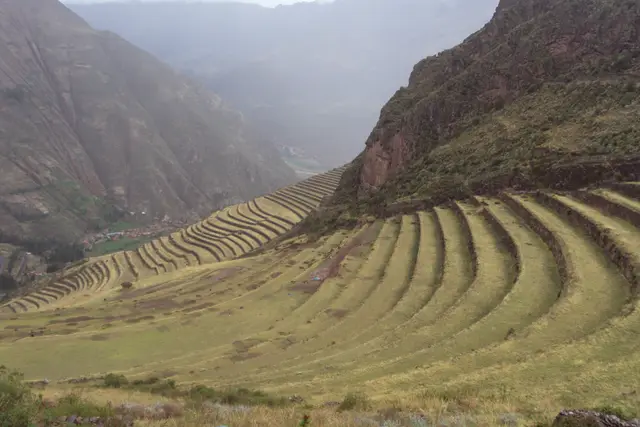
From up here, Pisac looks like a map of itself. The river runs along the valley floor in a pale ribbon. The town’s grid of tin and tile roofs sits beside it, and the slopes above are cut into the stepped Inca terraces the place is known for.
This viewpoint is listed on Google simply as “pisac”. It has few reviews but a strong rating, and it gets a fraction of the traffic of the archaeological park higher up. It’s a quieter way to see the valley before or after the busier stops.
The valley seen from above
The river below is the Urubamba. Along this stretch locals often call it the Vilcanota. It formed the Sacred Valley, which runs northwest from here toward Urubamba town and Ollantaytambo. The fields on the valley floor grow maize, and the Inca built the terraces to farm the steep land above them.
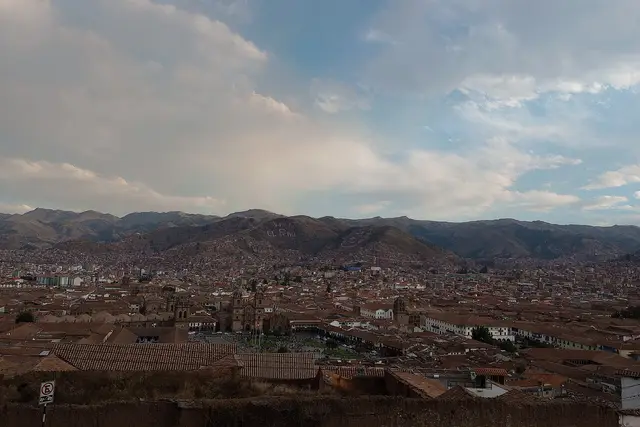
Looking down, you can make out the pattern of the town clearly. The central plaza and the market streets sit close together, and the road to Cusco climbs out of the valley in switchbacks. It’s the easiest way to understand Pisac’s layout before you walk around it.
Finding H5J2+CQP
The address is a plus code: H5J2+CQP, Pisac. Paste it straight into Google Maps. Drivers may not know a spot listed only as “pisac”, so showing them the pin works better than giving a name.
Getting to Pisac first:
- From Cusco by colectivo: shared minivans run from the Calle Puputi area. The trip is about 33 km and takes roughly an hour.
- By taxi or private driver: this is the more flexible option if you’re combining Pisac with other valley stops on the same day.
- Within Pisac: mototaxis wait near the plaza and the main road. They’re the usual way to get up the hill without walking.
Why the 3pm close shapes your day
At the moment the viewpoint is open 8am–3pm, every day of the week. That early close matters more than it seems. Outdoor sites in the Andes often change their hours with the seasons, so check the current schedule before you set out from Cusco.
The weather pushes you toward the morning anyway. In the rainy season, roughly November to March, cloud often gathers over the peaks by early afternoon and can hide the far side of the valley. The dry months, roughly May to September, bring clearer skies and the strongest light.
Coming from Cusco, an early colectivo gets you here with time to spare. Arriving close to 8am usually means softer light on the terraces and fewer people.

Thin air and strong sun
Pisac town is lower than Cusco, at roughly 2,970 m, but that is still high. Any climb up to the viewpoint will feel steeper than it looks. Walk slowly and stop when you need to.
At this altitude the sun burns quickly, even when the air feels cool. Bring:
- Sunscreen and a hat with a brim
- A warm layer, since early mornings can be cold
- Water, because the dry air dehydrates you fast
- A rain jacket from November to March
Give yourself about an hour: time to take in the view, take photos and let your breathing settle.
Reading the terraces
What you’re looking at from here is the edge of the Pisac Archaeological Park, one of the largest Inca sites in the Sacred Valley. Its terraces curve around the mountain above town. Up on the ridge sit stone ceremonial buildings, including the area around the Intihuatana, a carved ritual stone.
On the cliff faces across the gorge are the holes of Tankanamarka. It’s considered one of the largest known Inca cemeteries, with tombs set into the rock. They’re hard to spot at first, so look for dark pockmarks in the cliff.
The archaeological park is separate from this viewpoint. It requires Cusco’s boleto turístico. The current price and which sites the ticket covers are posted at official ticket points and on the Cusco tourism authority’s site.
Cash, greetings and the camera
Pisac runs mostly on cash in Peruvian soles. Carry small notes and coins, because mototaxi drivers and small stalls often can’t change large bills. Card readers are more common in hotels and restaurants than anywhere else.
A few habits help:
- Greet first. Say “buenos días” before asking anything. A conversation that skips the greeting feels abrupt here.
- Ask before photographing people. Women and children in traditional Quechua dress, sometimes with a llama or lamb, usually expect a small tip for a photo. Agree before you raise the camera.
- Agree the mototaxi fare before you get in, especially for the trip uphill.
- Stay on the paths around the terraces. The walls are old dry stone, and climbing on them causes damage.
Down into Pisac’s market
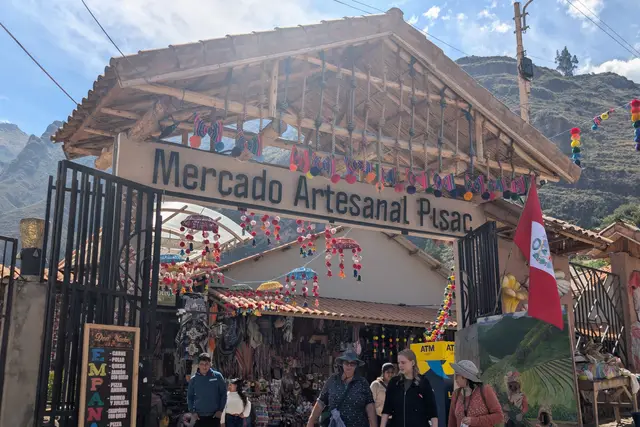
Once you’ve seen the valley from above, walk down to the plaza. The Pisac market fills the central streets with textiles, ceramics, silver and produce. Sunday is its traditional big day, when people from the surrounding farming communities come in to trade. Tuesdays and Thursdays are also traditionally busier.
Look for the bakeries with clay ovens off the market streets, which bake round loaves and empanadas. Then catch a colectivo back toward Cusco. You can also continue up the valley toward Urubamba and Ollantaytambo, the next stops for most people working their way toward Machu Picchu.
Frequently asked questions
How do I get to the pisac viewpoint from Cusco?
Take a colectivo minivan from the Calle Puputi area of Cusco to Pisac, about an hour's drive, or hire a taxi. In town, show a mototaxi driver the plus code H5J2+CQP on Google Maps, since the spot is listed only as "pisac".
What time should I visit?
It currently opens 8am–3pm, and the hours can change with the seasons, so check first. Mornings are best: in the rainy season, roughly November to March, cloud often builds over the valley by early afternoon.
How long do I need there?
About an hour is enough to take in the view, take photos and catch your breath at altitude. Allow more time if you're also visiting the archaeological park or the market.
Is this the same as the Pisac ruins?
No. The Pisac Archaeological Park is a separate site higher up the mountain and needs Cusco's boleto turístico. Check the current price at official ticket points or on the Cusco tourism authority's website.
What else is near the viewpoint?
The Pisac market around the town plaza is the main draw, and Sunday is its biggest day. Further up the Sacred Valley are Urubamba and Ollantaytambo.
Plan your trip to Pisac
Peru eSIM & staying connected →
Some links above are affiliate links — if you book through them, Wander Atlas earns a small commission at no extra cost to you. It's how we keep every guide free.