Stalls under the plaza tree
The market fills Pisac’s main square. Blue tarps and wooden frames run out from the Plaza de Armas, where a huge pisonay tree shades the centre. From there the stalls carry on down the cobbled lanes towards Vigil 247. Textiles hang from poles overhead, and some aisles are only as wide as one shopper.
This is one of the best-known craft markets in the Sacred Valley, and tour groups from Cusco come through every day. Don’t expect a secret. Expect volume and choice, and some sellers who are happy to explain how their work is made.
What’s on the tables
The range is wide, and quality varies a lot from one stall to the next. Look for:
- Alpaca and sheep’s-wool textiles: chullos (earflap hats), ponchos, scarves and blankets
- Ceramics: painted beads, bowls and the small clay figures sold all over Cusco region
- Mates burilados: gourds carved with village scenes
- Silver and stone jewellery, much of it set with turquoise-coloured stone
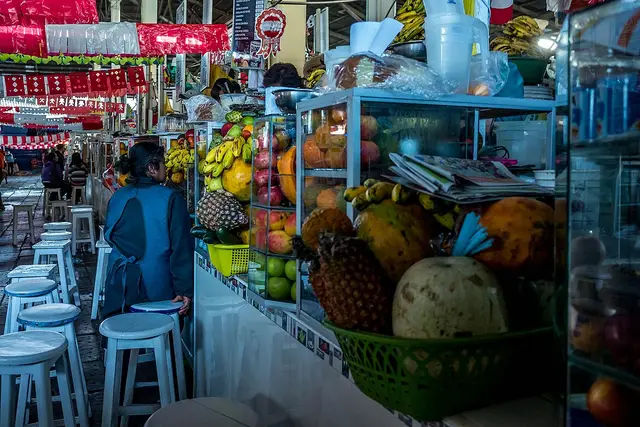
- Produce stands at the edges, selling Andean corn, potatoes and fruit
Rub a “baby alpaca” label between your fingers before you believe it. Real alpaca feels soft and slightly cool. Synthetic blends feel squeaky or shiny. Hand-woven pieces have small irregularities, and machine-made ones repeat perfectly.

Haggling without the haggle
Bargaining is expected here, but it’s done gently. Ask “¿Cuánto cuesta?” and listen to the first price. Counter politely, or buy two items and ask for a better total. That usually gets you further than walking away. Prices are only rarely marked, so the conversation is the price list.
- Pay in soles, in cash. Small notes make the deal easier, because change for big ones can be scarce at a stall.
- Ask before you photograph a vendor or their children. Some will want you to buy something first.
- Learn “sulpayki”, Quechua for thank you. Many sellers here speak Quechua as a first language.
Sunday has traditionally been Pisac’s largest market day, when villagers come down from the hills. It is also the day most tour buses add Pisac to their routes. For a calmer browse, go on a weekday morning soon after the 9am opening, before the day-tour vans from Cusco usually arrive.
Getting to Pisac and what’s nearby
Pisac sits on the Urubamba River, roughly 33 km from Cusco by road. Shared colectivos and vans run along the valley, and taxis and Sacred Valley day tours stop here too. From the bridge it’s a short walk uphill into the plaza.
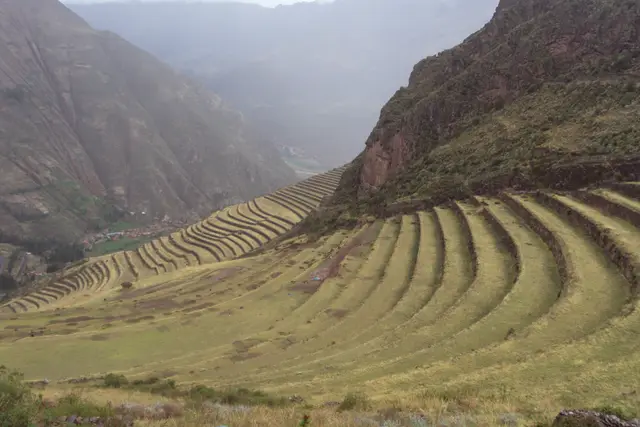
Allow one to two hours for the market. Then go up to the Pisac Archaeological Park on the ridge above town. Its Inca terraces, ceremonial centre and cliff tombs need at least two to three hours. Many visitors take a taxi to the top and walk the steep trail back down into town.
Bakeries near the plaza sell bread from clay ovens, which makes a good snack between the market and the ruins. Pisac also works as a first stop on a valley loop towards Urubamba and Ollantaytambo.
Frequently asked questions
What are the market's opening hours?
At the moment it is listed as open 9am–5pm every day of the week. Individual stalls set their own pace, so some may pack up early.
How do I get to Pisac from Cusco?
Pisac is about 33 km from Cusco along the Sacred Valley road. Shared colectivos and vans run there, taxis can be hired, and most Sacred Valley day tours stop in town.
Is Sunday the best day to visit?
Sunday has traditionally been the biggest market day, with more produce and more villagers from the hills. It also draws the most tour groups. A weekday morning is calmer if you want space to browse.
How long should I spend there?
One to two hours covers the market. Add two to three hours if you're also visiting the Pisac Archaeological Park above town.
Can I pay by card?
Plan on cash in Peruvian soles. Small notes help, because many stalls struggle to break large ones.
Plan your trip to Pisac
Peru eSIM & staying connected →
Some links above are affiliate links — if you book through them, Wander Atlas earns a small commission at no extra cost to you. It's how we keep every guide free.