Above the Red Roofs
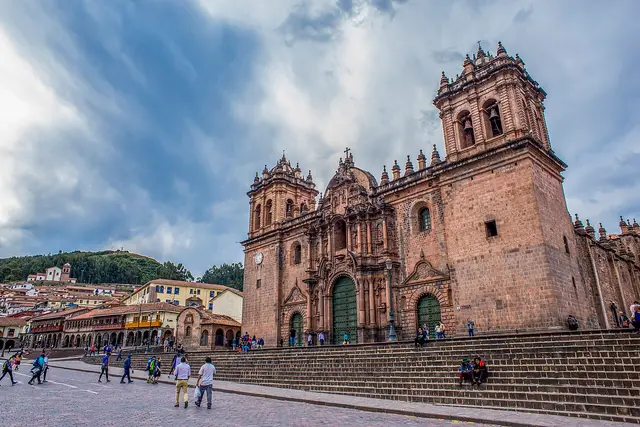
From up here, Cusco is a bowl of terracotta. Thousands of clay-tiled roofs pour down the slope toward the Plaza de Armas. The twin towers of the Cathedral and the Compañía de Jesús rise out of them, and the brown ridges of the valley close in on every side.
Mirador de Sán Cristobal sits on the hillside named after the Iglesia de San Cristóbal, above the historic centre. It is an open terrace with a parapet, not a ticketed deck with a building. Visitors who make the climb rate it consistently well, and it gets far less traffic than Cusco’s headline sights.
The Climb from the Plaza de Armas
It is a short walk, and nearly all of it is uphill. From the Plaza de Armas, head north up the steep lanes and stone stairways toward San Cristóbal. Most walkers take 15–20 minutes, mainly because of the stairs.
Plug the plus code F2PC+J52 into your maps app rather than trusting a street name. Several lanes up here are footpaths that taxis cannot drive. If your legs are not ready, a taxi can drop you at the road near the church. Say “San Cristóbal” to the driver and walk the last stretch.
- On foot: from the Plaza de Armas, roughly 15–20 minutes uphill
- By taxi: ask for the Iglesia de San Cristóbal
- Coming down: the same stairways, which are slick after rain
Reading the Skyline
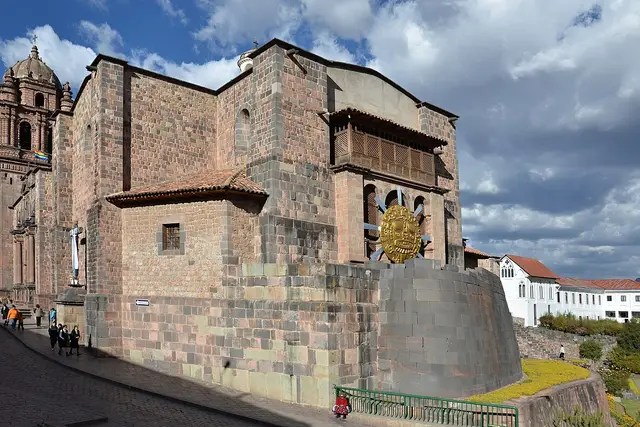
Give the view a few minutes and it starts to make sense. The large open rectangle below is the Plaza de Armas. The Cathedral fills its northeastern side, and the Compañía de Jesús, with its carved stone façade, stands on the southeastern edge.
Past the plaza, the old city’s grid runs toward the newer districts and the airport down the valley. Look up the slope behind you to find the white statue of Cristo Blanco, which marks the way to Sacsayhuamán. A quick game: count how many church towers you can pick out from the roofline.
On a clear day the sky over Cusco is a deep, high-altitude blue and the tiles look almost orange. Clouds tend to build later in the rainy season, roughly December to March. Morning is the safer bet for sharp photos.
The Seven-to-Eight Window
This terrace has one easy timing rule. It is quietest between 7am and 8am, on weekdays and weekends alike. At that hour the low sun comes in from the east across the valley, the roofs are lit side-on, and you can usually have the parapet to yourself.
On weekends, try not to arrive between 10am and 11pm. That long stretch is the busiest, when walking groups and photo-takers fill the front rail. If a Saturday is your only chance, go early. That one hour makes all the difference.
Google currently lists the mirador as open 24 hours. It is an open-air public space, and after dark the Plaza de Armas lights up below you. If you come at night, bring company, stick to the lit lanes and take a taxi back if the stairs feel too quiet.
Breathing on the Stairs
Cusco sits at roughly 3,400 metres, and this climb is where many visitors first feel it. The stairs are steep enough to leave fit people breathless. On your first day off the plane, that is a reason to take it slowly.
- Stop on the landings. Every one of them has a view.
- Carry water. Shops thin out once you leave the centre.
- Bring a layer. Mornings up here are cold even in the dry season (May–September), and the sun is fierce by mid-morning.
- Wear sunscreen and a hat. UV at this altitude burns quickly.
If you arrived in Cusco today, consider leaving the mirador for your second morning. That fits the 7am–8am window anyway.
Manners on San Cristóbal’s Steps
The church is a working parish, so behave as you would at one. If a service is on, keep your voice down near the doors and do not photograph the inside without asking. The terrace is shared space. Take your photo, then step back from the rail for the next person.
You may meet women in traditional dress, sometimes with a lamb or a llama, offering photos. That is how they earn a living, and a tip is expected, so agree before you raise your camera. Keep small coins in soles handy. Nobody here will have change for a large note.
Street vendors may offer textiles or snacks. A polite “no, gracias” is enough. If you do buy, light bargaining is normal and cash is how people pay.
Linking It to the Rest of the Hill
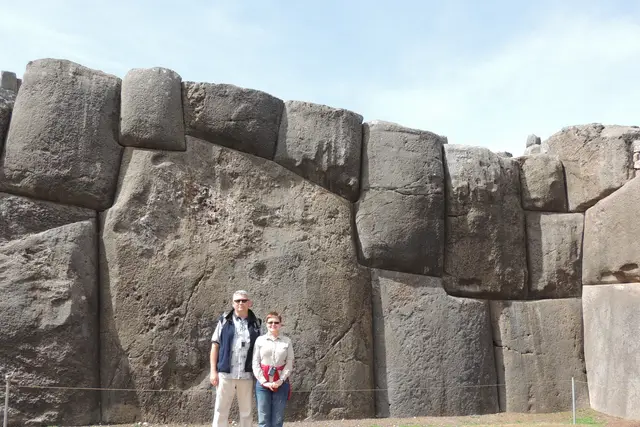
San Cristóbal makes a natural first stop on a half-day uphill. From here, carry on toward Sacsayhuamán, the great Inca fortress of zigzagging stone walls above the city. It needs its own ticket, and the official tourist-ticket office or website has current details. From there it is a short extra climb to Cristo Blanco for a wider, higher view.
If you would rather stay low, follow the hillside lanes east toward San Blas. That is the artisans’ quarter, with steep cobbled streets, workshops and its own small church. Plan 20–40 minutes at the mirador itself. Make it a full morning if you add Sacsayhuamán.
For the return, head back down the stairways to the Plaza de Armas. Watching the city get closer, roof by roof, is part of the appeal.
Frequently asked questions
How do I get to Mirador de Sán Cristobal from the Plaza de Armas?
Walk north and uphill on the steep lanes and stairways toward the Iglesia de San Cristóbal. Most people take 15–20 minutes because of the stairs and the altitude. You can also take a taxi to the church and walk the final stretch. The plus code F2PC+J52 works in map apps.
When is the quietest time to visit?
Between 7am and 8am, on both weekdays and weekends. On weekends the busiest stretch runs from 10am to 11pm, so avoid that window if you want space at the rail.
Is the mirador open at night?
Google currently lists it as open 24 hours, and it is an open-air public space. After dark you see the Plaza de Armas lit up below. Go with company, stay on lit lanes, and consider a taxi back.
How long should I spend there?
Around 20–40 minutes for the view itself. Allow a full morning if you continue uphill to Sacsayhuamán and Cristo Blanco, or across to the San Blas quarter.
Will the altitude be a problem on the climb?
Cusco is at roughly 3,400 metres and the stairs are steep, so go slowly, rest on the landings and carry water. If you only landed today, save it for your second morning.
Plan your trip to Cusco
Peru eSIM & staying connected →
Some links above are affiliate links — if you book through them, Wander Atlas earns a small commission at no extra cost to you. It's how we keep every guide free.