
A town of stone above the river
Low stone walls cover the whole hill. They rise in terraces above the junction of the Río Grande and the Río Huasamayo, laid in the same grey-brown rock as the slope. Narrow paths run between them, linking rooftless houses, corrals and open patios. Tall cardón cacti stand among the ruins, some of them taller than the walls.
This was a fortified settlement, a pucará in Quechua. The Omaguaca peoples of the Quebrada de Humahuaca built it and lived here long before the Spanish arrived. The site sits on a natural rise with a clear view up and down the valley. Once you reach the top, it is easy to see why it was chosen.
What was rebuilt, and what you’re looking at
Part of what you see is reconstruction. In the mid-20th century, archaeologists from the University of Buenos Aires rebuilt a section of houses on the original foundations, roofs included. They show how the dwellings were laid out, with low doorways and thick walls. Most of the hill was left as excavated foundations.
The odd feature at the summit is a truncated stone pyramid. It is not pre-Hispanic. It was built in the 1930s as a memorial to Juan Bautista Ambrosetti and Salvador Debenedetti, the archaeologists who first excavated the site. You will also see a high-altitude botanical garden near the entrance, planted with the cacti and shrubs of the Puna and the Quebrada.
The whole Quebrada de Humahuaca, this hill included, has been a UNESCO World Heritage Site since 2003.
From Purmamarca up the valley
Purmamarca sits where Ruta 52 meets Ruta Nacional 9. Tilcara is roughly 25 km north on Ruta 9, about half an hour by car. Regional buses running between San Salvador de Jujuy and Humahuaca stop at both towns, so you can do this as a day trip without a car.
From Tilcara’s centre the pucará is about a kilometre’s walk. You head south-west, cross the bridge over the Río Huasamayo and follow the road up to the gate. Drivers can park near the entrance. The walk is easy, but keep the altitude in mind:
- Tilcara sits at roughly 2,460 m, so walk the uphill paths slowly.
- There is almost no shade on the hill. Bring a hat, sunscreen and water.
- The paths are loose gravel and uneven stone steps, so wear shoes with grip.
Timing your climb
Plan on 1.5–2 hours to walk the hill without hurrying. At the moment the site opens 9am–6:30pm from Tuesday to Sunday and closes on Mondays. Times can change with the season and on holidays, so check the official page before you set out.
The Monday closure catches out a lot of people on a Quebrada road trip. If you’re staying in Purmamarca, give Monday to the Cerro de los Siete Colores or the Salinas Grandes and visit Tilcara on another day.
From December to March is the rainy season. Afternoon storms often build over the mountains, so a morning visit is the safer choice. Through the dry winter months the skies are clear, but the wind on the summit can be cold.
Getting around the ticket office and the crowds
This is one of the busiest stops in the Quebrada. Day tours from Jujuy and Salta regularly include it, so don’t expect it to yourself. Arriving right at 9am usually puts you on the hill before the tour vans come up from the south. Late afternoon is often calmer too, once the day-trippers have moved on.
- Buying tickets: there is a ticket booth at the entrance, and the current prices are posted there. Argentine residents and foreign visitors are usually charged different rates, so carry your passport.
- Paying: card payment in the Quebrada can be unreliable, so ask at the booth what they accept before you queue.
- The museum: the Museo Arqueológico on the plaza in Tilcara holds finds from the site. Ask whether your ticket covers both, and keep it until you’ve seen each.
- On the hill: stay on the marked paths and don’t climb on the walls. Even the rebuilt sections stand on original foundations.
- Guides: you may be offered a local guide near the entrance. Agree what’s covered and the fee before you start.
Making a day of Tilcara
The museum works best after the ruins, once you have walked the hill. Its rooms hold ceramics, tools and textiles from the Quebrada and the wider Andean region. Seeing them puts the rebuilt houses into context.
The plaza outside is the centre of Tilcara. Craft stalls usually set up there selling woven goods from the region. If you still have energy, the trail to the Garganta del Diablo gorge starts from town. On the way back to Purmamarca you pass Maimará and the striped hillside called the Paleta del Pintor, which is worth a short stop.
Frequently asked questions
How do I get to Pucará de Tilcara from Purmamarca?
Drive or take a regional bus about 25 km north on Ruta Nacional 9 to Tilcara, roughly half an hour. From the town centre it's about a 1 km walk: cross the bridge over the Río Huasamayo and follow the road uphill to the entrance.
Is Pucará de Tilcara open on Mondays?
No. It is currently closed on Mondays and opens 9am–6:30pm from Tuesday to Sunday. Hours can change with the season and on holidays, so check the official page before you go.
How long should I spend there?
Allow 1.5–2 hours to walk the ruins, the summit monument and the botanical garden, then around 45 minutes for the archaeological museum on Tilcara's plaza.
When is the best time to visit?
Arrive soon after 9am. You'll usually get there before the day-tour vans, and between December and March you'll be down before the afternoon storms start. In the dry winter months the skies are clear, but bring a layer for the wind on top.
Is the altitude a problem?
Tilcara is at about 2,460 m and the site involves climbing uphill on gravel. Walk slowly, drink water and take sun protection, because there's very little shade.
Plan your trip to Purmamarca
Argentina eSIM & staying connected →
Some links above are affiliate links — if you book through them, Wander Atlas earns a small commission at no extra cost to you. It's how we keep every guide free.
Related guides
 attraction
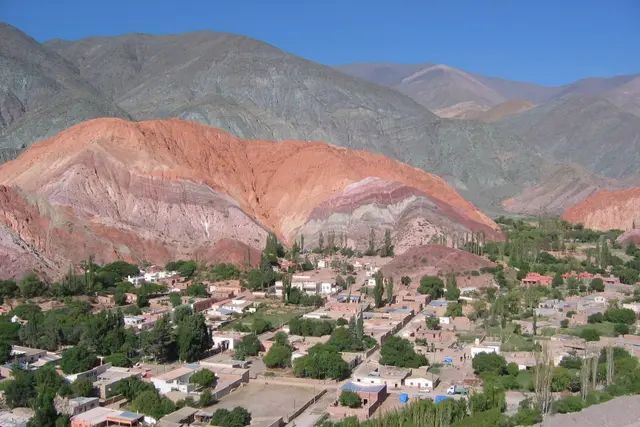
Cerro de los Siete Colores: Purmamarca Travel Guide (4.8★)
 attraction
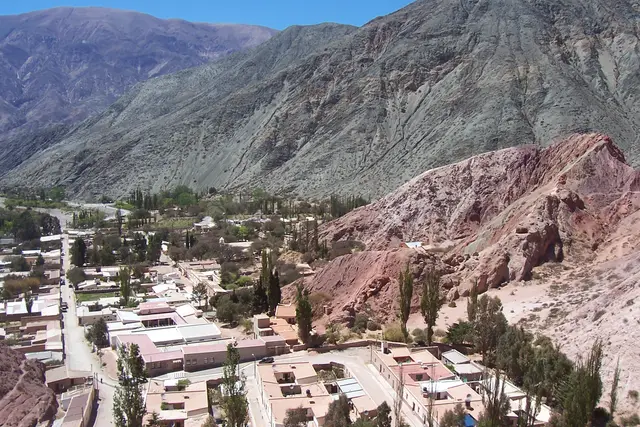
Purmamarca Jujuy: Travel Guide (4.8★)
 attraction
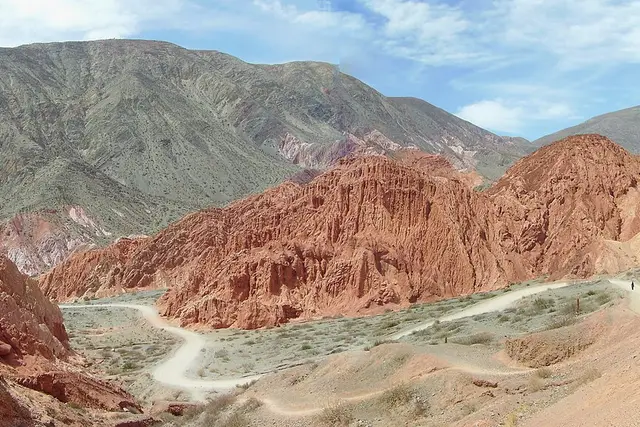
Paseo de los colorados: Purmamarca Travel Guide (4.7★)
 hidden gem