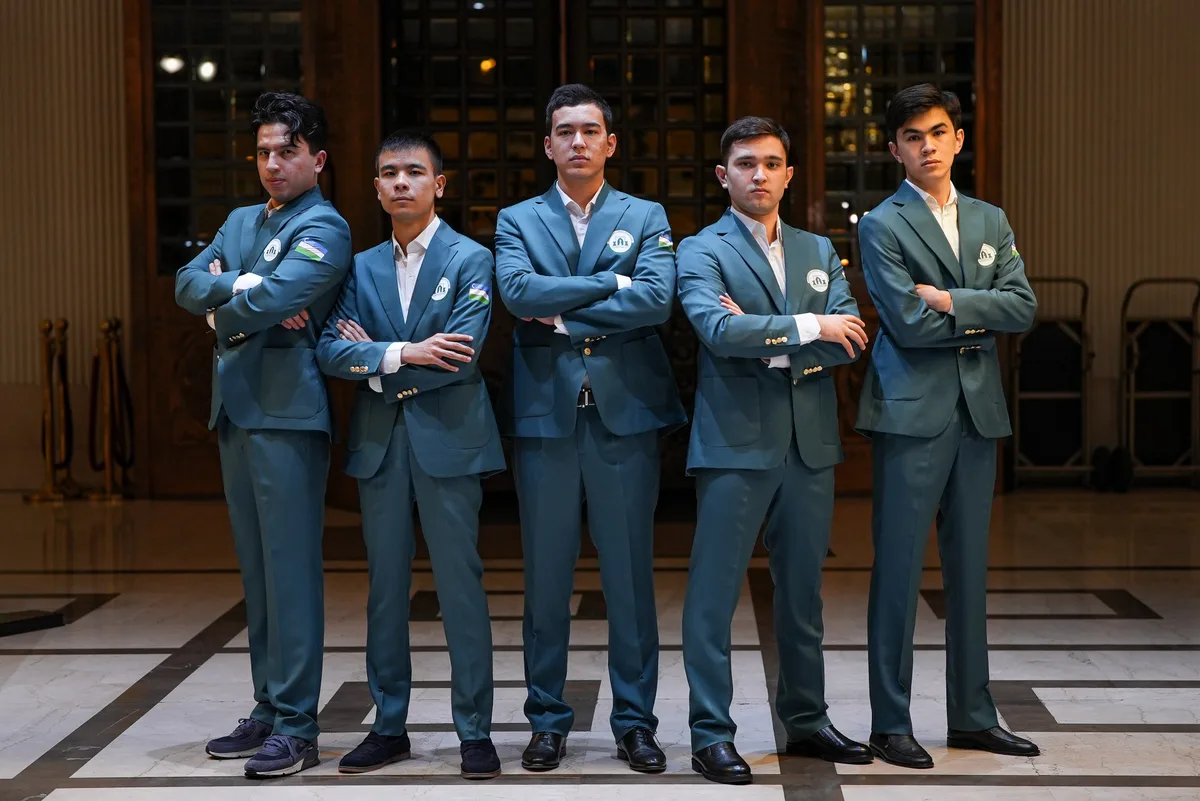
Why this Olympiad matters
This was chess history landing somewhere new. The Chess Olympiad is FIDE’s biggest team event, and it had never before come to Central Asia. The 2026 edition was set for Samarkand, with roughly 200 national federations due to enter open and women’s teams over two packed weeks.
Samarkand isn’t a neutral backdrop either. Uzbekistan has invested heavily in chess as a national pastime, and this city, a Silk Road capital with a chess-loving population, makes a fitting host.
Getting there and getting oriented
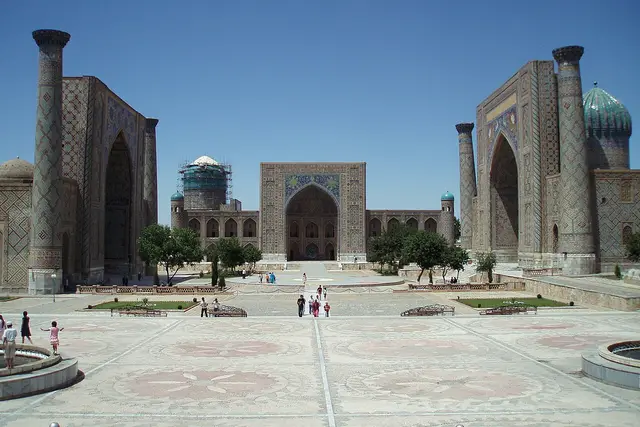
Samarkand International Airport takes direct flights from several regional hubs, and a high-speed Afrosiyob train connects the city to Tashkent in under two hours. Most visitors base themselves near the old city, walking distance from the Registan ensemble.
The tournament venue itself was never spelled out in detail in the early announcements. Large international events like this typically use a purpose-built or converted congress/exhibition center, so:
- A specific venue address was not part of what FIDE set out for the Olympiad
- Team hotels and satellite venues are commonly added to the map as an Olympiad approaches
- The main hall for an event this size usually sits somewhat outside a historic core, given the space large Olympiads require
What actually happens during the days
The rhythm is familiar to chess event veterans. Morning and afternoon rounds, rest days scattered through the two weeks, and a playing hall buzzing with hundreds of boards running simultaneously.
The room hums rather than roars, arbiters moving quietly between tables, digital boards broadcasting top games to giant screens, and clusters of spectators pressing against ropes near the strongest matchups. Side halls usually host commentary, analysis with visiting grandmasters, and a bustling chess merchandise and book fair.
Closing and opening ceremonies tend to be the loudest, most photogenic moments, flag parades, speeches, and often a cultural performance reflecting the host nation.
Beyond the boards: what to see in Samarkand
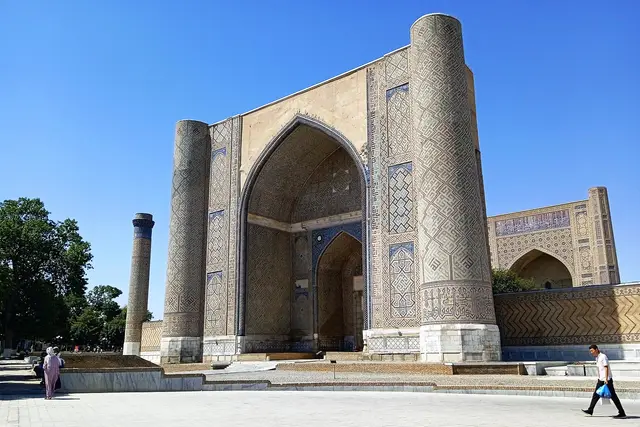
Between rounds, you’re a ten-minute taxi ride from some of the most photographed architecture in Central Asia.
- Registan Square, three monumental madrasahs faced in turquoise tilework, best seen at golden hour when the mosaics catch low sun
- Gur-e-Amir Mausoleum, Timur’s resting place, with a ribbed azure dome visible from several streets away
- Siab Bazaar, a working market for fresh bread, dried fruit, and spices, loud with vendors calling out prices
- Shah-i-Zinda, a narrow avenue of tiled mausoleums climbing a hillside, quieter than Registan and easy to reach on foot
When to go and what September brings
Mid-to-late September in Samarkand means warm days, cooling evenings, and none of summer’s punishing heat. It’s a comfortable stretch for walking the old city between rounds.
Accommodation near the historic center is limited. An event pulling in players, delegations, and journalists from roughly 200 countries puts real pressure on the city’s hotel supply.
How to visit like a local
Uzbeks follow chess closely, and Olympiad host cities usually see genuine public enthusiasm rather than indifference. Cafés fill with talk of overnight results.
- Tickets: FIDE typically sells spectator passes online in advance and sometimes at the door
- Payment: both cash (Uzbek som) and cards are useful, as small vendors and bazaar stalls often prefer cash
- Pace yourself: rounds run long; locals treat spectating as a drop-in activity, not a sit-through-everything commitment
- Etiquette: phones stay silent and voices low near the boards, and arbiters do enforce quiet
- Avoid the mistake: the playing venue for an Olympiad is rarely inside a historic center, and transport time between hotel, venue, and monuments adds up across a day
For a first-time host city, the logistical picture tends to come together late, and Samarkand had no local Olympiad template to work from.
Plan your trip to Samarkand
Some links above are affiliate links — if you book through them, Wander Atlas earns a small commission at no extra cost to you. It's how we keep every guide free.