For twelve days, the rules on global wildlife trade are rewritten in a city once known for its caravan trade. CoP20 is the 20th meeting of the Parties to CITES, the Convention on International Trade in Endangered Species of Wild Fauna and Flora. It runs from November 24 to December 5, 2026, at the Silk Road Samarkand tourism complex.
The convention was signed in Washington in 1973 and came into force in 1975. More than 180 Parties now belong to it. Their delegates decide which plants and animals go on its three Appendices, and those lists set the terms on which sharks, rosewood, elephants and orchids cross borders.
Badges, not tickets
There is no box office for CoP20. The conference is a treaty meeting. The only way through the door is an accreditation badge, and the CITES Secretariat in Geneva runs registration.
Accredited attendees usually fall into four groups:
- Party delegations: officials named by their national governments.
- Non-Party states and intergovernmental bodies: UN agencies and regional organisations attending as observers.
- NGOs: international groups are approved by the Conference itself. National groups also need approval from the CITES Management Authority of their own country.
- Media: journalists accredited through the Secretariat’s press process.
Badges are typically collected in person on site, with passport in hand. Most delegates pick theirs up the day before the opening plenary to avoid the first-morning queue at security.
Inside the Silk Road Samarkand complex
The venue is a purpose-built tourism district a few kilometres east of the Registan. You will not find it among the old mud-brick mahallas. It is a planned site with a congress centre, a cluster of large hotels and a long landscaped canal running through it.
At its heart is the Eternal City, a walkable reconstruction of an old Silk Road town. It has domed brick buildings, craft workshops and tea houses, and delegates use it for coffee between sessions and for informal side meetings in the evening.
Because the conference halls and many of the delegate hotels share one grounds, much of CoP20 happens on foot. Delegates staying in the old city usually commute by taxi. Yandex Go is the ride-hailing app most people in Samarkand use.
Committee I, Committee II and the last two days
A CoP has a rhythm of its own, and it pays to know it. After the opening plenary the work splits into two rooms that run side by side.
- Committee I handles the proposals to add, move or remove species on the Appendices. These are the debates that make headlines.
- Committee II covers budget, administration, enforcement and trade reviews. These are the sessions that shape how the convention actually works.
A decision in committee is not final. Everything returns to the closing plenary, where it is adopted, and Parties can reopen a contested listing there. Changes to the Appendices need a two-thirds majority of Parties present and voting, and close votes sometimes go to secret ballot. Seasoned observers save their energy for those last two days in early December.
Reaching Samarkand in late November
Most international delegates fly into Tashkent and take the high-speed Afrosiyob train south. The journey takes a little over two hours and ends at Samarkand railway station. Others fly straight into Samarkand International Airport, which is a short drive from the eastern side of the city where the complex sits.
Many nationalities can enter Uzbekistan visa-free or on an e-visa. Accredited delegations usually go through the host country’s arrangements for the conference.
Late November in Samarkand is properly cold. Days are crisp and often sunny, and nights can drop to around freezing. Delegates who walk between the halls and the hotels usually bring a warm coat as well as their suits.
Bread, tea and the delegate’s evening
Samarkand takes hospitality seriously, and a few habits go a long way. The round, glazed Samarkand non is the city’s pride. It gets torn by hand rather than cut, and it is never set face-down on the table.
Green tea arrives in a small handle-less bowl called a piala. Your host pours it only part-full, which is a sign of welcome, not stinginess, and tops it up often. Plov, the rice dish cooked with carrots and lamb, is traditionally a midday meal. Locals tend to eat it at lunch rather than late at night.
The currency is the Uzbek so’m. Hotels and larger restaurants inside the complex take cards. Taxis, bazaar stalls and small tea houses in the old city mostly work in cash. Restaurant bills often add a service charge already, so look at the bill before adding a tip.
Between sessions: the old city
The working days are long, but the city’s great monuments are only a short taxi ride west.
- Registan: three madrasas facing one square, with tiled facades that are lit up after dark.
- Gur-e-Amir: the ribbed blue-domed mausoleum of Timur.
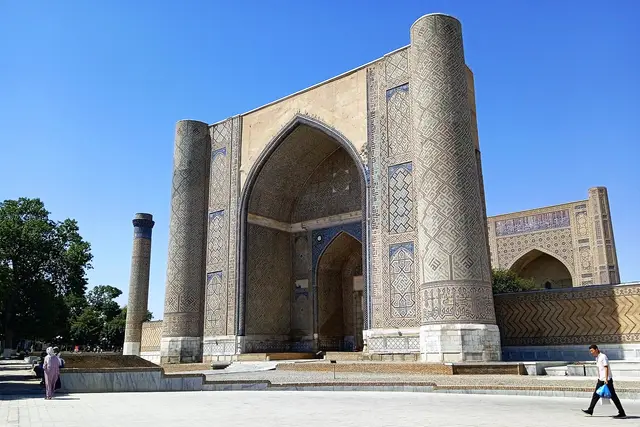
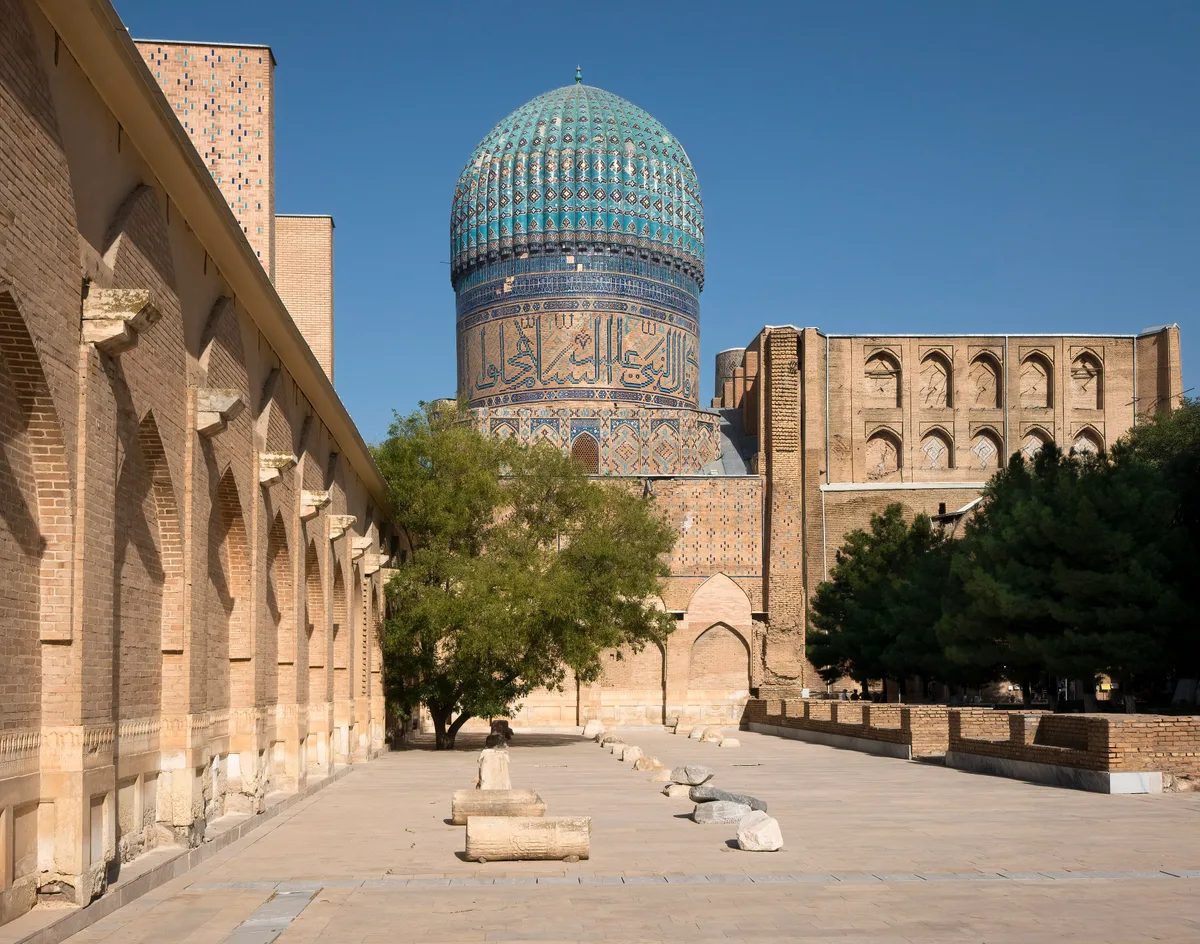
- Bibi-Khanym Mosque: a vast fifteenth-century congregational mosque beside Siyob Bazaar, where locals buy non, dried fruit and nuts.
- Shah-i-Zinda: a narrow avenue of tiled tombs climbing the hillside.
- Ulugh Beg Observatory: the remains of a fifteenth-century astronomer-king’s giant sextant.
The middle weekend of the conference is when most delegates do their sightseeing. The Registan and Shah-i-Zinda together fill a comfortable half day. You could hardly ask for a better backdrop for a convention about cross-border trade.
Frequently asked questions
When and where does CITES CoP20 take place?
CoP20 runs from November 24 to December 5, 2026, at the Silk Road Samarkand tourism complex on the eastern side of Samarkand, Uzbekistan.
Can members of the public buy tickets for CoP20?
No. CoP20 is a treaty meeting with no public ticketing. Entry is by accreditation through the CITES Secretariat for Party delegations, approved observers such as NGOs and intergovernmental bodies, and accredited media.
How do delegates get to Samarkand?
Most fly into Tashkent and take the high-speed Afrosiyob train, which takes a little over two hours to reach Samarkand railway station. Others fly directly into Samarkand International Airport, a short drive from the venue.
What is the weather like during the conference?
Late November and early December in Samarkand bring crisp, often sunny days and cold nights that can drop to around freezing, so delegates usually pack a warm coat.
What can attendees see nearby?
The Registan, Gur-e-Amir, Bibi-Khanym Mosque with Siyob Bazaar beside it, Shah-i-Zinda and the Ulugh Beg Observatory are all a short taxi ride west of the complex. The Eternal City, a reconstructed old-town quarter, is inside the venue grounds.
Plan your trip to Samarkand
Uzbekistan eSIM & staying connected →
Some links above are affiliate links — if you book through them, Wander Atlas earns a small commission at no extra cost to you. It's how we keep every guide free.