
A church that is only a front wall
It’s one wall and nothing behind it. A carved granite facade rises in tiers above 68 stone steps. Through its empty window openings you see sky, not a nave.
This was the front of the Church of Mother of God, built by the Jesuits between 1602 and 1640. Next to it stood the College of St. Paul, often described as the first Western-style university in East Asia. A fire in January 1835 burned the church and college down. Only the stone front survived.
Today it’s the image most people picture when they think of Macau, and it sits inside the Historic Centre of Macao, listed by UNESCO in 2005. Plan on 45 minutes for the facade and crypt. Allow two hours if you add the fortress next door.
Reading the granite, tier by tier
Look at the carving before you take your photo. The facade is thought to have been designed by the Italian Jesuit Carlo Spinola. Japanese Christian exiles and Chinese craftsmen carved it, and you can see both traditions in the stone.
Read it from the top down:
- The pediment: a bronze dove for the Holy Spirit, with the sun, moon and stars around it.
- Below the dove: the infant Jesus, with the instruments of the Crucifixion carved alongside.
- The central tier: the Virgin Mary among angels, flanked by peonies for China and chrysanthemums for Japan.
- The odd details: a Portuguese sailing ship, a skeleton, and a seven-headed hydra with the Virgin standing over it. Look for Chinese characters set beside the Christian images.
- The lowest tier: bronze statues of Jesuit saints in niches, and “MATER DEI” carved above the central doorway.
Steady morning light falls on the front, so the lower carvings are easiest to read early in the day.
Behind the facade: crypt and museum
Walk through the central doorway and you’re standing where the church used to be. Low foundation walls trace out the old nave on the ground. A metal stairway at the back lets you climb part of the way up and look out through the upper window openings, back down the steps toward the old town.
Steps lead down to the crypt and the Museum of Sacred Art. The crypt holds the bones of Japanese and Vietnamese Christian martyrs behind glass, along with the tomb of the church’s founder, Alessandro Valignano. The museum is small. It’s one room of paintings, silverware and statues from Macau’s churches and monasteries.
The climb up Rua de São Paulo
There’s no metro stop here. Nearly everyone starts at Senado Square, the black-and-white mosaic square in front of the Leal Senado building. From there you follow the signs uphill past St. Dominic’s Church for about 10 minutes.
The last stretch is Rua de São Paulo, a narrow lane of shops selling almond cookies, egg rolls and sheets of sweet pork jerky. The jerky is cut with scissors and sold by weight. Staff stand in the doorways handing out free samples, so you can try several before you buy.
The lane comes out at the bottom of the stairway with the whole facade in front of you. A lot of visitors arrive from the Cotai Strip. Taxis and city buses to the Senado Square area are the simplest way to get here, but check current routes before you set out.
When the doors are open
The facade sits in an open square, and the steps work as a public plaza. The crypt and museum have set hours: 9:00 AM to 6:00 PM, every day of the week, with no weekly closing day.
If you want to go inside, get there well before 6:00 PM. The climb, the crypt and the fortress next door take longer than you’d guess. After closing time you can still sit on the steps and look at the facade from outside.
Getting the steps to yourself
The square is very busy. Tour groups walk up from Senado Square through the middle of the day, and the steps fill up with people waiting for photos. Arriving around the 9:00 AM opening usually beats the groups, and early in the morning the stairway is often nearly empty.
A few habits make the visit smoother:
- Photos: stand on the steps to one side and shoot at an angle up toward the facade. That keeps the crowd in the middle of the stairway out of your frame.
- Inside the crypt: keep your voice down. People still come here to pray at the martyrs’ remains.
- Paying: the pataca is the local currency. Hong Kong dollars are widely accepted in the shops on Rua de São Paulo, but your change usually comes back in patacas.
- Language: signs are in Chinese and Portuguese. The ruins are called Ruínas de São Paulo in Portuguese and Daam Sam Ba Paai Fong in Cantonese, which helps if you ask a taxi driver.
Next door: Mount Fortress and Na Tcha Temple
You don’t have to go back down the way you came. Just left of the facade, a small Chinese temple sits against the side of the ruins. This is Na Tcha Temple, and a surviving stretch of the old city wall runs beside it. Seeing a Taoist shrine against a Jesuit church wall tells you a lot about Macau.
On the other side, a path and escalators lead up to Mount Fortress. It’s a 17th-century Jesuit fort with old cannons still lined up on the walls, and the Macau Museum is built into the hill underneath.
The view from the ramparts looks down onto the back of the facade. From there you can see how thin the wall is, and how much of the building is missing. Walk east from here into the cobbled lanes of the St. Lazarus Quarter and you’ll be among quieter streets of colonial houses within minutes.
Frequently asked questions
How do I get to the Ruins of Saint Paul's from Senado Square?
Walk uphill past St. Dominic's Church and follow the signs to Rua de São Paulo, the lane of almond cookie and pork jerky shops. It comes out at the bottom of the stairway. The walk takes about 10 minutes.
What are the opening hours?
The crypt and religious museum are listed as open 9:00 AM to 6:00 PM every day, with no weekly closing day. The facade and steps are in an open square, so you can see them from outside after closing.
When is the best time to avoid crowds?
Go early. If you arrive around the 9:00 AM opening, you're usually ahead of the tour groups that walk up from Senado Square through the middle of the day.
How long should I spend there?
Give it about 45 minutes for the facade, the view from behind it and the crypt. Allow around two hours if you add Mount Fortress and the Macau Museum next door.
What else is nearby?
Na Tcha Temple and a section of the old city wall are right beside the facade. Mount Fortress and the Macau Museum are up the hill next door. Senado Square is a 10-minute walk downhill, and the St. Lazarus Quarter's cobbled lanes are a short walk east.
Plan your trip to St. Lazarus Quarter
Macau eSIM & staying connected →
Some links above are affiliate links — if you book through them, Wander Atlas earns a small commission at no extra cost to you. It's how we keep every guide free.
Related guides
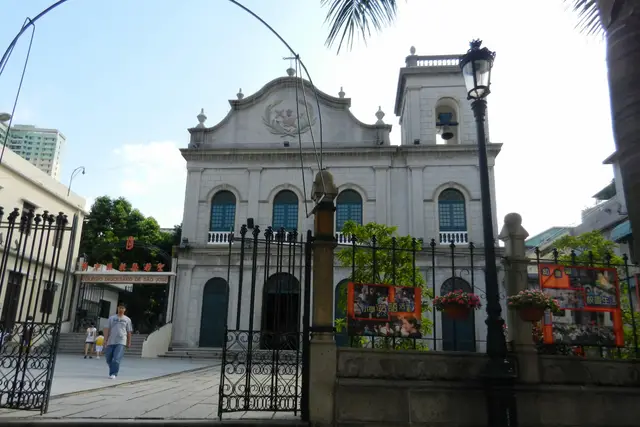 hidden gem
 St. Lazarus' Church: St. Lazarus Quarter Travel Guide (4.3★)
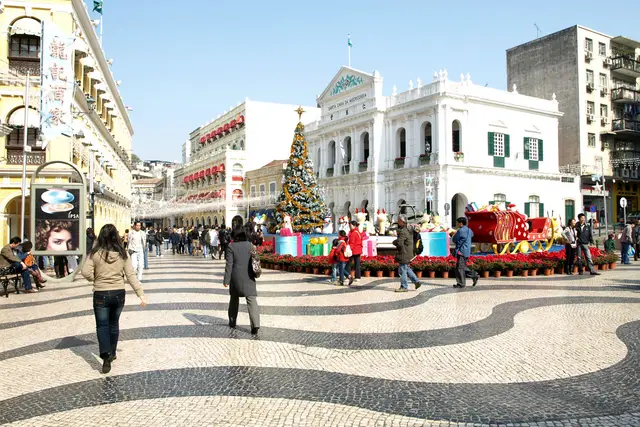 attraction
 Senado Square: Macau Peninsula Travel Guide (4.3★)
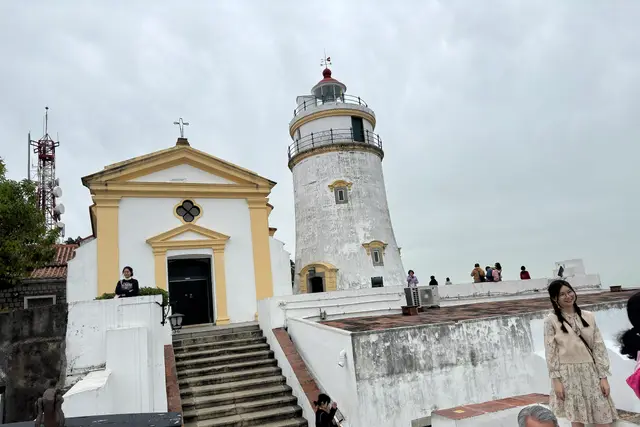 attraction
 Guia Fortress and Lighthouse: Travel Guide (4.5★)
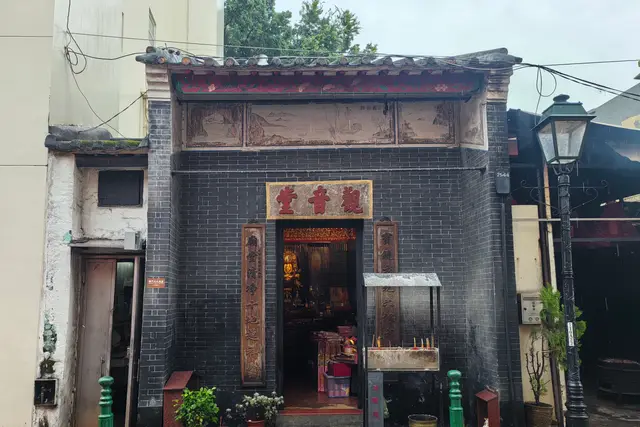 attraction