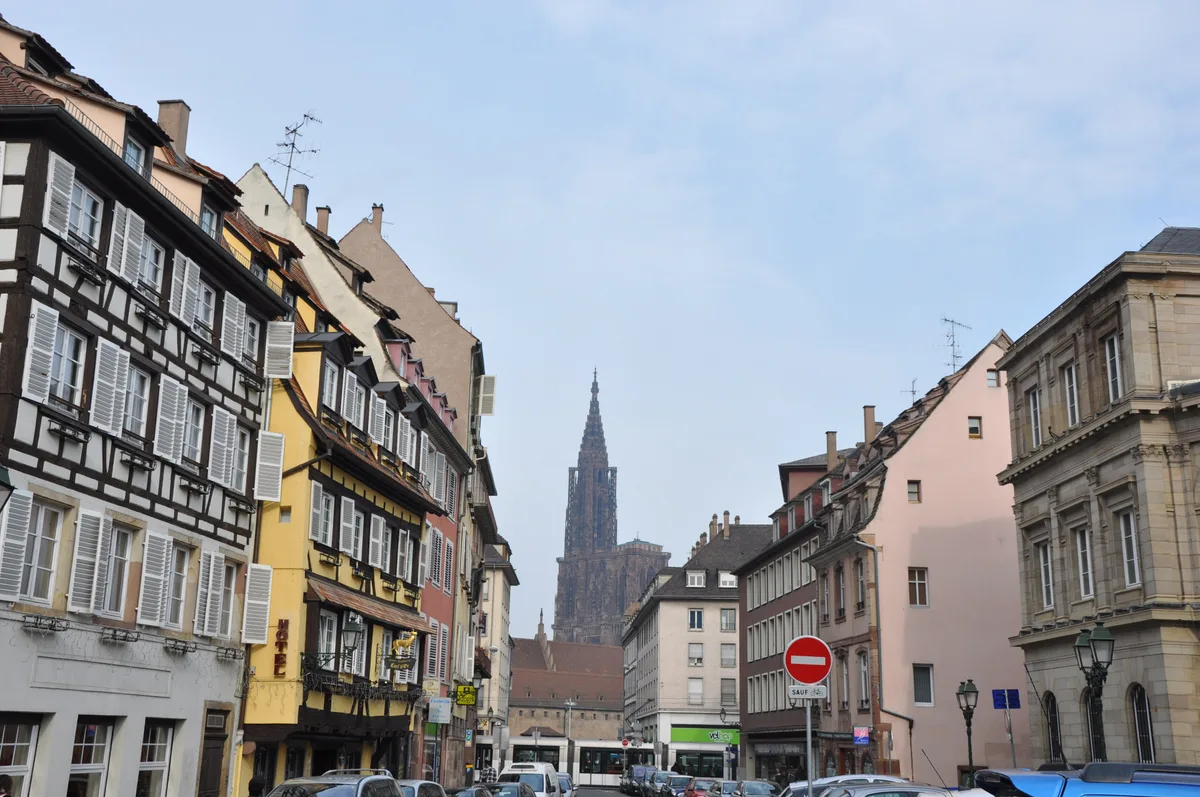
Water on every side
You can walk right around it. Grande-Île is an island in the strict sense: the River Ill curls around its southern edge, and the Fossé du Faux-Rempart canal closes the loop to the north. Every way in crosses a bridge, so you always know when you’ve arrived.
Inside that ring, the old city of Strasbourg is packed tight. Medieval lanes, half-timbered houses and red sandstone churches sit within a short stroll of each other. UNESCO listed the island as a World Heritage Site in 1988, the first time an entire city centre in France received the honour.
The cathedral and the squares around it
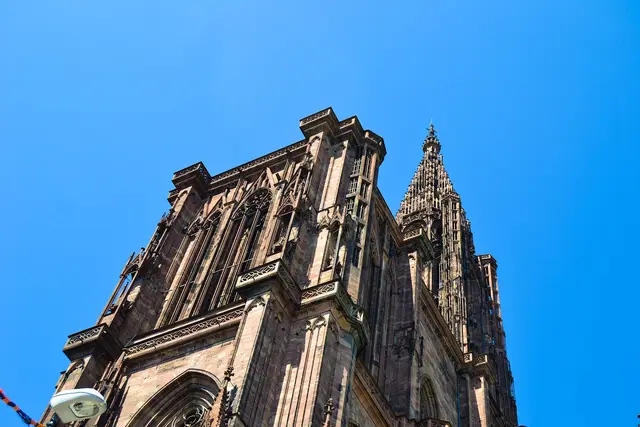
Start with the Cathédrale Notre-Dame. It is built of pink-red Vosges sandstone, which shifts from rust to rose depending on the light. The single spire was finished in 1439, and for centuries it made this the tallest building in the Christian world.
Inside, look for the astronomical clock in the south transept. Its parade of automata performs daily at 12:30, and people gather early to get a spot. Climbing to the viewing platform means more than 300 steps, and on a clear day the reward is a view across to the Black Forest in Germany.
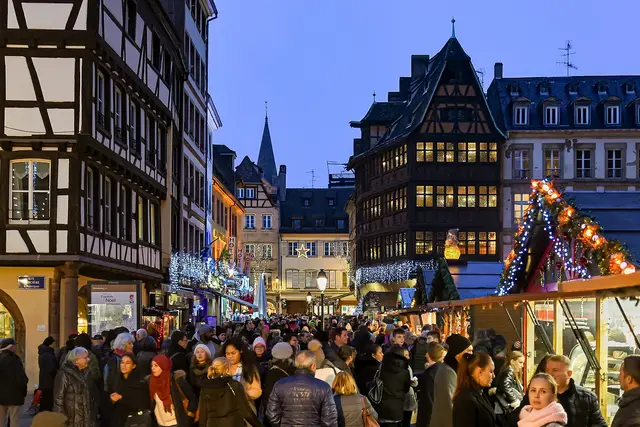
Step back out into Place de la Cathédrale and you’ll see the Maison Kammerzell, a heavily carved timber house from the late Gothic era. A few minutes’ walk takes you to:
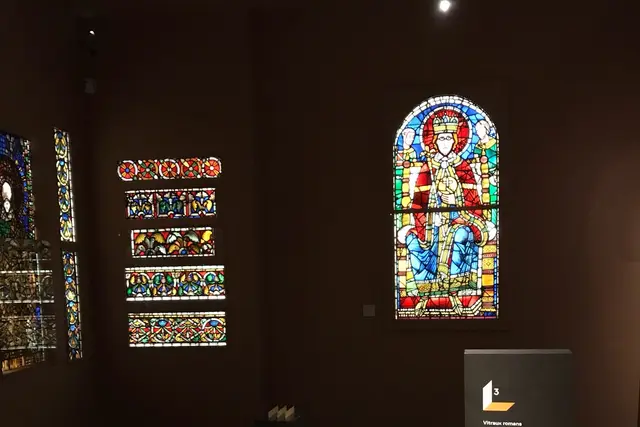
- Palais Rohan, the 18th-century bishops’ palace, now home to three museums
- Place Gutenberg, with its statue of the printing pioneer who once worked in Strasbourg
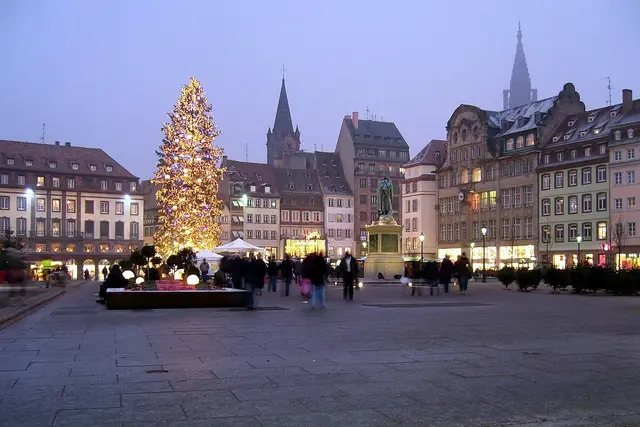
- Place Kléber, the island’s largest square and the main tram hub
Petite France and the covered bridges
The island’s western tip belongs to Petite France. Tanners, millers and fishermen once worked here, and their tall timber houses still lean over the canals. Some have open galleries under the roof, where hides used to hang to dry.
Rue du Bain-aux-Plantes is the street everyone photographs. Keep walking west to the Ponts Couverts, three bridges guarded by medieval towers. Behind them is the Barrage Vauban, a 17th-century defensive dam. Its roof terrace looks back over the towers toward the cathedral spire, and you can usually go up without paying.

Getting onto the island
The tram does most of the work. Homme de Fer, beside Place Kléber, is served by several lines and drops you in the middle of the island. Langstross/Grand’Rue and Broglie are also handy stops along the edges.
From Strasbourg’s main train station it’s about a 15-minute walk east. Cross the Ill at Pont Kuss and you’re in Petite France almost immediately. Leave the car behind: the island centre is largely pedestrianised, and the parking garages on its edge fill up quickly.
Batorama boat tours leave from near Palais Rohan and loop around the island. It’s a good way to make sense of the layout on your first afternoon.
Moving through Grande-Île the Strasbourg way
The streets never close, but how you move through them matters.
- Watch for bikes. Strasbourg is one of France’s most bike-friendly cities. Cyclists use the lanes beside the tram tracks, so look both ways before you step off a kerb.
- Say “bonjour” first. Greet whoever is behind the counter before you ask for anything. In Alsace, skipping that sounds rude.
- Eat in a winstub. These are traditional Alsatian wine taverns. Order tarte flambée (flammekueche), choucroute garnie or baeckeoffe, with a glass of Riesling or Sylvaner.
- Tipping is light. Service is included in the bill. Round up, or leave a little extra in cash for good service.
- Respect the services. The cathedral is a working church. Speak quietly and don’t walk around during Mass.
The museums and the cathedral platform change their hours through the year, so check the official sites for this month’s times before you plan your day around them.
When to come, and how long to stay
In December the island turns into Christkindelsmarkt, Strasbourg’s Christmas market. It has been held since 1570 and spreads out from Place Broglie into the squares near the cathedral. Expect very full streets and book a room early.
Spring and early autumn are calmer. Balconies are full of geraniums, and the canals are good for walking well into the evening. One full day covers the cathedral, Petite France and a museum. Two days let you slow down, take the boat tour and see the floodlit cathedral front after dark.
Getting there early pays off in any season. Morning light hits the cathedral’s west front before the tour groups arrive, and the back lanes of Petite France are at their quietest.
Frequently asked questions
How do I get to Grande-Île by public transport?
Take the tram to Homme de Fer, next to Place Kléber, which several lines serve. From Strasbourg train station it's about a 15-minute walk east, crossing the Ill into Petite France.
How long do I need on Grande-Île?
One full day covers the cathedral, the astronomical clock, Petite France and one museum at Palais Rohan. Two days give you time for a boat tour and an evening walk.
Is Grande-Île open at night?
Yes. The island is a public city quarter, so you can walk it at any hour. Individual sights like the cathedral platform and the museums keep their own seasonal hours, so check their official sites.
When does the astronomical clock perform?
The automata in the cathedral's south transept perform daily at 12:30. Arrive a little early, because people gather well before it starts.
What's the best time of year to visit?
December is for the Christkindelsmarkt, but the streets are very full and hotels book up. Spring and early autumn are calmer and better for walking along the canals.
Plan your trip to Strasbourg
France eSIM & staying connected →
Some links above are affiliate links — if you book through them, Wander Atlas earns a small commission at no extra cost to you. It's how we keep every guide free.