
Ulaanbaatar has statues of Chinggis Khaan almost everywhere you look. This is where the objects behind the legend are kept. The museum opened in 2022 as a purpose-built national institution, and it carries the story of the Mongolian steppe from long before the empire to long after it.
It’s well known and consistently well rated, so expect company. Nobody will mistake it for a secret. What you get in return is the most complete single telling of Mongolian imperial history anywhere in the capital.
A new building for an old empire
The scale is the first thing to plan around. This is a large, multi-floor modern building, and it takes time to walk. Galleries are arranged so you move through history in sequence, so it pays to begin at the start and keep going rather than hopping between floors.
Give yourself 2–3 hours if you read the labels. If you’re short on time, give 90 minutes to the Mongol Empire galleries alone and accept that you’ll skim the rest.
What the galleries actually cover
Chinggis Khaan is the name on the door, but he takes up only part of the building. The collection follows the peoples of the steppe in order. The Xiongnu come first, then the Turkic khaganates. The Mongol Empire comes next, and after it the successor states that ruled after it broke apart.
Things to look out for as you go:
- Steppe-empire material culture: horse gear, weapons, and the portable goods of a society that moved with its herds
- The imperial period: the administration, trade and communication networks that tied the empire together
- Script and documents: the traditional vertical Mongolian script appears throughout, and you’ll see it on the city’s banknotes and some signage afterwards
- Later khanates and the Buddhist era: how Mongolia’s story continued after the empire fragmented
English labelling is there for the main displays. Some smaller items carry less explanation, so read up a little beforehand.
Chinggis, not Genghis
The spelling on the building is deliberate. “Genghis Khan” is the Persian-influenced form Western readers grew up with. “Chinggis Khaan” is the standard Mongolian romanisation. In Mongolian Cyrillic the museum is Чингис хаан үндэсний музей.
The difference goes deeper than spelling. Most Western accounts frame the empire through the cities it conquered. Here you get the Mongolian view: a lawgiver and state-builder who united the tribes, created a written legal code and opened the trade routes across Eurasia.
You don’t have to accept every framing. But reading the galleries with that lens explains a lot about the rest of Ulaanbaatar: the square, the airport and the vodka bottles that all carry his name.
Finding it from Sükhbaatar Square
Ulaanbaatar has no metro, so you’ll arrive on foot, by taxi or by bus. The address is Sambuu Street at Revolutionaries Avenue (Khuvisgalchdyn Örgön Chölöö), in the 4th khoroo of Chingeltei District. That puts it a short walk north-west of Sükhbaatar Square, the city’s central plaza that is sometimes still signed as Chinggis Square.
If you’re staying anywhere near Peace Avenue, walking is usually faster than a car. Traffic in central Ulaanbaatar is notoriously slow at rush hour. For a taxi, show the driver the Mongolian name written above; it works better than an English spelling.
Timing it: hours, winter and Naadam
The current schedule is simple. Right now the museum opens 9am–5pm every day, Monday through Sunday, with no shorter day this week. That can change with the season and around public holidays, so check the official site before you commit to a day.
Two seasonal patterns matter more than the clock:
- Winter: Ulaanbaatar is the coldest national capital on earth. A long indoor museum is one of the best ways to spend a January afternoon in the city.
- Naadam (mid-July): the national festival fills the city with domestic and foreign visitors. Holiday closures are possible too, so confirm the dates before planning around it.
Arriving soon after opening generally gives you the first galleries before tour groups build up. Last entry is likely before closing time, so don’t turn up at 4:30pm expecting to see much.
At the ticket desk and in the galleries
A few habits make the visit smoother.
- Ask about photography at the desk. Many Mongolian museums treat camera use separately from entry. Ask whether a permit is needed before you raise your phone.
- Check your coat. From October to April you’ll come in wrapped up for subzero streets. The galleries are heated, so use the cloakroom if one is offered.
- Pay in tögrög or by card. Cards are widely accepted in central Ulaanbaatar. Admission is posted at the ticket desk and on the official site.
- Ask about guided tours. Guided options in English and other languages may be available. Asking at the desk when you arrive is the surest way to find out.
- Keep your voice down near ceremonial objects. Chinggis Khaan holds near-sacred status in Mongolia, and many Mongolian visitors treat his galleries with real reverence.
After the museum: what’s within walking distance
You come out in the densest cluster of sights in the city. Walk back to Sükhbaatar Square to see the Government Palace and the seated Chinggis Khaan statue across its façade. That’s the same figure you’ve just spent hours reading about, in monument form.
On the square’s edge, the Central Museum of Mongolian Dinosaurs covers the Gobi’s fossil finds and makes a good, shorter second museum. South of the square, the Choijin Lama Temple Museum is a monastery complex from the early 20th century, standing among the office towers.
If you still have energy, take a taxi west to Gandantegchinlen Monastery. It is the country’s main working Buddhist monastery, and it shows the faith that followed the empire, which the museum’s later galleries cover.
Frequently asked questions
Where is the Chinggis Khaan National Museum in Ulaanbaatar?
It's on Sambuu Street at Revolutionaries Avenue, in the 4th khoroo of Chingeltei District. That's a short walk north-west of Sükhbaatar Square in central Ulaanbaatar. For a taxi, show the driver the Mongolian name: Чингис хаан үндэсний музей.
What are the opening hours?
At the moment it opens 9am–5pm every day, Monday to Sunday. Museum hours can shift with the season and around public holidays, so check the official site for current times before you go.
How long should I spend there?
Allow 2–3 hours to move through the galleries in order and read the labels. With only about 90 minutes, focus on the Mongol Empire galleries.
Is it worth visiting in winter?
Yes. Ulaanbaatar is the coldest national capital in the world, and a large heated museum is one of the best indoor options in the city from October to April. Use the cloakroom if one is offered.
What else is nearby?
Sükhbaatar Square with the Government Palace and its Chinggis Khaan statue is a short walk away. So are the Central Museum of Mongolian Dinosaurs and the Choijin Lama Temple Museum. Gandantegchinlen Monastery is a short taxi ride west.
Plan your trip to Ulaanbaatar
Mongolia eSIM & staying connected →
Some links above are affiliate links — if you book through them, Wander Atlas earns a small commission at no extra cost to you. It's how we keep every guide free.
Related guides
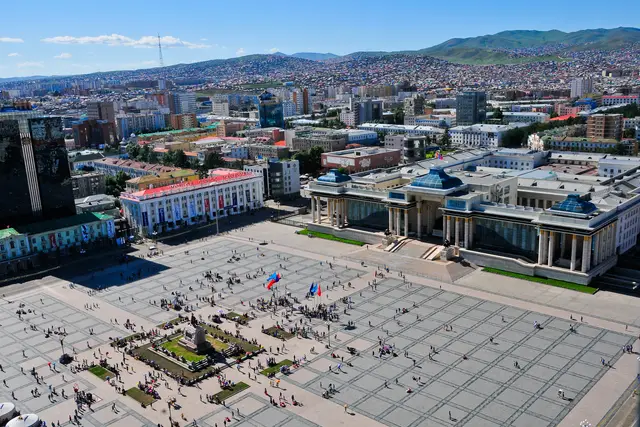 attraction
 Sükhbaatar Square: Ulaanbaatar Travel Guide (4.6★)
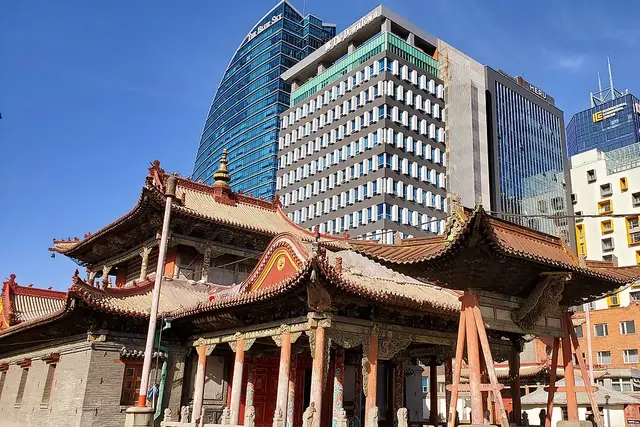 attraction
 Choijin Lama Temple Museum: Ulaanbaatar Travel Guide (4.4★)
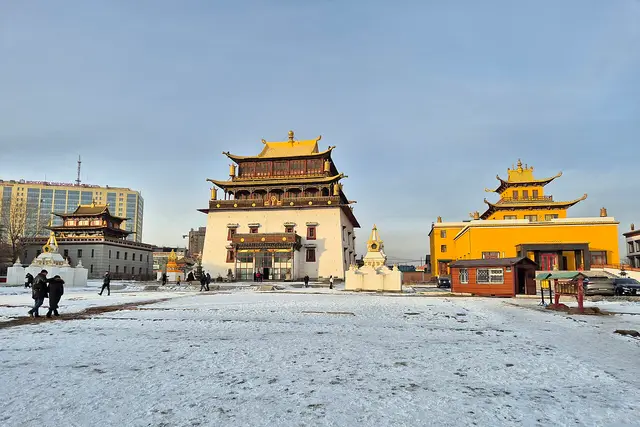 attraction
 Gandantegchinlen Monastery: Ulaanbaatar Travel Guide (4.4★)
 hidden gem