
A city’s front room, paved in stone
Look north and the Government Palace fills the whole horizon. In its colonnade a huge bronze Genghis Khan (Chinggis Khaan) sits enthroned. His successors Ögedei and Kublai flank him, and mounted warriors stand guard at the corners.
Everything else in Ulaanbaatar seems to lead to this flat grey plaza. Traffic on Peace Avenue (Enkh Taivny Örgön Chölöö) runs along its southern edge. Taxis, buses and pedestrians all funnel past it, which is why locals use it as their default meeting point.
The man on the horse
At the centre stands Damdin Sükhbaatar on a rearing horse. He was a leader of the 1921 revolution, and legend says his horse urinated on this exact spot, which he took as a good omen. The square carries his name, and you will hear it called Sükhbaataryn Talbai in Mongolian.
The name has moved with politics. In 2013 the square was officially renamed Chinggis Square, then it reverted to Sükhbaatar Square in 2016. Older maps and some taxi drivers still use either name.
The Genghis Khan monument is newer than it looks. It went up in 2006 for the 800th anniversary of the Mongol Empire. The mausoleum of Sükhbaatar and Choibalsan, a Soviet-style tomb, was demolished to make room for it.
Reading the buildings around the edge
Turn slowly in a circle and the square tells you Mongolia’s 20th century in architecture. What to pick out:
- North: the Government Palace, home of parliament, behind the Chinggis colonnade.
- East: the State Opera and Ballet Theatre, a salmon-pink neoclassical building, and the Central Cultural Palace beside it.
- West: the small Mongolian Stock Exchange, housed in a former children’s cinema.
- Southwest: the glass Blue Sky Tower, shaped like a sail, which stands out against the Soviet-era blocks.
The National Museum of Mongolia sits just behind the palace’s northwest corner. It is the logical next stop if you want the story behind the statues.

Timing your visit through the year
It is open around the clock, but the season decides a lot. In winter Ulaanbaatar is among the coldest capitals on earth, so the bare stone gets brutal. Keep a midwinter visit short and duck into the museum to thaw.
Summer evenings stay light late, and the square fills with families and children on rented toy cars and bikes. Around Naadam in July, ceremonies tied to the national festival take place at the Government Palace. Expect barriers and crowds that week, and check local announcements before you go.
Thirty minutes covers the monuments. An hour lets you take in the surrounding buildings and watch the square’s life go by.
Sharing the square with Ulaanbaatar
Few international visitors linger here, despite it being the city’s ceremonial centre. Here is how to fit in:
- Ask for it by name. Tell drivers “Sükhbaatar talbai.” Ride-hailing apps such as UBCab are easier than haggling in Mongolian.
- Stay off the monuments. The statues are national symbols, and climbing the Chinggis steps or the Sükhbaatar plinth will draw a guard’s whistle.
- Give the photo shoots room. Graduates and wedding parties often pose in front of the palace. Step around their frame rather than through it.
- Watch your pockets. Pickpocketing is a known problem in central Ulaanbaatar. Keep phones zipped away in crowds and on the busy stretch of Peace Avenue toward the State Department Store.
- Expect protests sometimes. This is where Mongolians gather to demonstrate. Rallies are usually peaceful, but give them space.
Cards work in most cafés and shops around the square, though a little cash in tögrög helps at small kiosks.
Walking on from here
The square works best as a starting point. From the palace, these are all short walks:
- National Museum of Mongolia: directly northwest, covering prehistory to the democratic revolution of 1990.
- Choijin Lama Temple Museum: a few minutes south across Peace Avenue, a Buddhist temple complex framed by modern towers.
- State Department Store: west along Peace Avenue, known for its top-floor souvenir and cashmere section.
Gandan Monastery is further west and is worth a taxi. Go in the morning, when the monks’ chanting is usually underway.
Frequently asked questions
Where exactly is Sükhbaatar Square?
It is in Sükhbaatar District in central Ulaanbaatar, on the north side of Peace Avenue. The Government Palace is on its north side and the State Opera and Ballet Theatre on its east. Ulaanbaatar has no metro, so walk from central hotels or ask a taxi for "Sükhbaatar talbai."
Is the square open at night?
Yes. It is a public square and is currently listed as open 24 hours every day. Access can be restricted during state ceremonies or major events.
How long should I spend there?
Allow 30 minutes for the Sükhbaatar and Chinggis Khaan monuments, or about an hour to take in the surrounding buildings. Add a couple of hours if you continue to the National Museum of Mongolia next door.
Is it the same place as Chinggis Square?
Yes. It was officially called Chinggis Square from 2013 to 2016, then went back to the name Sükhbaatar Square. Locals and older maps may use either name.
What is nearby?
The National Museum of Mongolia is just northwest. The Choijin Lama Temple Museum is a short walk south across Peace Avenue, and the State Department Store is a few minutes west. Gandan Monastery is a short taxi ride away.
Plan your trip to Ulaanbaatar
Mongolia eSIM & staying connected →
Some links above are affiliate links — if you book through them, Wander Atlas earns a small commission at no extra cost to you. It's how we keep every guide free.
Related guides
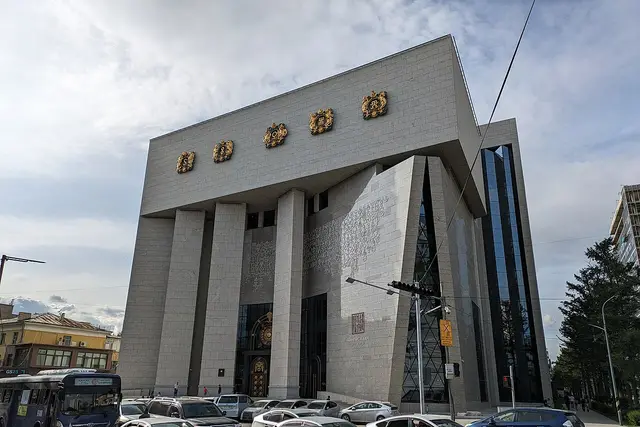 attraction
 Chinggis Khaan National Museum Mongolia: Ulaanbaatar Travel Guide
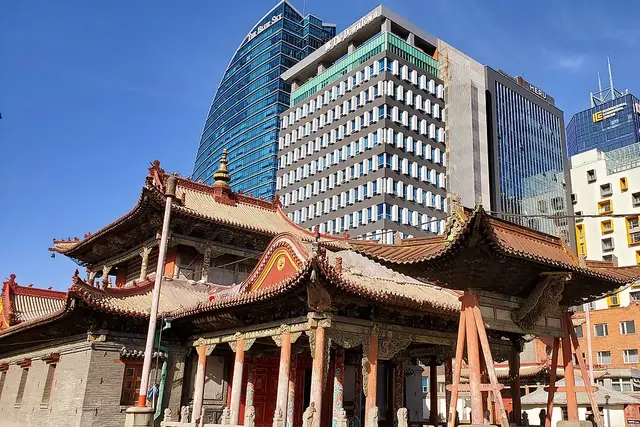 attraction
 Choijin Lama Temple Museum: Ulaanbaatar Travel Guide (4.4★)
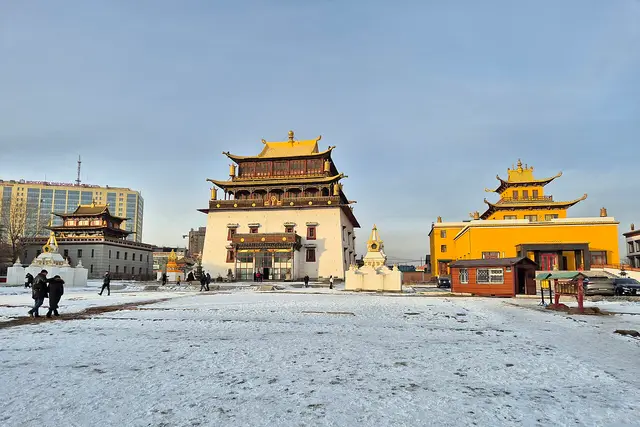 attraction
 Gandantegchinlen Monastery: Ulaanbaatar Travel Guide (4.4★)
 hidden gem