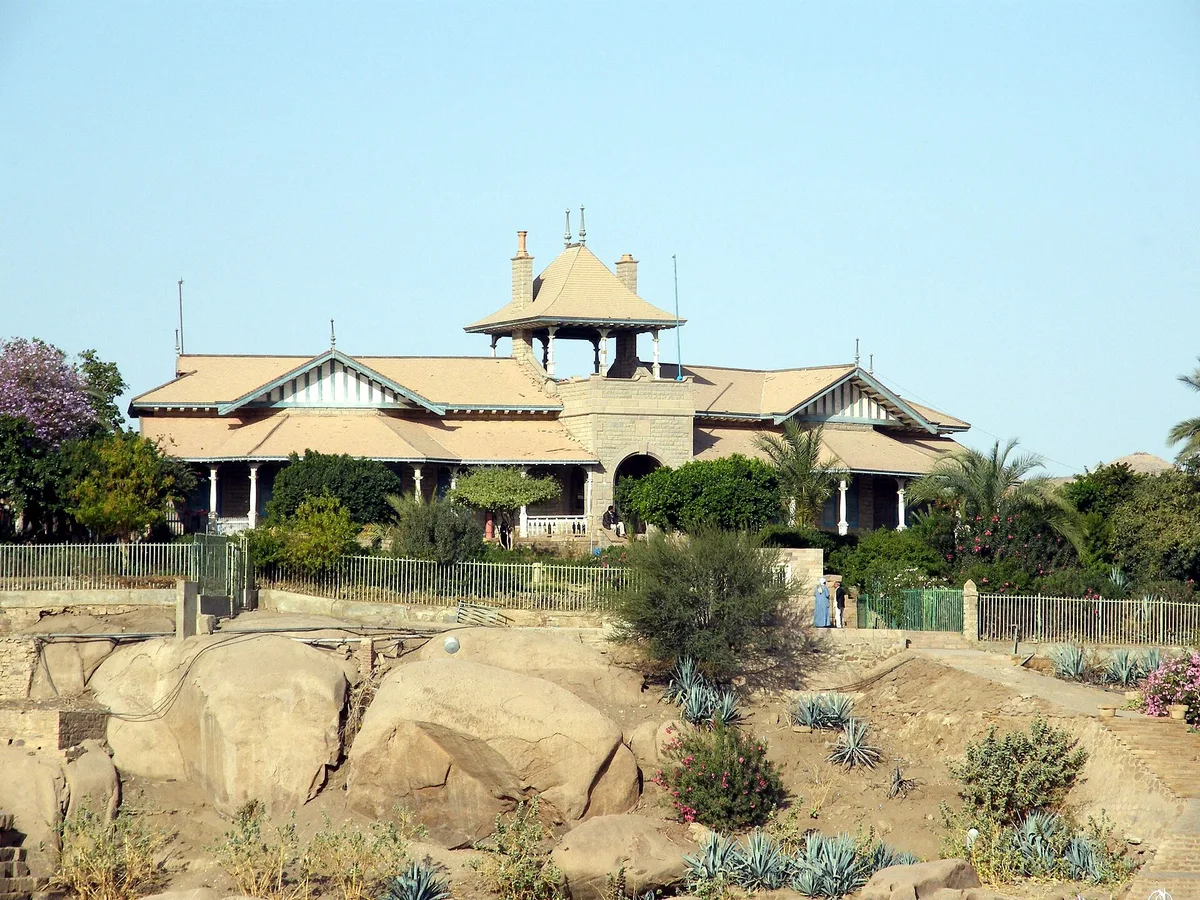
A villa full of the dam’s leftovers
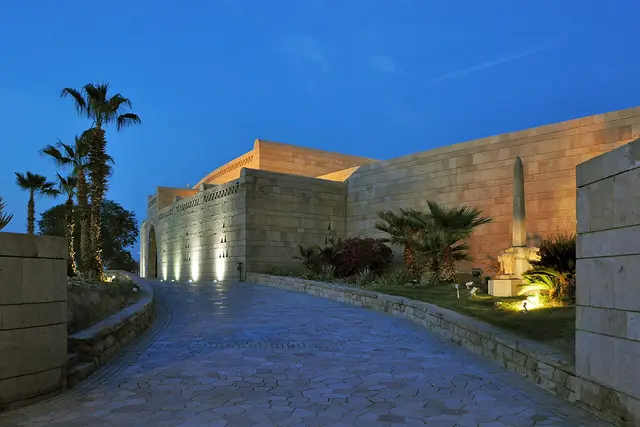
The museum is small, and that suits it. It occupies a colonial-era villa on Elephantine Island, a house linked to the British engineers who built the first Aswan Dam. The collection came out of the ground during that construction: pottery, statuary, funerary goods and Roman-period pieces from Nubia and the cataract region.
You walk from room to room past glass cases rather than through grand halls. The best-known exhibit is a mummified ram, tied to Khnum, the ram-headed creator god worshipped on this island. Outside, the grounds open onto the excavated remains of Abu, the ancient town that Elephantine once was.
Crossing to Elephantine
You need a boat to get there. Public ferries cross from the Corniche el-Nil on the east bank to Elephantine in a few minutes, carrying locals with shopping bags as much as visitors.
- Public ferry: cheapest option, frequent, pay the boatman in small Egyptian pound notes.
- Felucca or motorboat: negotiate before boarding; easy to combine with Kitchener’s Island (the Botanical Garden).
- On foot once landed: the museum is at the island’s southern end, beyond the Nubian villages of Siou and Koti.
Ruins, Nilometer and the rest of the island
Budget about an hour for the museum, then another hour or more outside. The archaeological zone around it covers the Temple of Khnum’s foundations, a reconstructed Temple of Satet, and one of Aswan’s ancient Nilometers. The Nilometer is a stone stairway cut down to the river, with markings that tracked the height of the annual flood.
Afterwards you can walk back north through the Nubian villages, where the houses are painted in bright colours. Across the water on the west bank sit the Tombs of the Nobles. Inland on the east side is the much larger Nubian Museum. If you are short on time, choose that one; if you already know it, this museum fills in the local story.
Getting the most from your hour on the island
Most of the shade is indoors, so it helps to plan the outdoor ruins around the sun. Currently the doors open at 9:00 AM and close at 7:00 PM. Antiquities sites shift their hours through the year and on holidays, so confirm on the Ministry of Tourism and Antiquities site before crossing.
- Tickets: buy them at the entrance and check there what the ticket covers, museum only or the ruins as well. Payment rules at Egyptian sites change, so carry a card and some cash.
- Guardians: site attendants may offer to unlock a corner or point out a carving, then expect a small baksheesh. You can say a polite “la, shukran” (no, thank you) up front.
- Photography: rules on phones and cameras are posted at the ticket window. Ask before photographing the mummies.
- Dress: cover your shoulders and knees for the walk through the villages; they are residential, not a theme park.
- Water: bring it with you. The southern tip has few places to buy any.
Frequently asked questions
How do I get to Aswan Museum?
Take a public ferry or hire a felucca from the Corniche el-Nil to Elephantine Island, then walk to the island's southern tip, where the museum stands beside the ancient ruins of Abu.
What are the opening hours?
At the moment Google lists 9:00 AM–7:00 PM every day. Antiquities sites change hours seasonally and on holidays, so check the official Ministry of Tourism and Antiquities site before you go.
How long should I spend there?
Around an hour for the museum itself, plus an hour or more for the Temple of Khnum remains, the Temple of Satet and the Nilometer outside.
What is the museum known for?
Egyptian and Roman artefacts found during excavations for the Aswan Dam, displayed in an old villa. Its best-known piece is a mummified ram linked to the god Khnum.
Should I visit this or the Nubian Museum?
The Nubian Museum on the east bank is larger and the better pick if you only have time for one. Aswan Museum adds the archaeology of Elephantine Island itself and pairs well with a walk through the island's Nubian villages.
Plan your trip to Aswan
Egypt eSIM & staying connected →
Some links above are affiliate links — if you book through them, Wander Atlas earns a small commission at no extra cost to you. It's how we keep every guide free.