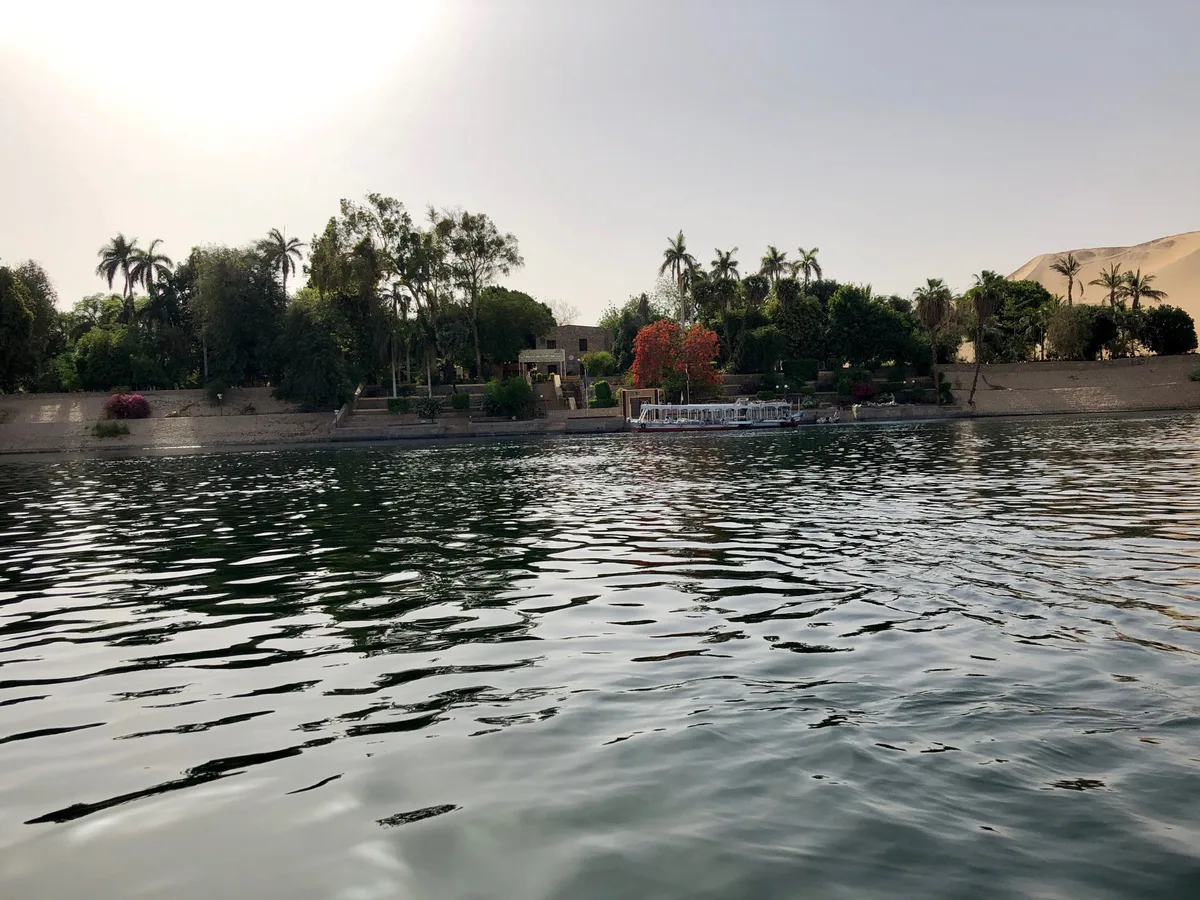
An island you reach under sail
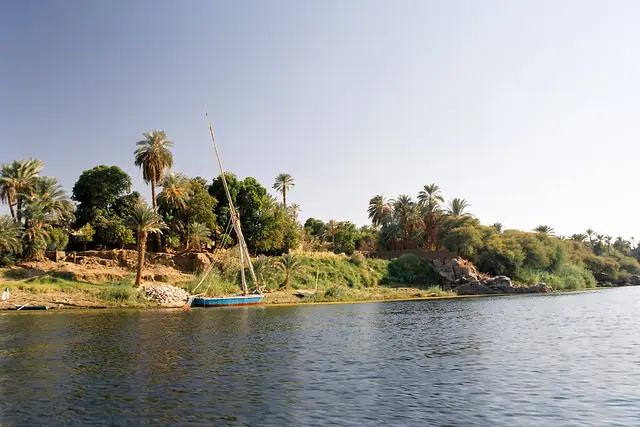
There’s no bridge to this garden. The whole island is planted, and the only way on is across the water. The boat ride is part of the outing, not a chore before it.
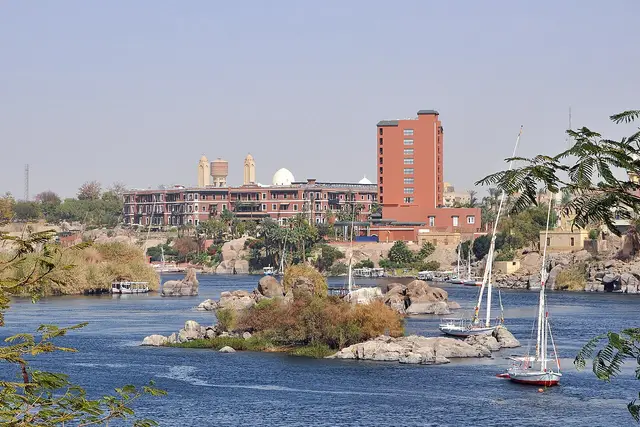
From the Corniche you look across the river at a low strip of green between Elephantine Island and the west bank. Behind it, the sand climbs to the Tombs of the Nobles at Qubbet el-Hawa. Your felucca or motorboat sets you down at a small landing, and from there the paths go off under the trees.
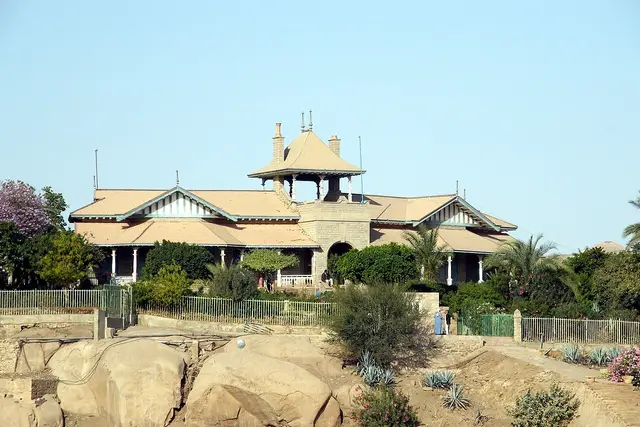
What Kitchener left behind
In the 1890s the island was handed to Lord Kitchener, then commanding the Egyptian army. He turned it into a private garden and had plants shipped in from India, Southeast Asia and other parts of Africa. Locally it still goes by his name, Kitchener’s Island, and the Arabic name Geziret el-Nabatat means “Island of Plants”.
The state now runs it as a botanical garden. The layout still feels like a private estate that someone tended for decades:
- Long avenues of tall palms run the length of the island
- Broad ficus and other tropical trees cast deep, cool shade
- Bougainvillea and flowering shrubs spill over the path edges
- Many specimens have small labels, often with the botanical name
The plants are only half of it. Wherever the trees open up, you get the Nile: granite boulders mid-river, white feluccas tacking past, and the dun-coloured west bank across the channel.
Doing the felucca crossing properly
Most visitors arrive by felucca, and that is the right call. Captains wait along the Corniche, near the hotels and the ferry landings. Lots of people combine the garden with a longer sail around Elephantine and the islands.
Settle the deal on the quay before you step aboard. Three things matter:
- The fare, and whether it covers the whole boat or each person
- How long the captain will wait while you’re on the island
- Which other stops are included, if you want them
If there’s no wind, a felucca can barely move. Motorboats cross faster and don’t depend on the weather, and they’re handy when your time is short. Whichever you take, the entry ticket is a separate thing: you pay it at the garden entrance, where the current price is posted.

Beating the tour boats to the shade
You’ll share the island. It’s a well-known stop on Aswan sightseeing itineraries and on many Nile cruise programmes, and it gets busy.
It’s quietest from 8am to 11am on weekdays. At weekends, the calm hour is 8am to 9am. Try not to land between 9am and 11am, or between 2pm and 5pm, on a weekend. Those are the usual busy windows, with groups crowding the main avenue and the landing.
Going early also makes sense for comfort. Aswan heats up quickly, and the morning light across the river is softer for photos. At the moment the garden opens 8am to 5pm every day. Gardens shift their hours with the seasons and on holidays, though, so check the current times before you book a boat for late afternoon.
Moving through the garden like you belong
Look up the plan at the entrance first, then leave the main avenue. The side paths near the island’s edges are where you’ll find a bench with an open view of the river and nobody else around.
A few habits help the visit go smoothly:
- Dress modestly. Shoulders and knees covered is the norm in Aswan, and it also protects you from the sun.
- Carry small notes in Egyptian pounds. Boat captains and tips are usually paid in cash.
- Expect a request for baksheesh if someone points out a plant or offers to take your photo. A small tip is normal, and you can politely decline before they start.
- Leave the plants alone. Don’t pick flowers or climb trees, even when the low branches tempt you.
- Bring water. Don’t count on buying exactly what you want on the island.
Allow one to two hours in the garden itself. Add the crossing time on top, plus extra if your felucca is tacking against the wind.
Birds, shade and the slow afternoon
Being an island helps the wildlife. River birds work the edges of the garden, and you’ll often spot egrets on the banks and kingfishers over the water. Bring binoculars if you have them. The quieter perimeter paths are the best places to watch.
Plenty of people treat the garden as a place to rest rather than a list of sights. You find a bench under the palms and watch the feluccas pass. It’s a welcome break after a morning in the heat at temples and quarries.
Pairing it with the west bank and Elephantine
The garden sits among several of Aswan’s best river sights, so one boat can link a few of them:
- Elephantine Island, right next door, has Nubian villages and the ruins of ancient Abu
- Tombs of the Nobles (Qubbet el-Hawa) are cut into the west-bank cliff, with views back over the garden
- Aga Khan Mausoleum stands on the west-bank hillside to the south
- Monastery of St Simeon is reached by a walk or a camel ride up from the west bank
- Nubian Museum, back on the east bank, covers the people of this stretch of the Nile
The easy plan is to do the garden first, while it’s quiet, and then let the boat carry you on. Finish on the water as the light drops, with the garden’s palms dark against the west bank.
Frequently asked questions
How do I get to Aswan Botanical Garden?
It covers Kitchener's Island in the Nile, so you have to arrive by boat. Hire a felucca or motorboat on the Aswan Corniche, or make the short crossing from Elephantine Island. Before you board, agree the fare, how long the captain will wait and any other stops.
When is the quietest time to visit?
It's usually quietest from 8am to 11am on weekdays and from 8am to 9am at weekends. Try not to arrive between 9am and 11am, or between 2pm and 5pm, on weekends, because those are the usual busy periods.
What are the opening hours?
At the moment it opens 8am to 5pm every day. Hours can change with the seasons and on holidays, so check the current times before planning a late-afternoon visit.
How long should I spend there?
Allow one to two hours on the island, plus the boat crossing each way. Give yourself more time if you're going by felucca and the wind is light.
What else can I combine it with nearby?
Elephantine Island is right next door. The Tombs of the Nobles at Qubbet el-Hawa, the Aga Khan Mausoleum and the Monastery of St Simeon are all on the west bank, and one boat trip can link them up. The Nubian Museum is back on the east bank.
Plan your trip to Aswan
Egypt eSIM & staying connected →
Some links above are affiliate links — if you book through them, Wander Atlas earns a small commission at no extra cost to you. It's how we keep every guide free.