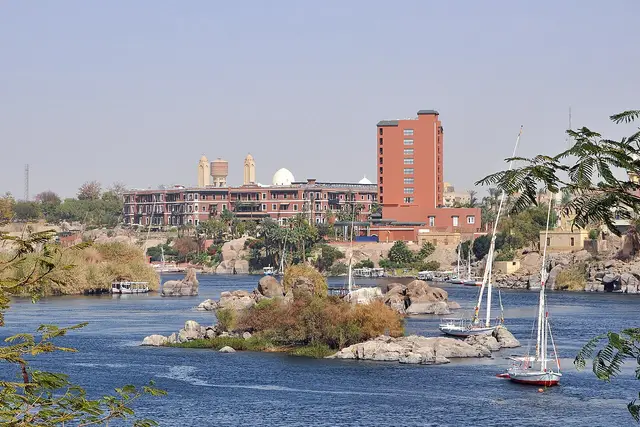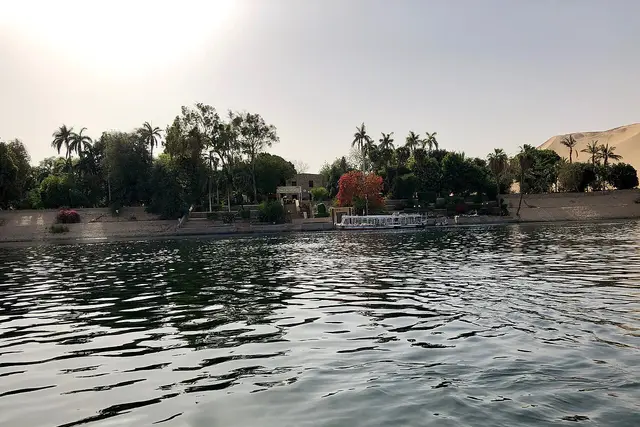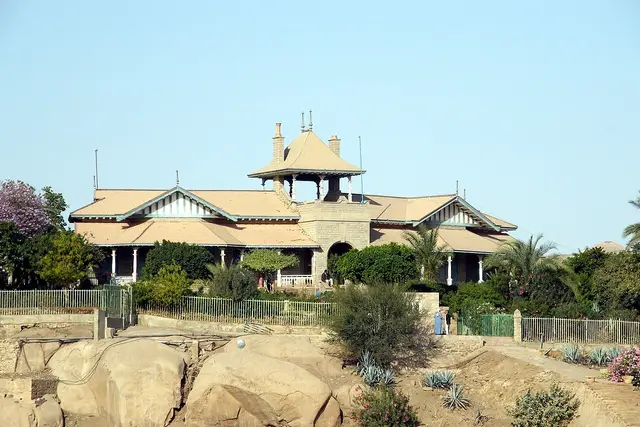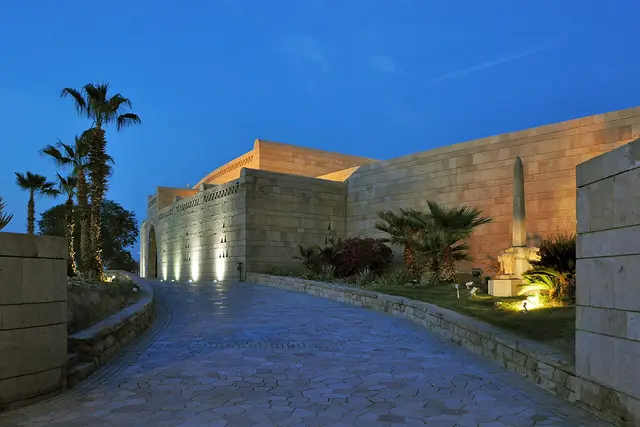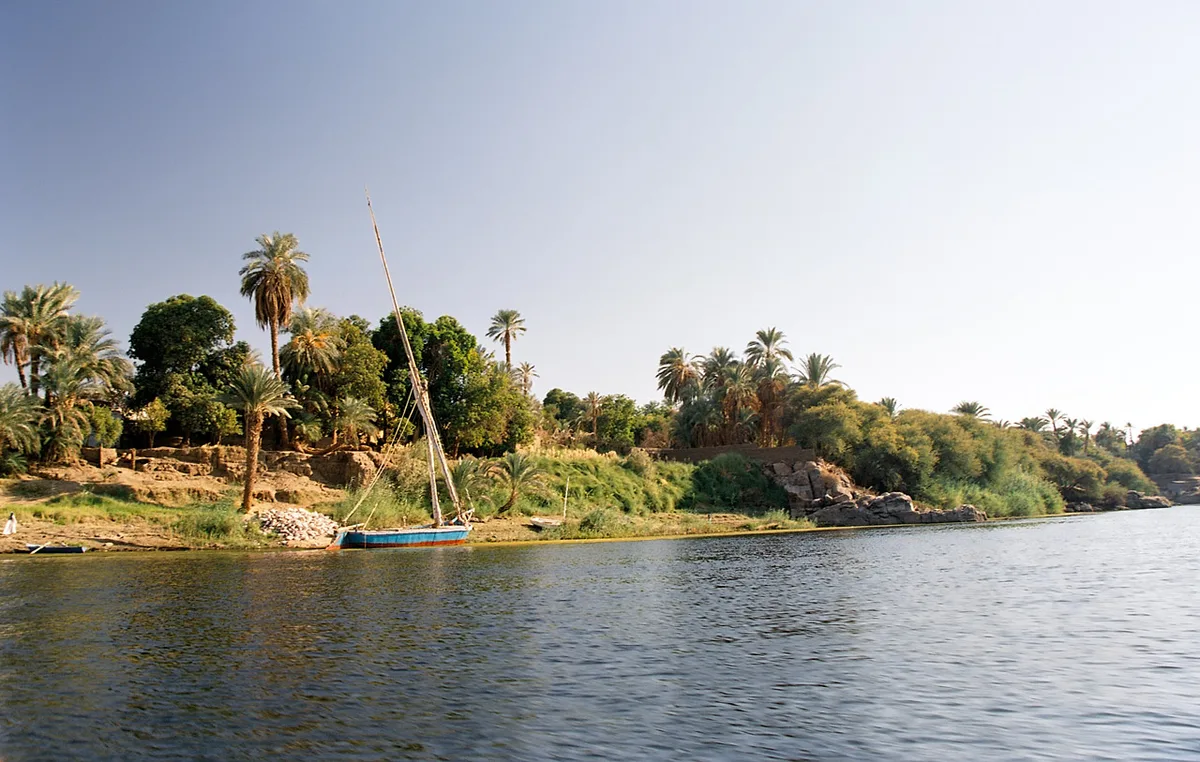
Stand on Aswan’s Corniche and look across the water. The long, low island in front of you, with granite boulders at its southern tip and palm trees along its spine, is Elephantine. It is close enough to see people on it and far enough that the traffic noise of the city drops away once you land.
The island is small, roughly a kilometre and a bit from end to end. It holds two very different things: the excavated ruins of one of Egypt’s oldest frontier towns, and Nubian villages where people still live, farm and keep animals. Most visitors to Aswan sail past it. Far fewer step off the boat.
Why the island is worth the crossing
Elephantine was once the border. For much of ancient Egyptian history, this island marked the southern edge of Egypt proper, the point where the First Cataract broke the river into rocks and rapids. Trade from Nubia and Africa beyond passed through here.
Its ancient name was Abu, a word linked to elephants and ivory. The Greeks translated it, and the name stuck. Walking the island, you move from mud-brick and sandstone foundations thousands of years old to a village lane with satellite dishes in a matter of minutes.
That compression is the point. You will not get it at the big temple sites, where everything ancient is fenced off from everything living.
The ferry from the Corniche
Getting across is easy and quick. Public ferries, small motorboats with bench seats, run from landings along the Corniche in central Aswan. One lands near the archaeological site and museum at the southern end; another serves the Nubian villages further north.
Your options:
- Public ferry: the cheapest and most direct route, shared with residents carrying shopping and schoolbags. Pay on board in Egyptian pounds and carry small notes.
- Felucca: the traditional wooden sailing boat. Agree the route and price with the captain before you board, and decide whether he waits for you.
- Motorboat hire: useful if you want to combine Elephantine with Kitchener’s Island or the west bank in one trip.
The crossing takes only a few minutes. Ask which landing the boat is heading for before you sit down.
The ruins of Abu
The archaeological zone covers the southern part of the island. It looks rough at first: low walls, scattered blocks, sandy paths between the boulders. Give it time and the layout starts to make sense.
The main remains belong to temples of the gods who guarded the cataract and the river’s source. Khnum, the ram-headed creator god, was believed to control the Nile flood from caves beneath this stretch of river. Satet, his consort, had a temple here that was rebuilt again and again over many centuries. Parts of it have been reconstructed so you can read its outline.
German archaeologists have excavated on Elephantine for decades, and information boards explain the layers of the town. The site museum sits nearby. Tickets for the archaeological zone are sold at the entrance, where the current price is posted.

Reading the river: the Nilometer
This is the detail that makes Elephantine unlike anywhere else on a Nile itinerary. Near the temple of Satet, a stone staircase runs down the bank straight into the water. Its walls carry marked scales that priests and officials used to measure the height of the annual flood.
The reading mattered enormously. A good flood meant a good harvest, and the level was used to set taxes for the year. Too low meant hunger; too high meant destruction. Elephantine, being the first point the flood reached in Egypt, gave the earliest warning.
Stand at the top of the steps and look down. The river is now controlled by the dams upstream, so the flood that once filled the staircase no longer comes. The markings stay where they were.
Through Siou and Koti
North of the ruins, the island changes character. The Nubian villages of Siou and Koti spread along sandy lanes between houses painted in bright blues, yellows and ochres, many with patterned doorways. Small fields and palm groves fill the gaps.
There are no ticket gates here and no set route. You simply walk. The lanes are narrow and loop back on themselves, so getting slightly lost is part of the experience and rarely a problem on an island this size.
Some homes operate as guesthouses or small cafés. A few residents sell handicrafts. Following the paths to the western edge brings you out on the river, facing the green of Kitchener’s Island and the sand hills of the west bank.
Walking the villages without intruding
These villages are homes first. A few habits make the visit easier for everyone:
- Greet people. “Salaam aleikum” is understood everywhere; many residents also speak Nubian among themselves.
- Ask before photographing people, especially women and children. Doors and walls are fine; faces need permission.
- Dress modestly. Covered shoulders and knees are respectful in a residential village.
- If you are offered tea, it is usually hospitality with an expectation of a small tip, or an invitation into a shop. Accept or decline politely.
- Use cash. Ferries, cafés and craft sellers deal in Egyptian pounds, and small notes save awkward change hunts.
If someone offers to guide you, agree on whether it is paid before you start walking.
Timing the heat and the light
Aswan is one of the hottest cities in Egypt. Between October and April the island is comfortable to explore on foot at most times of day. From May to September, start early in the morning and be off the exposed ruins before the midday sun, since there is little shade among the stones.
Late afternoon gives the warmest light on the painted village walls and the granite boulders. It also lines you up for a felucca back across the river as the sun drops behind the west bank.
Plan two to three hours for the ruins, the Nilometer and a loop through the villages. If you want more, combine it with a few nearby stops:
- Kitchener’s Island (Aswan Botanical Garden), just west by boat
- Tombs of the Nobles at Qubbet el-Hawa on the west bank
- The Corniche in Aswan itself, right at the ferry landings
Frequently asked questions
How do I get to Elephantine from Aswan?
Take a public ferry from the landings on Aswan's Corniche. One lands near the ruins and museum at the southern end, and another serves the Nubian villages. You can also hire a felucca or motorboat, but agree the route and price before you board.
How long should I spend on Elephantine?
Two to three hours covers the ruins of Abu, the Nilometer and a walk through the villages of Siou and Koti. If you want a felucca ride or a visit to Kitchener's Island as well, allow half a day.
What is the best time of year to visit?
October to April is the most comfortable time to walk the island. In the summer months, go early in the morning, because the ruins have very little shade.
Can I walk around the Nubian villages freely?
Yes. There is no gate and the lanes are open to walkers. These are people's homes, though, so dress modestly, greet people as you pass and ask before you photograph anyone.
What else is nearby?
From Elephantine it is a short boat ride to Kitchener's Island (Aswan Botanical Garden) and to the Tombs of the Nobles at Qubbet el-Hawa on the west bank. The Corniche in central Aswan is right at the ferry landings.
Plan your trip to Aswan
Egypt eSIM & staying connected →
Some links above are affiliate links — if you book through them, Wander Atlas earns a small commission at no extra cost to you. It's how we keep every guide free.