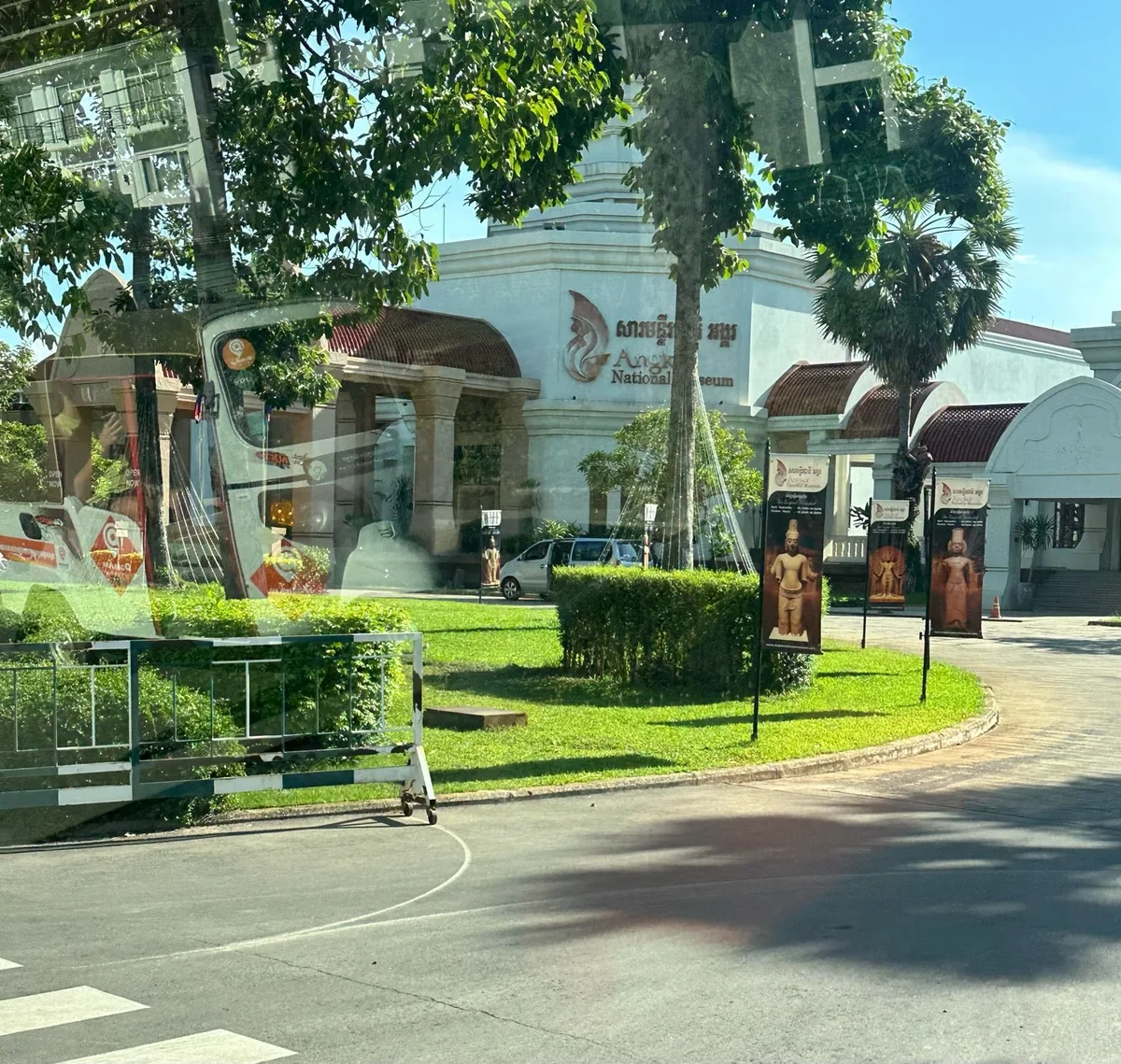
Why go before the temples
Start here before you start climbing over sandstone. The Angkor National Museum exists to explain what you’re about to see at Angkor Wat, Bayon, and Ta Prohm, and it does that job well.
Inside, air-conditioned galleries hold hundreds of genuine Khmer artifacts: sandstone Buddhas, Hindu deities, inscribed steles, royal costumes. Without this context, the temples become impressive rubble. With it, you start reading the carvings.
What you’ll actually see
The museum unfolds across eight themed galleries, moving roughly chronologically through Khmer civilization. The showpiece is the Gallery of a Thousand Buddhas, a dim, atmospheric hall lined with Buddha statues of every size, some missing heads or hands from centuries of looting and war.
Other rooms cover:
- Khmer costume and textiles, with mannequins in royal dress
- Religious sculpture, Shiva, Vishnu, and Hindu iconography that predates Angkor’s Buddhist era
- Angkor Wat itself, with a dedicated gallery on its construction and symbolism
- Pre-Angkorian history, tracing the kingdoms that came before the temple-building boom
Most panels are in English and Khmer, with an audio guide available in several languages at the entrance desk. Photography is generally restricted inside, so leave the camera in your bag and just look.
Getting there and timing your visit
The museum sits on Vithei Preah Sihanouk Avenue, close enough to central Siem Reap that most visitors walk, cycle, or take a short tuk-tuk ride. It’s roughly midway between the old town and the road out to the Angkor Archaeological Park entrance, making it an easy add-on either before or after temple-hopping.
It’s open every day, 8:30am to 6pm, with no weekly closure to plan around. Two hours is enough to see everything without rushing, though if you linger over every gallery label you could stretch that to three.
Go early. The quietest window is 9am to 10am, both on weekdays and weekends, before the day-trip crowds arrive.
Weekends get busy fast, foot traffic climbs steadily and stays heavy from 1pm right through closing at 6pm. If you can only visit on a Saturday or Sunday, arrive right at opening and you’ll have galleries mostly to yourself for that first hour.
How to visit like a local
This museum draws a heavy tourist crowd, so beating the queues is the whole game. Arrive at or just after 8:30am opening. You’ll walk straight into empty galleries instead of shuffling behind a tour group.
Tickets are usually bought at the counter on arrival; card payment is widely accepted alongside cash in US dollars, which is the everyday currency in Siem Reap alongside Cambodian riel. There’s rarely a need to book ahead online, but check current pricing at the door since museum admission fees do shift over time.
The mistake most visitors make is treating this as an optional add-on and skipping it, or worse, visiting it after the temples as a tired afterthought. Locals working in the tourism trade will tell you the opposite order works better: see the museum first, then the carvings on the actual monuments make sense.
- Rent the audio guide. The sculpture galleries have minimal English text otherwise
- Skip flash photography galleries entirely; most of the museum bans cameras
- Wear light layers. The AC is strong compared to Siem Reap’s heat outside
- Pair the visit with a coffee at one of the cafés along the same avenue afterward
Give yourself a buffer before an afternoon temple run. Two hours here plus travel time to Angkor Wat’s outer moat is a realistic half-day when combined.
Nearby and what to combine it with
The museum’s location on Sihanouk Avenue puts it near Siem Reap’s Old Market area and the riverside strip of restaurants and bars, making it easy to fold into an evening out. Many visitors pair a morning museum visit with an afternoon at Angkor Wat or a sunset stop at Phnom Bakheng.
If you’re building a multi-day Angkor itinerary, treat this as day one, hour one, everything you see afterward at the temples will read differently once you’ve spent time with the real carvings and statues under museum lighting.
Frequently asked questions
Is the Angkor National Museum actually in Kep?
No — the museum is in Siem Reap on Vithei Preah Sihanouk Avenue, not in the coastal town of Kep. It's the main museum serving visitors to the Angkor Archaeological Park.
What are the opening hours?
It's open daily from 8:30am to 6pm, with no weekly closure day.
When is the quietest time to visit?
Both on weekdays and weekends, 9am–10am is the calmest window, right after opening. Weekends get heavily crowded from 1pm until closing.
How long should I spend there?
Plan on about two hours for a thorough visit; add extra time if you rent the audio guide and read every gallery panel.
Should I visit before or after the temples?
Before. The galleries explain the history and symbolism behind Angkor Wat and the other temples, so seeing the museum first makes the ruins easier to understand.
Plan your trip to Siem Reap
Cambodia eSIM & staying connected →
Some links above are affiliate links — if you book through them, Wander Atlas earns a small commission at no extra cost to you. It's how we keep every guide free.
Related guides
 attraction
 Royal Independence Gardens: Siem Reap Travel Guide (4.4★)
 attraction
 Pub Street: Siem Reap Travel Guide (4.4★)
 attraction
 Angkor Wat: Siem Reap Travel Guide (4.8★)
 attraction
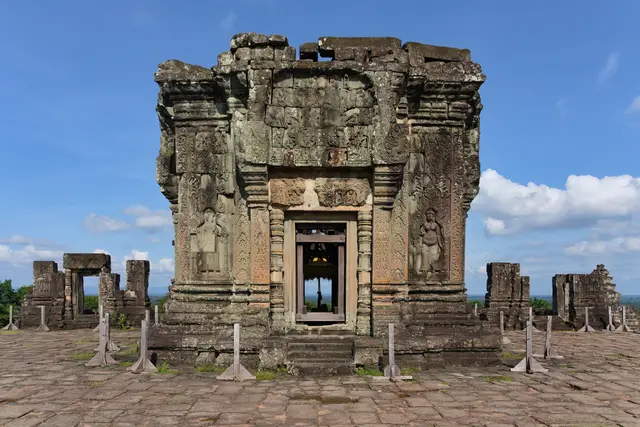
 Phnom Bakheng Temple: Siem Reap Travel Guide (4.6★)
This spot is Day 2 of our Siem Reap 3-day itinerary