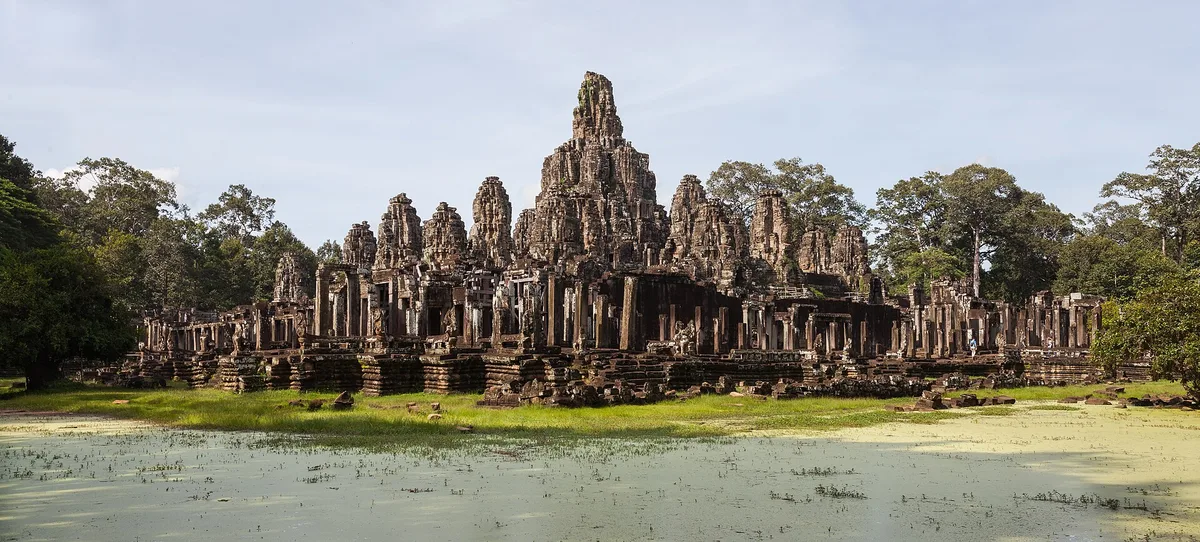
Why Bayon stops people mid-step
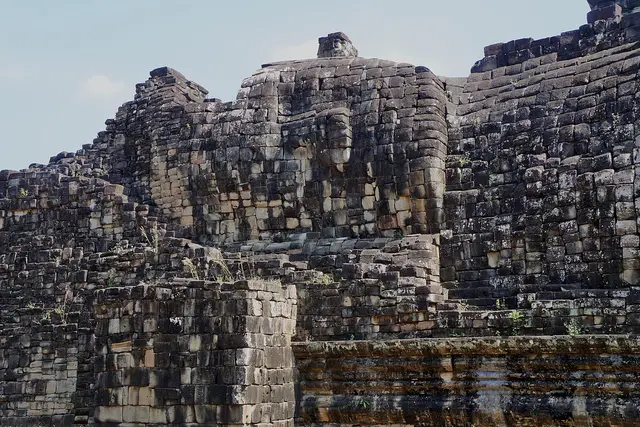
You walk up a low causeway and the temple looks like a pile of grey rubble from a distance. Then you get close, look up, and a face is looking back at you. Then another, and another, enormous stone faces, eyes half-closed, mouths curled into that famous half-smile, stacked on tower after tower. Bayon has 54 towers and, by most counts, over 200 of these faces, carved in the late 12th century under King Jayavarman VII.
It sits dead center of the walled city of Angkor Thom, and nothing else at Angkor feels quite like it.
Getting there
Bayon is inside Angkor Thom, about 1.5km north of Angkor Wat itself. Most visitors arrive by tuk-tuk or private driver as part of a wider Angkor Archaeological Park loop, Bayon usually comes right after entering through the South Gate, itself lined with giant stone figures pulling a naga serpent.
You’ll need the Angkor Pass (day, three-day, or week passes are sold at the official ticket center outside town, not at the temple gate). Bikes are common too; the road in from Siem Reap is flat and shaded in parts by the old forest canopy.
What to see once you’re inside
The layout is dense and layered, so don’t just circle it once. Go up.
- The bas-reliefs on the outer gallery: carved scenes of everyday Khmer life, naval battles, markets, and cockfights, running for hundreds of meters.
- The upper terrace: this is where the faces cluster tightest. Walk slowly, the angles change everything.
- The central tower: originally a Buddhist sanctuary, later reworked as Hindu iconoclasm swept through.
- Face-viewing corners: the northwest and southeast towers are less crowded but photograph just as well.
Give yourself 60 to 90 minutes minimum. Rushing Bayon means missing the faces that only reveal themselves once you’re at the right height and angle.

When to go
Bayon is open every day from 7:30am to 5:30pm. It’s a very popular stop, arguably the second most-visited monument in the park after Angkor Wat, and weekends get genuinely packed between 9am and 4pm.
Aim to arrive right at opening or in the last hour or two before closing. Midday sun is also harsh and flattens the shadows that make the faces look alive; early and late light rakes across the stone and deepens every carved feature.
Many people pair Bayon with an Angkor Wat sunrise, then move here as the crowds are still building. Others save it for the golden hour before the 5:30pm close, when the tour buses have mostly cleared out.
How to visit like a local
Bayon draws heavy crowds year-round, so the smartest move is timing, not avoidance.
- Go early or late. The window right after 7:30am opening, or after 4pm, is noticeably calmer than the 9am–4pm weekend peak.
- Dress for a religious site. Shoulders and knees covered. This is enforced at Angkor Thom’s temples, not just suggested.
- Buy your pass in advance. The Angkor Pass office is separate from the site and has its own queue; buying the afternoon before saves a morning bottleneck.
- Pay in US dollars. Cambodia runs largely on USD for tourist transactions, including tuk-tuk fares and the ticket counter; small bills help.
- Walk the full upper terrace before you leave. Most visitors photograph one or two faces near the entrance and move on. The quieter corners further round are just as striking and far less crowded.
- Tip your tuk-tuk driver or guide modestly in cash if they wait for you through a multi-temple loop; it’s customary and appreciated, not obligatory.
The single biggest mistake first-time visitors make is treating Bayon as a five-minute photo stop between bigger temples. It rewards slowness, climbing, circling, looking up rather than just ahead. Combine it with a walk through Angkor Thom’s other structures nearby, like the Terrace of the Elephants and Baphuon, since they share the same walled enclosure and ticket entry.
Frequently asked questions
What are Bayon Temple's opening hours?
Bayon is open daily from 7:30am to 5:30pm, with no variation across the week.
When is the quietest time to visit Bayon?
Right at the 7:30am opening or in the last hour or two before the 5:30pm close. Weekends between 9am and 4pm are the busiest stretch, so avoid that window if you can.
Do I need a separate ticket for Bayon?
No — Bayon is included in the general Angkor Pass (day, three-day, or week options), bought at the official ticket center outside the Angkor park, not at the temple itself.
How long should I spend at Bayon?
Plan on 60 to 90 minutes to properly climb the upper terrace and see the face towers from multiple angles, plus the outer bas-relief galleries.
What else is nearby?
Bayon sits inside Angkor Thom, within walking distance of the Terrace of the Elephants, the Terrace of the Leper King, and Baphuon temple, all sharing the same walled city.
Plan your trip to Siem Reap
Cambodia eSIM & staying connected →
Some links above are affiliate links — if you book through them, Wander Atlas earns a small commission at no extra cost to you. It's how we keep every guide free.
Related guides
This spot is Day 1 of our Siem Reap 3-day itinerary