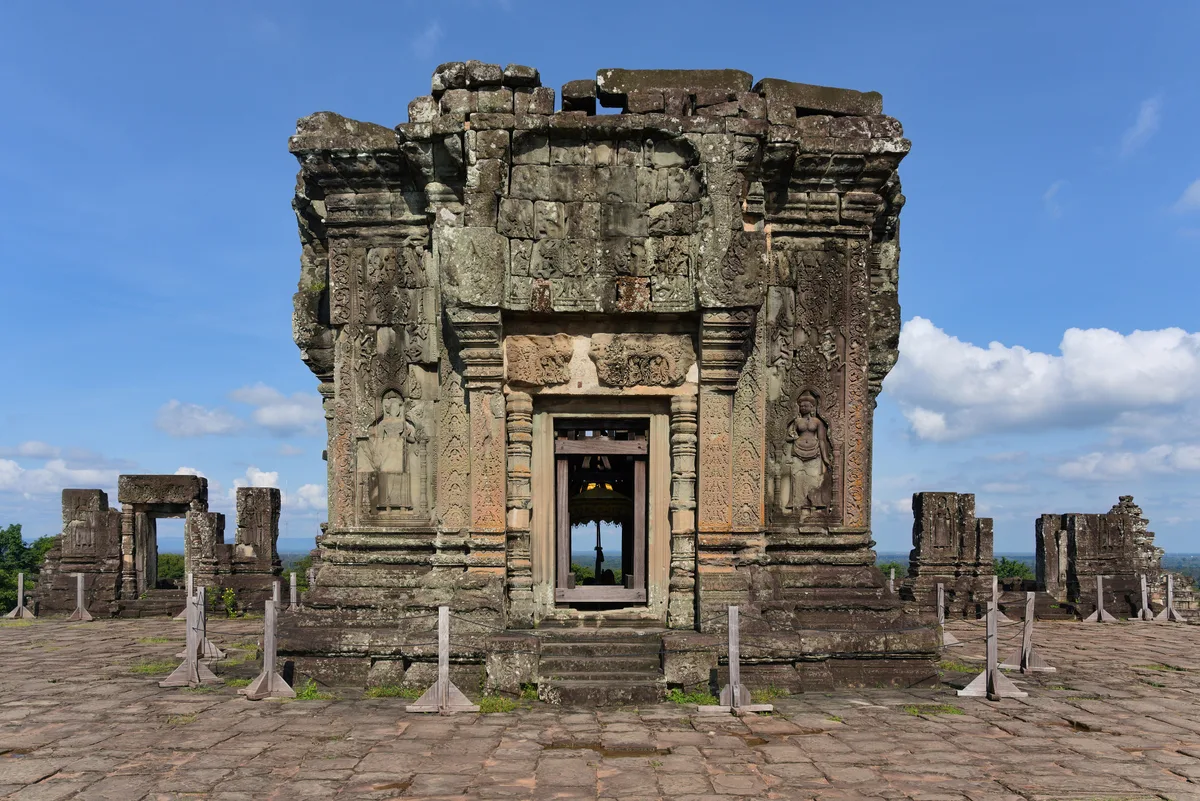
Every visitor to Angkor eventually ends up walking the same sandy path off the road between Angkor Wat and Angkor Thom, following signs toward a low forested hill that doesn’t look like much from the base. Phnom Bakheng sits about 65 metres above the plain, and the climb is the point: this is Angkor’s original state temple, built by King Yasovarman I between 889 and 910 CE, decades before Angkor Wat existed.
The temple itself is a stepped pyramid, five tiers of sandstone and laterite ringed by rows of small towers, many now collapsed into rubble piles rather than standing shrines. Originally it held 108 towers arranged around the central structure, a number tied to Hindu-Buddhist cosmology. Today the state of the ruins is part of the appeal: you’re climbing something genuinely worn, not restored for photographs.
Getting up the hill
You can walk the dirt path to the summit in about 20 minutes, a moderate uphill trek on packed earth and stone steps that gets slippery after rain. There used to be elephant rides to the top; these have been discontinued in recent years, so plan on your own legs.
The final approach involves steep, narrow stone stairs up the temple structure itself, and access to the upper tiers is sometimes restricted or capped in numbers to manage the crowd and protect the stone. Wear shoes with grip, not sandals.
Why everyone comes at sunset
Phnom Bakheng’s reputation rests almost entirely on one thing: the western-facing summit gives a wide, unobstructed view over the jungle canopy toward Angkor Wat’s towers in the distance, and it’s the classic Angkor sunset spot. Because the summit platform is small and the whole park knows this, it fills up fast.
Crowd data for the site shows the busiest window on weekends runs from around 4pm to 7pm, exactly when everyone converges for the light show. If you’re set on sunset, get there well before 4pm to secure a stair-step or ledge with a clear sightline.

When to actually go if you want quiet
If sunset crowds aren’t your priority, the temple is far calmer earlier in the day. The quietest stretch on weekdays runs from about 1pm to 2pm, when the midday heat thins the crowd and the tour buses are elsewhere.
A late-morning or early-afternoon visit trades the famous glow for empty stone steps and space to actually look at the carving details and tower bases without queuing. Combine it with visiting Angkor Wat at sunrise and Phnom Bakheng in the heat of the day, skipping sunset entirely if lines aren’t your thing.
Practicalities inside Angkor Park
Phnom Bakheng sits inside the Angkor Archaeological Park, reachable only with a valid Angkor Pass, checked at the base of the hill. It’s open daily from 5am to 7pm, and hours effectively bookend both sunrise and sunset visits.
A few things worth knowing before you set off:
- Bring water; there’s little shade on the actual climb.
- A flashlight or phone light helps for the walk down after sunset, since the path isn’t lit.
- The summit area has a hard visitor cap at busy times, so arriving right at gate-opening for sunset (rather than at the last minute) matters more here than at most Angkor sites.
- Nearest reference point for drivers and tuk-tuk drivers is the small road junction between Angkor Wat’s west gate and the Angkor Thom South Gate; Phnom Bakheng’s entrance path branches off there.
Sharing the summit without the scrum
Because this is a well-known, heavily visited site rather than an under-the-radar stop, the smart move is managing the crowd, not avoiding it. Most tuk-tuk drivers know to drop you at the base and either wait or head off to Angkor Thom while you climb, so agree on a pickup point before you start.
At the top, staff typically manage flow onto the highest tier when it’s full, so don’t be surprised by a short wait even after the climb. Locals and repeat guides often suggest picking a stair-side rather than dead-centre summit spot: you get a similar view over the treeline with less shoulder-to-shoulder jostling as the light drops.
Frequently asked questions
What are the opening hours for Phnom Bakheng?
It's open daily from 5:00 AM to 7:00 PM, which covers both sunrise and sunset visits.
When is the best time to visit to avoid crowds?
Weekdays between 1pm and 2pm are the quietest. Weekends from 4pm to 7pm, during the sunset rush, are the busiest and worth avoiding if you dislike crowds.
Do I need a separate ticket for Phnom Bakheng?
No separate ticket; access is included with the standard Angkor Archaeological Park pass, checked at the base of the hill.
How long does the climb take?
About 20 minutes uphill on a dirt path, plus a steep final stone staircase to the summit. Budget 45–60 minutes total for the round trip and time at the top.
Is Phnom Bakheng good for sunrise or only sunset?
It's best known for sunset views over Angkor Wat, but visiting midday or even at sunrise avoids the crowds entirely while still offering the same panoramic view.
Plan your trip to Siem Reap
Cambodia eSIM & staying connected →
Some links above are affiliate links — if you book through them, Wander Atlas earns a small commission at no extra cost to you. It's how we keep every guide free.
Related guides
 attraction
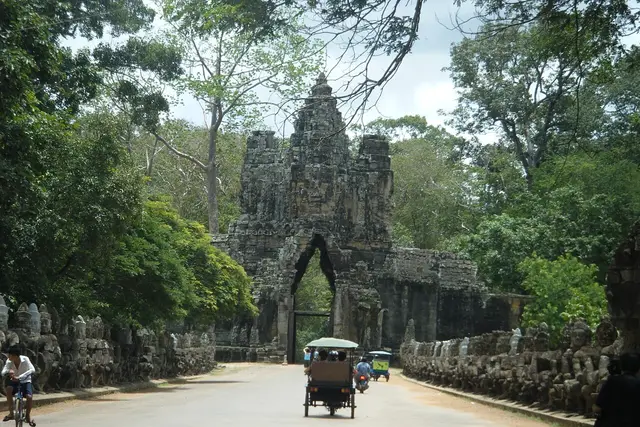
 South Gate Angkor Thom: Siem Reap Travel Guide (4.9★)
 attraction
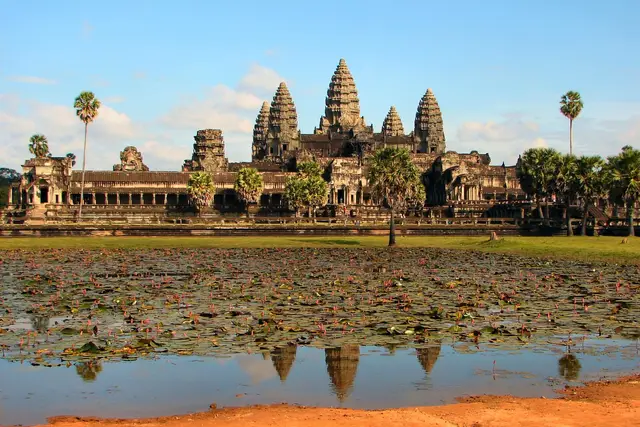
 Angkor Wat: Siem Reap Travel Guide (4.8★)
 attraction
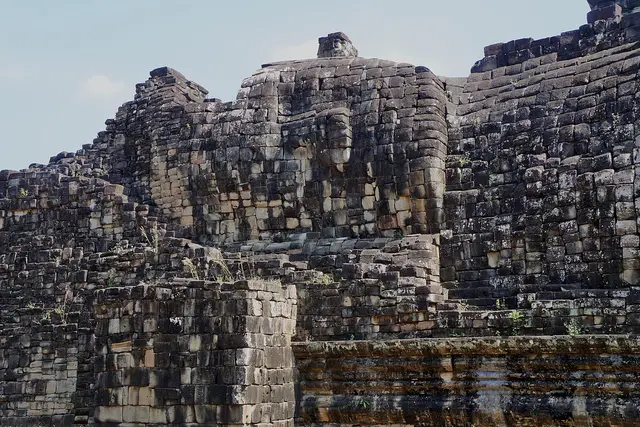
 Baphuon Temple: Siem Reap Travel Guide (4.7★)
 attraction
 Ta Prohm Temple: Siem Reap Travel Guide (4.8★)
This spot is Day 1 of our Siem Reap 3-day itinerary