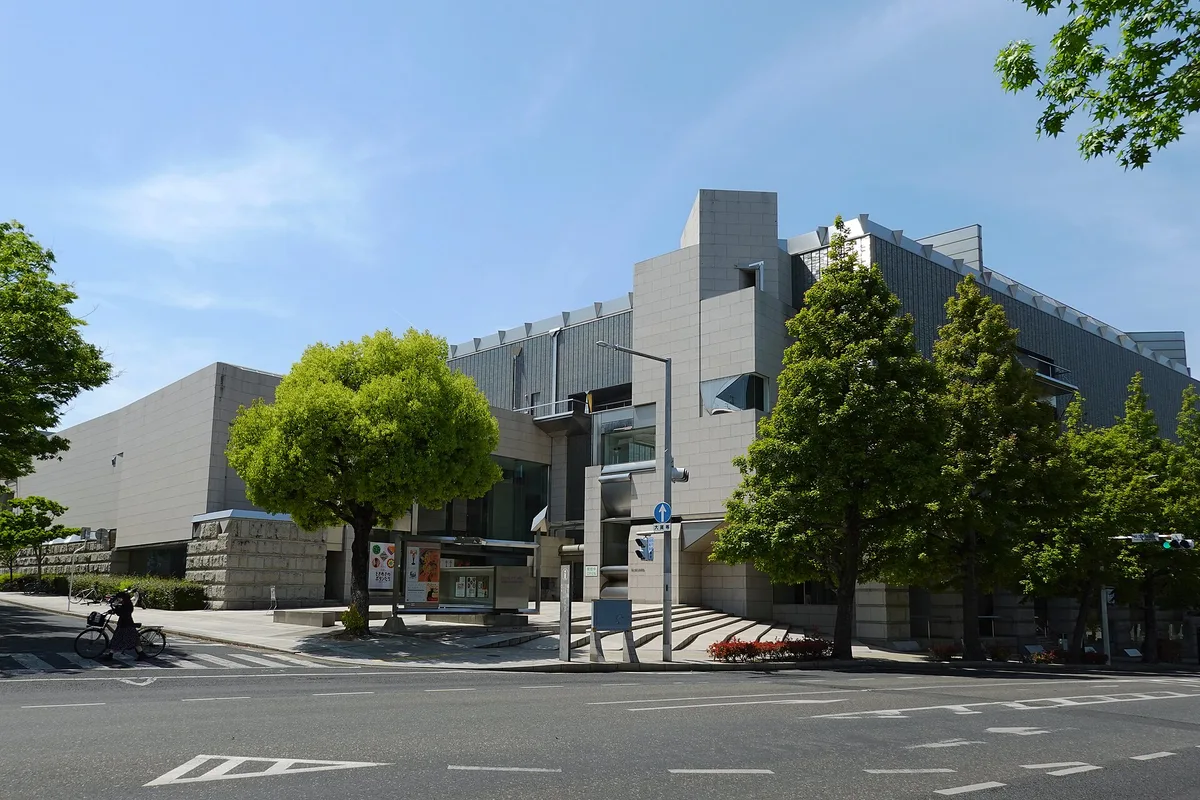
A gallery that collects its own prefecture
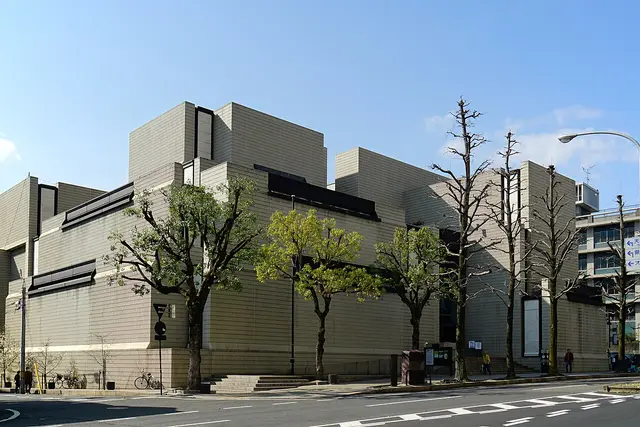
This museum knows what it is for. It gathers art made by people born in, or tied to, Okayama, and it builds its collection rooms around them.
That gives it a focus most regional museums lack. You walk from medieval ink landscapes to modern oil painting, and each room is linked by geography rather than by a textbook timeline. The address is 8-48 Tenjinchō, on the stretch of Kita Ward between the station and the castle. That is museum territory, with several institutions within a few minutes of each other.
Sesshū, Musashi and the home-grown collection
Two names justify the trip for many visitors. Sesshū Tōyō, the fifteenth-century Zen monk who changed Japanese ink painting, was born in the old Bitchū province, now western Okayama. Miyamoto Musashi, the swordsman better known for The Book of Five Rings, also painted in ink. Okayama counts him as a local son too.
The museum holds work connected to both. It also covers later artists from the prefecture, among them Kuniyoshi Yasuo, who made his career as a painter in the United States.
A few things to know before you set your heart on one picture:
- Ink paintings on paper and silk are light-sensitive, so they rotate on and off display.
- A specific Sesshū or Musashi work may be in storage when you visit.
- The collection galleries change their themes through the year.
If one work is the reason you are coming, check the museum’s official site for the current collection rotation first.
Reading the exhibition calendar
Two kinds of show run here. Collection exhibitions draw on the museum’s own holdings. Special exhibitions bring in loans and touring shows, and the editorial line runs across Western and Japanese art.
The two are usually ticketed separately. The current charges are posted at the entrance and on the official site. Special exhibitions are what fill the building, so it is worth knowing which one is on before you go. The museum also runs guided tours and craft workshops. Schedules and sign-up details are listed with each exhibition, and many sessions are in Japanese.
On foot or by tram from Okayama Station
The museum is easy to reach from JR Okayama Station, the Shinkansen stop for the city.
- Walk: head east from the station’s East Exit along Momotarō-Ōdōri. Allow roughly 15–20 minutes.
- Tram: take the Okayama Electric Tramway (Higashiyama line) to Shiroshita. From there it is about five minutes on foot.
- Combined day: Okayama Castle and Kōrakuen are a short walk east, so the museum makes a natural first or last stop.
The tram is the easier choice in summer heat or if you are carrying luggage. Coin lockers at the station are a sensible place to leave bags.
Weekdays win: timing your visit
The measured foot-traffic is blunt about weekends. Saturdays and Sundays are busy for the whole of opening hours, from 9am to 5pm. No weekend slot reliably avoids the people who come for a popular special show.
If your schedule allows it, come Tuesday to Friday. At the moment the museum opens 9am–5pm on those days and closes all day Monday. Hours can shift for exhibition changeovers and holidays, so check the official site for this month’s schedule. Give it 1.5–2 hours for one special exhibition plus the collection rooms.
Lockers, hushed rooms and the photo signs
Japanese museums run on quiet routines. Fitting in with them makes the visit smoother.
- Bags: large bags and umbrellas are generally expected to go into lockers or an umbrella stand near the entrance. Follow the signs and staff directions.
- Photography: rules differ between collection rooms and loaned special exhibitions. Look for the camera icons at each gallery entrance. Where you see a crossed-out camera, phones stay in pockets.
- Pencils, not pens: if you want to take notes, Japanese galleries commonly ask for pencil only.
- Voices: conversation in the rooms is kept to a murmur, and phone calls happen in the lobby.
Buy your ticket at the counter for the exhibition you want. Tell the staff which one you mean: the special show, the collection galleries, or a ticket covering both. The Japanese name, Okayama Kenritsu Bijutsukan, helps if you are asking a taxi driver or a passer-by for directions.
The castle-side afternoon
The museum is one stop on a compact cultural strip, so plan your route around it.
- Okayama Orient Museum: right next door, with artefacts from the ancient Near East. It is a striking contrast after Japanese ink painting.
- Hayashibara Museum of Art: a short walk toward the castle, built on a former daimyō family collection of armour, swords and costume.
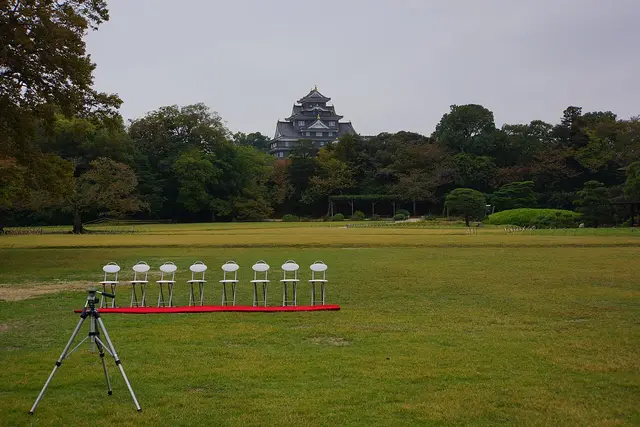
- Okayama Castle: the black-walled “Crow Castle”, across the Asahi River’s inner bank.
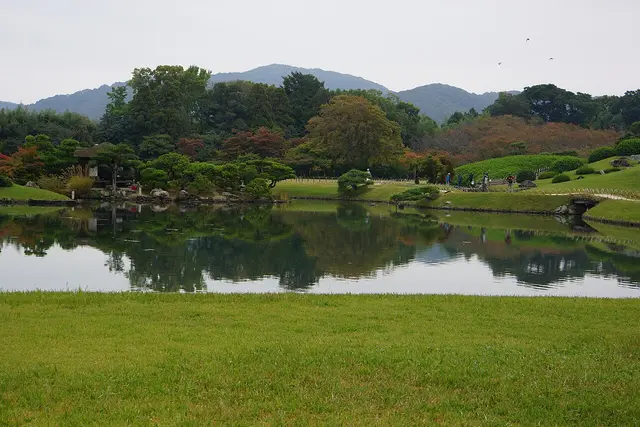
- Kōrakuen: one of Japan’s celebrated landscape gardens, reached by bridge from the castle.
The garden and castle set their own hours, which change through the year. Seeing the museum first on a weekday morning, then walking east to the castle and garden, puts the indoor part of the day ahead of the busier outdoor sights.
Frequently asked questions
How do I get to the Okayama Prefectural Museum of Art from Okayama Station?
Walk east from the East Exit along Momotarō-Ōdōri for roughly 15–20 minutes. You can also ride the Okayama Electric Tramway (Higashiyama line) to Shiroshita and walk about five minutes.
When is the quietest time to visit?
Weekends are busy for the whole of opening hours, 9am–5pm, so go on a weekday instead. Tuesday to Friday it currently opens 9am–5pm. It is closed Mondays, and hours can change around exhibitions and holidays, so check the official site.
Will I definitely see Sesshū or Musashi paintings?
Not necessarily. Ink works are light-sensitive and rotate on and off display, so check the official site for the current collection exhibition before you go.
How long should I spend there?
About 1.5–2 hours covers one special exhibition and the collection galleries. Add time if you join a guided tour or workshop.
What is nearby?
The Okayama Orient Museum is next door, and the Hayashibara Museum of Art is a short walk away. Okayama Castle and Kōrakuen garden are just to the east, so all of them fit in one day.
Plan your trip to Okayama
Japan eSIM & staying connected →
Some links above are affiliate links — if you book through them, Wander Atlas earns a small commission at no extra cost to you. It's how we keep every guide free.