The water at the centre of Korakuen
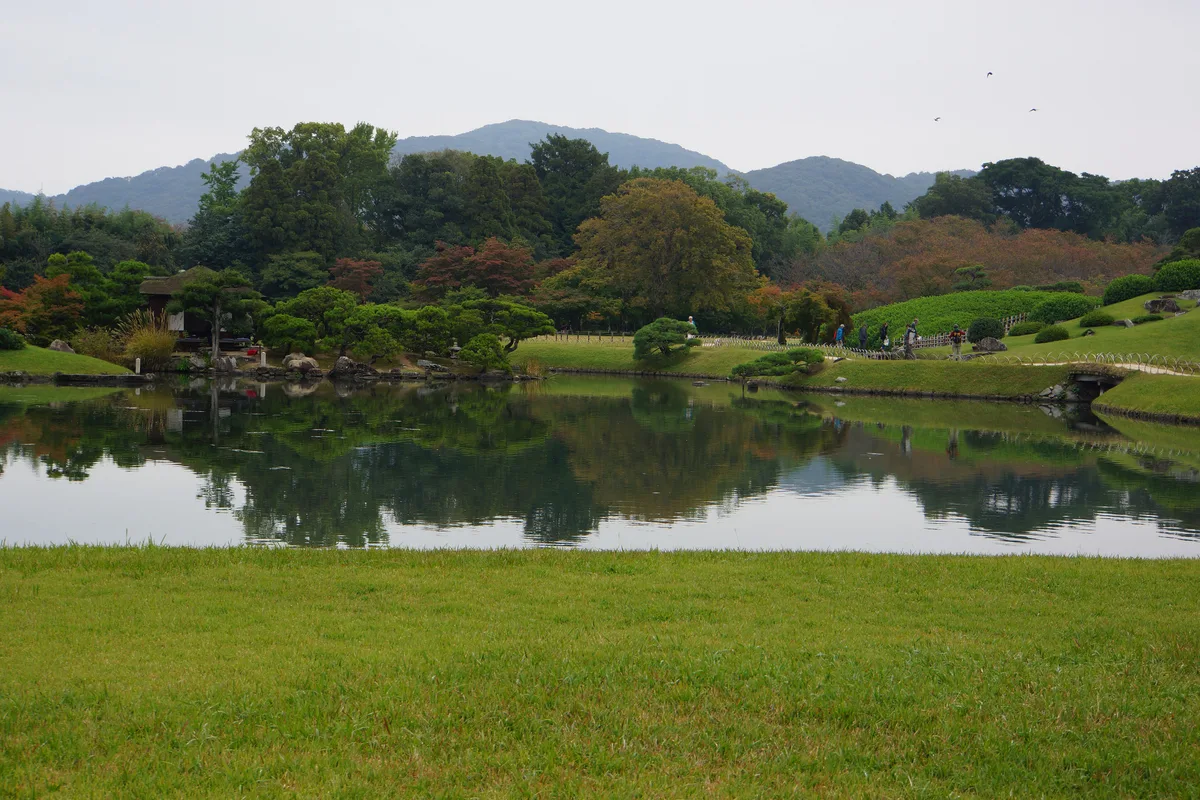
The pond holds the whole garden together. Korakuen is a stroll garden of the Edo period, built for the Ikeda lords of Okayama and completed around 1700. It is one of Japan’s Three Great Gardens, along with Kenrokuen in Kanazawa and Kairakuen in Mito. Sawa-no-Ike is its largest body of water. The paths, lawns and viewpoints are laid out so that you keep getting it back in sight.
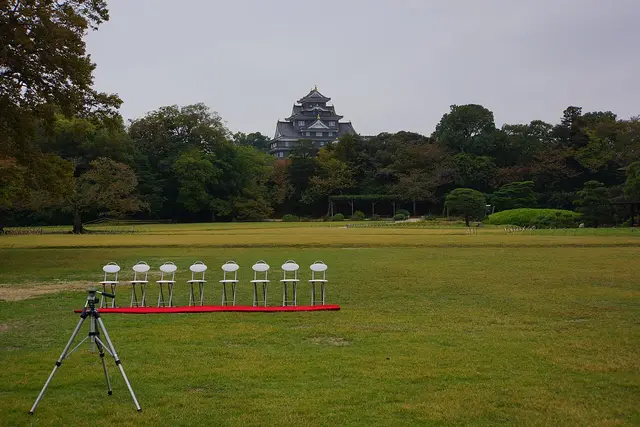
Small islands break up the surface. Naka-no-shima is the largest and holds a modest teahouse. Mitsuki-shima sits close by. Low stone bridges and stepping stones link the shore to the islands. Beyond the far bank, Okayama Castle’s black keep rises over the trees as borrowed scenery, the old technique of framing a distant landmark inside the garden.
Reaching the shore
The address is 1-1 Kōrakuen, Kita Ward. From JR Okayama Station you have three options:
- Tram: Higashiyama line to Shiroshita stop, then about 10 minutes on foot across the Tsurumi Bridge.
- Bus: Okayama city buses run to the Korakuen-mae stop.
- Walk: roughly 25 minutes east along Momotaro-odori.
Go in through the main gate. The open lawns lead you down to the water within a few minutes. The South Gate gives a shorter link to the castle side of the river.

Walking the circuit
Follow the shore clockwise and climb Yuishinzan when you reach it. This small artificial hill is the one high point in a flat garden. From the top you look straight down over Sawa-no-Ike, its islands and the lawns behind it. Back at water level, the angles shift every few steps. The design depends on that.
Things to look for on the way round:
- Enyo-tei, the lord’s residence, which looks out over the lawns toward the pond.
- The tea plantation and plum grove on the garden’s edges.
- The crane aviary. Red-crowned cranes have been kept at Korakuen since the domain era.
- Seasonal colour: plum blossom in late winter, cherry along the river in spring, and maples in November.
Give the pond itself 30–45 minutes. Allow two hours if you also want the rest of the garden and a walk over to the castle.
Reading the garden like an Edo lord
Don’t rush to the far end. These gardens were made for slow walking, and the views open up in sequence. At each bridge or bend, stop and look back the way you came. Stay on the gravel paths and keep off the moss edges. Feeding the carp is only allowed where the garden sells feed.
Within Korakuen, the pond shore is one of the quieter corners. Tour groups tend to head for Enyo-tei and the main lawns first. Arriving soon after opening usually gets you a still surface and clearer reflections of the castle. Pay at the gate and check the current fee there.
Opening hours shift through the year. Korakuen also holds evening illumination events in some seasons, when the pond reflects the lit trees and the castle. The official Okayama Korakuen website lists this month’s hours and event dates, so check it before you plan a late visit.
Frequently asked questions
How do I get to Sawa-no-Ike Pond from Okayama Station?
Take the Higashiyama tram line to Shiroshita and walk about 10 minutes across the Tsurumi Bridge. You can also ride a city bus to Korakuen-mae, or walk about 25 minutes. The pond is inside Okayama Korakuen, a short walk from the main gate.
How long should I spend at the pond?
A loop of the shore with the climb up Yuishinzan takes 30–45 minutes. Allow about two hours for the whole of Korakuen plus Okayama Castle.
What is the best season to visit?
Plum blossom comes in late winter and cherry blossom in spring. Maple colour peaks around November. Some seasons also have evening illuminations, and the official Korakuen site gives the dates.
Where is the best view of the pond?
The top of Yuishinzan, the small artificial hill in the garden. From there you look over the islands and lawns, with Okayama Castle behind them.
What else is nearby?
Okayama Castle stands just across the Asahi River and is reached via the South Gate. Within Korakuen you also have Enyo-tei, the tea fields and the crane aviary.
Plan your trip to Okayama
Japan eSIM & staying connected →
Some links above are affiliate links — if you book through them, Wander Atlas earns a small commission at no extra cost to you. It's how we keep every guide free.