A square at 3,800 metres
The air is thin here. Puno sits at roughly 3,800 metres above sea level, so the gentle slope up from Lake Titicaca can leave you short of breath before you reach the square. Take it slowly.
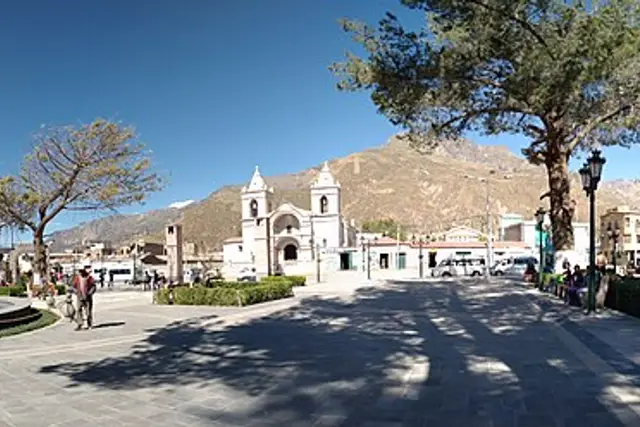
Plaza Mayor de Puno is the town’s formal centre and most locals call it the Plaza de Armas. It’s a classic Spanish-colonial grid square, with lawns, flower beds and benches crossed by paths. On one side stands the stone bulk of Puno Cathedral. Colonial-era houses with wooden balconies line the other sides.
It’s one of the most-reviewed spots in Puno and it’s consistently well rated. That’s not because it has a single dramatic sight. Nearly everything in the old centre is reached through it, so you’ll cross it several times on any stay.
The cathedral’s carved stone face
Your eye goes straight to the cathedral. The Catedral Basílica San Carlos Borromeo was completed in the mid-1700s in grey local stone. Its front is a well-known example of Andean baroque, sometimes called mestizo baroque.
Look closely at the carving around the main doorway. In this style, European columns and saints share space with local plants, fruit and faces cut into the stone. It’s the sort of detail a quick photo from the middle of the plaza flattens out.
The inside is much plainer than the facade, so don’t expect a gilded interior to match it. Mass times and visiting hours vary. Check the notice at the door before you plan to go inside.
Balconies, side streets and the Conde de Lemos
The square’s edges are worth a slow lap. Several buildings around the plaza still have the carved wooden balconies of colonial Peru. Some ground floors now hold cafés, travel agencies and small shops.
Just off the square, on the corner of Jirón Deústua and Jirón Conde de Lemos, is the Balcón del Conde de Lemos. This colonial balcony is linked to the viceroy who is said to have stayed here while subduing unrest in the region. Close by on Deústua is the Casa del Corregidor, one of Puno’s oldest houses, with an interior courtyard.
Both sit within a couple of minutes’ walk of the cathedral steps. They pair naturally with a circuit of the plaza.

Candelaria season: when the plaza fills with dancers
Every February the square changes completely. Puno is often called Peru’s folklore capital, and the Fiesta de la Virgen de la Candelaria is the reason. UNESCO lists it as intangible cultural heritage.
For roughly two weeks, troupes in embroidered costumes and devil masks parade through the streets. Brass bands play behind them. The main competitions are held at the city stadium, but the parades and street celebrations pull crowds through the centre and around the plaza.
If you’re in Puno then, book your room well ahead, because the town fills up. Expect the old centre to be loud late into the night, and expect road closures. Check the official festival schedule for this year’s parade dates and routes.
Getting there from the lake and Jirón Lima
You’ll almost certainly arrive on foot. The plaza is uphill from Puno’s lake port, where boats leave for the Uros floating islands and Taquile. It’s a manageable walk if you’ve had a day or two to adjust to the altitude.
The easiest approach is Jirón Lima, Puno’s pedestrian street. It runs between the plaza and Parque Pino and is lined with restaurants, bakeries and tour offices. Walk its length and you come out at the plaza’s corner, facing the cathedral.
If you’ve just arrived from Cusco or Arequipa and feel the altitude, take a taxi or mototaxi from the bus terminal or the port. Climbing with luggage is harder than it looks.
Plaza manners: benches, photos and the cathedral door
This is a working town square, not a monument park. Keep these in mind:
- Sitting: The benches are for everyone. Lingering is normal, and locals take long breaks here.
- The lawns: Stick to the paths. Grass in Peruvian plazas is often fenced off or watched by municipal staff.
- Photographing people: Women in traditional dress sometimes pose with llamas or lambs and expect a tip in return. Ask first, and don’t photograph anyone who says no.
- Inside the cathedral: Take off your hat, keep your voice down and skip flash during mass.
- Paying: Street vendors and mototaxis work in cash, in Peruvian soles. Small notes and coins make every transaction smoother.
Evenings get cold all year at this altitude, often near or below freezing. If you plan to see the cathedral lit up after dark, bring a proper warm layer.
Because the plaza is busy, keep your phone and wallet close in the evening and during festivals. That’s standard advice for any main square in Peru, and it applies here too.
Walks that start from the square
The plaza is the natural trailhead for central Puno’s short climbs. Cerro Huajsapata rises a few blocks to the southwest, with a statue of Manco Cápac, the legendary first Inca, looking out over Lake Titicaca. Go steadily: the stairs are steep and the air is thin.
Further up is the Kuntur Wasi viewpoint, crowned by a large metal condor. It has one of the widest views over the town and the bay. Taxis can take you up if you’d rather save your lungs for the walk back down.
Downhill, Jirón Lima leads to Parque Pino and the Church of San Juan Bautista, which is closely tied to the Candelaria devotion. That makes an easy loop of an hour or two that ends back where you started.
Frequently asked questions
Is Plaza Mayor de Puno the same as the Plaza de Armas?
Yes. Both names refer to Puno's main square, which faces Puno Cathedral at the top of the pedestrian street Jirón Lima.
How long should I spend at the plaza?
Allow 30–60 minutes for the square, the cathedral facade and a lap of the colonial balconies. Make it a half day if you add the Balcón del Conde de Lemos, the Casa del Corregidor and the climb to Cerro Huajsapata.
How do I get to the plaza from the Lake Titicaca port?
Walk uphill into the centre and follow Jirón Lima, which leads straight to the plaza. If you've just arrived and feel the altitude, a taxi or mototaxi is easier.
When is the best time of year to visit?
February is the most dramatic month, because the Fiesta de la Candelaria fills the streets with dancers and brass bands. Book accommodation far ahead. The rest of the year is calmer, though evenings stay cold at this altitude.
Can I go inside Puno Cathedral?
Usually, yes, but visiting hours and mass times vary. Check the notice at the cathedral door, take your hat off inside and avoid flash photography during services.
Plan your trip to Puno
Peru eSIM & staying connected →
Some links above are affiliate links — if you book through them, Wander Atlas earns a small commission at no extra cost to you. It's how we keep every guide free.