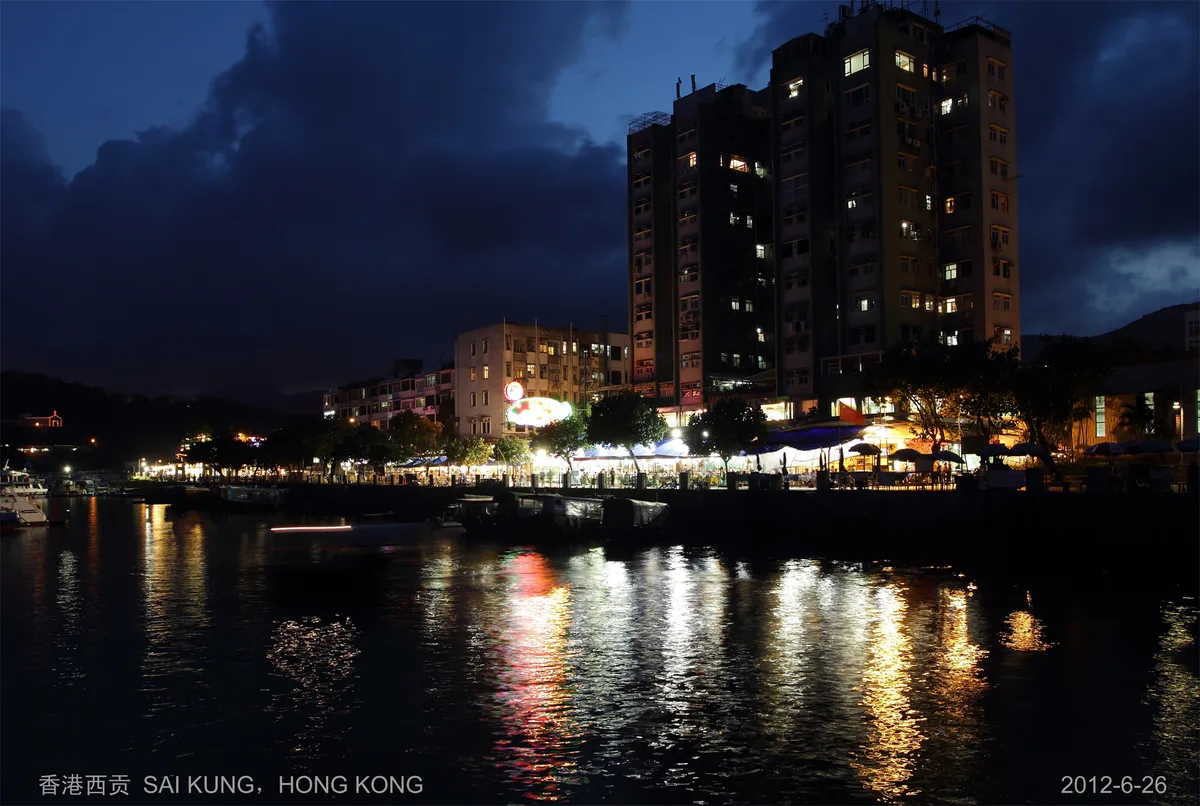
Tanks line the pavement at knee and chest height, stacked in tiers, with aerator tubes bubbling through every one. Mantis shrimp flick against the glass. Crabs sit tied with string. Behind them, dining rooms open straight onto the street, and past the last table the harbour starts.
Sai Kung Seafood Street is the waterfront run of seafood restaurants on Market St in Sai Kung town, on the eastern side of Hong Kong’s New Territories. It is well known and rated consistently well. You won’t find it quiet on a weekend, but it is one of the easiest ways to eat Cantonese seafood straight from the tank.
The tank-to-table routine
This is how it works. You don’t order from a menu first. You walk the tanks, point at what you want, and a staff member nets it, drops it in a bucket and weighs it in front of you.
Then you agree on a cooking style, and the restaurant cooks it in its kitchen. Staple preparations on this kind of street include:
- Salt-and-pepper mantis shrimp (椒鹽瀨尿蝦): deep-fried with garlic, chilli and spring onion
- Steamed garoupa or other whole fish, finished with soy, ginger and scallion
- Scallops steamed with garlic and glass noodles, served on the half shell
- Crab with black bean, ginger and spring onion, or fried with chilli
- Razor clams or clams stir-fried with black bean sauce
Fill out the table with a plate of stir-fried greens and fried rice. Seafood comes to the table on large platters for sharing, so it works best for groups of three or more.
Prices by the catty
Live seafood here is sold by weight, not by portion. The unit is the catty (斤, gan), a traditional measure of roughly 600 grams. Prices change with the season and the catch, so many tanks carry handwritten “market price” signs or none at all.
Before anything gets cooked, ask for the price per catty and watch the scale. Confirm whether the cooking style costs extra too. You’ll find the current price on the tank label or by asking at the counter; if nobody can tell you, go to the next restaurant.
Ordering several expensive items can push a bill up quickly. Weighing one item at a time gives you a running total before you commit.
Getting to Sai Kung town
Sai Kung has no MTR station, so the last leg is by road. The standard routes:
- Minibus 1A from Choi Hung Station (Kwun Tong Line) to Sai Kung town
- Bus 92 from Diamond Hill Station (Kwun Tong Line)
- Minibus 101M from Hang Hau Station (Tseung Kwan O Line)
All of them end at or near the Sai Kung bus terminus. From there, head toward the water. The seafood restaurants stretch along the promenade and Market St, a few minutes’ walk from the stop.
An Octopus card is the simplest way to pay on buses and minibuses. On weekend evenings, the queue for the ride back can be longer than the ride out, so leave extra time.

The 7am harbour
The street never closes, but the restaurants do. It is quietest between 7am and 8am, on weekdays and weekends alike. That’s the window for a walk rather than a meal.
At that hour, the promenade is at its most practical for looking around. Along the seawall, small fishing boats often tie up and sell straight from the deck. Buyers on the promenade lower and raise nets on long poles to hand over cash and seafood. It’s the market on this waterfront that happens before the restaurants open.
Go early, walk the water, have a dim sum or coffee breakfast in town, and come back later if you want to eat.
Beating the weekend crush
The crowd figures here are blunt. On weekends, it is busiest from 11am to 11pm, which covers basically every meal. Arrive at 1pm on a Saturday and you’ll be queuing for a table and waiting on the kitchen alongside everyone else.
If you can only come on a weekend, an early lunch right when your chosen restaurant opens is your best bet. Better still, come on a weekday. Weekday evenings are the easiest time for a relaxed dinner by the harbour.
Ordering without surprises
A few habits of Hong Kong seafood dining make the evening smoother:
- Pick one person to order. They go to the tanks with a staff member while the rest of the table stays seated.
- Say the cooking style clearly. “Steamed” (蒸, jing) and “salt-and-pepper” (椒鹽, jiu yim) are the two words that do the most work.
- Expect tea and a service charge. Hong Kong restaurants commonly charge for tea and add a 10% service charge, so extra tipping isn’t expected.
- Check the bill line by line. Match every weight to what you saw on the scale.
- Ask about payment first. Many places take cards, but some smaller operators prefer cash. Ask before you sit down.
A stall inviting you in loudly isn’t a reason to pick it. Compare a few tanks and prices first, especially in the busy weekend hours.
Around the waterfront
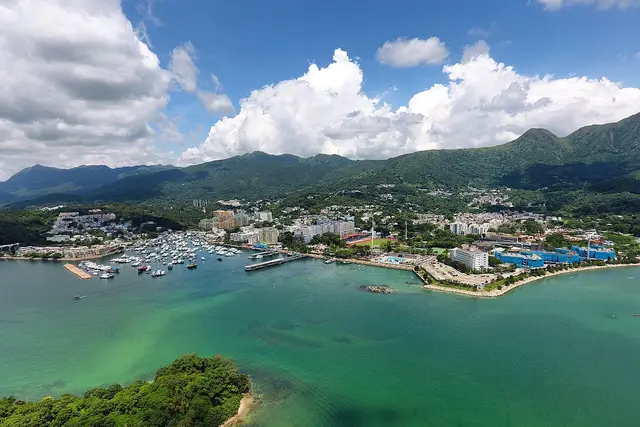
Make a day of it. Sai Kung sits on the edge of Hong Kong’s eastern islands and country parks, and the seafood street is where most outings end.
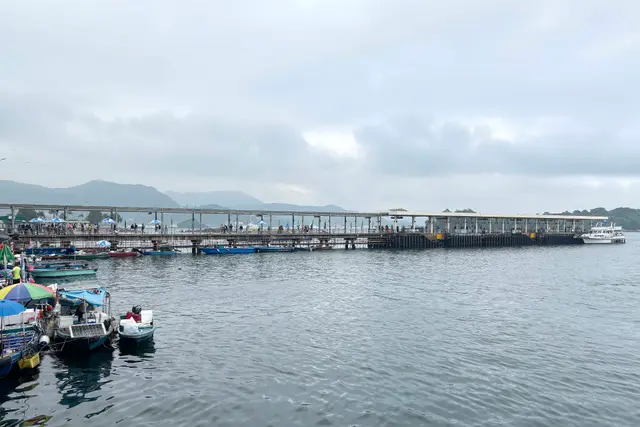
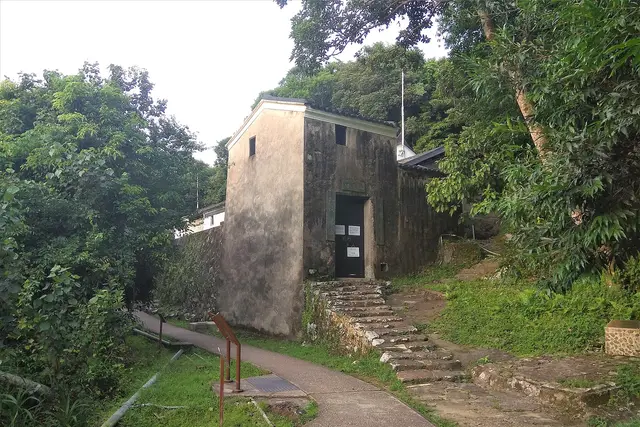
From Sai Kung Public Pier, a short walk along the promenade, kaito ferries and sampans leave for Sharp Island (Kiu Tsui Chau), part of the Hong Kong UNESCO Global Geopark, and for Hap Mun Bay beach. Boats also go to Yim Tin Tsai, a small, mostly abandoned Hakka village island with a restored chapel.
Back in town, the old lanes behind the waterfront hold Sai Kung’s Tin Hau Temple, a small shrine to the sea goddess. Swim or hike in the afternoon, then walk to the tanks for dinner as the sun goes down. Just try to do it on a weekday.
Frequently asked questions
When is the quietest time to visit Sai Kung Seafood Street?
Between 7am and 8am, on both weekdays and weekends. That's before most restaurants open, so it's best for walking the waterfront and seeing the fishing boats. Weekends from 11am to 11pm are the busiest period, so eat on a weekday if you can.
How do I get to Sai Kung Seafood Street by public transport?
Take minibus 1A from Choi Hung Station (Kwun Tong Line), bus 92 from Diamond Hill Station, or minibus 101M from Hang Hau Station (Tseung Kwan O Line) to Sai Kung town. From the terminus, walk a few minutes to the waterfront and Market St.
Is the street really open 24 hours?
The street is always accessible, but individual restaurants keep their own hours. Check with the restaurant you plan to eat at before you head out, especially for late dinners.
How does ordering seafood from the tanks work?
You pick live seafood from the tanks. Staff weigh it in front of you and it's priced per catty (about 600g), then you choose a cooking style such as steamed or salt-and-pepper. Always confirm the price per catty and any cooking charge before it goes to the kitchen.
What else is there to do near Sai Kung Seafood Street?
Kaito ferries and sampans leave from Sai Kung Public Pier for Sharp Island, Hap Mun Bay and Yim Tin Tsai. In town, Sai Kung's small Tin Hau Temple is a short walk from the waterfront.
Plan your trip to Sai Kung
Some links above are affiliate links — if you book through them, Wander Atlas earns a small commission at no extra cost to you. It's how we keep every guide free.
Related guides

This spot is Day 3 of our Hong Kong 3-day itinerary
This spot is Day 4 of our Hong Kong 5-day itinerary