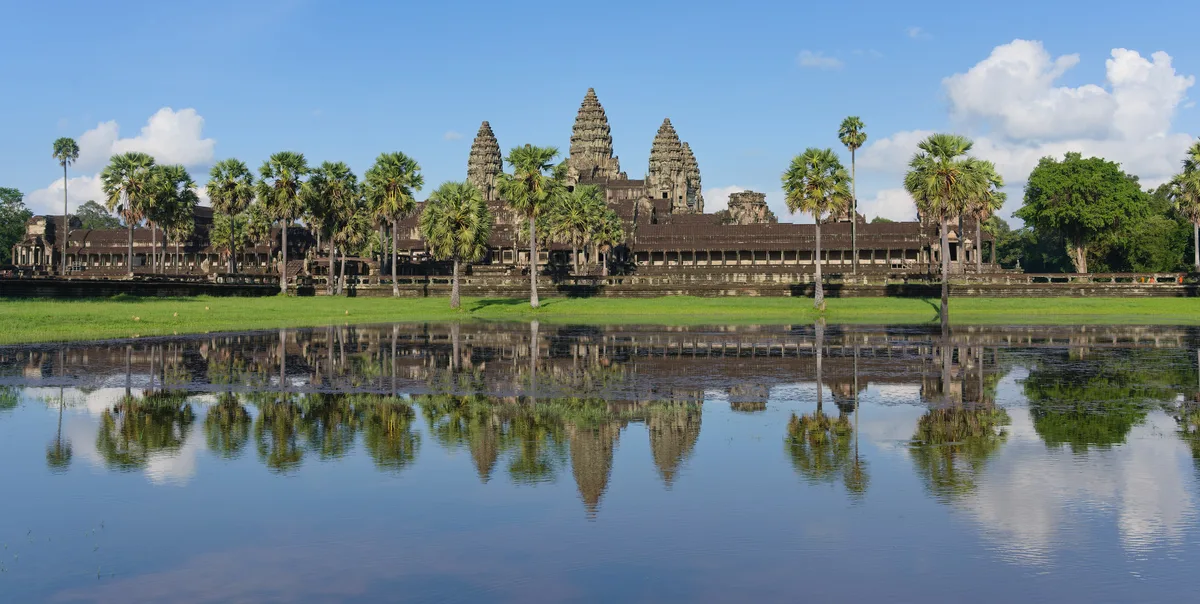
This is not a marathon you run past scenery. You run through it: past sandstone causeways, moat water, and tree roots that have been growing over stone since the 12th century, with thousands of other runners doing the same thing at dawn.
What the race actually is
The Angkor Wat International Half Marathon is a charity race now in its 31st year, which makes it one of the longest-running organized runs in Southeast Asia. It takes place on December 6, 2026, inside and around the Angkor Archaeological Park in Siem Reap.
Runners choose from a half marathon, a 10K, and shorter fun-run distances, so the field ranges from serious competitive runners to families walking the short course. The route passes several of Angkor’s major temples, giving even casual entrants a look at monuments most tourists only see from a tuk-tuk.
Organizers pitch it as a charity event, with past editions raising money for landmine victims and disability support programs in Cambodia. That history is part of why it draws entrants from dozens of countries rather than staying a local fun run.
Getting to the start line
Siem Reap International Airport sits a short drive from both the town center and the Angkor park entrance, and is the arrival point for nearly everyone flying in for race weekend. Most runners base themselves in Siem Reap town, then travel out to the park for the race itself.
The Angkor Archaeological Park entrance is a few kilometers north of town, and race organizers typically route buses or shuttles to the start on event morning given the road closures involved. If you’re staying centrally, plan to leave your guesthouse well before the announced start time rather than trying to arrange a tuk-tuk at the last minute.
Confirm timing and tickets on the official site, since exact start location, shuttle arrangements, and road closure details are the kind of specifics that get finalized close to race weekend and are not worth guessing at.
Temples underfoot, not just in photos
What separates this race from a generic city half marathon is that the course itself is the attraction. Depending on the year’s routing, runners typically pass Angkor Wat’s outer causeway, sections of Angkor Thom’s walled city, and stretches of forest road connecting the park’s temple clusters.
That means you’re running on the same laterite and packed-earth roads used by tourists, tuk-tuks, and monks year-round, just closed to regular traffic for the morning. The surface is mostly flat by Cambodian road standards but uneven in patches, tree roots and old paving stones included.
Runners who’ve done other Angkor visits by tuk-tuk often say the half marathon is the only way to see the park at running pace and in relative quiet, since the road closures push out the usual tour traffic for those hours.
The December timing, and why it matters here
Early December sits at the tail end of Cambodia’s dry season, after the wet months but before the hottest stretch of the year returns. Mornings in Siem Reap in December are noticeably cooler than the April-to-June heat, which is precisely why the race is scheduled then rather than mid-year.
Even so, humidity builds fast once the sun is up, and the race’s early start time (confirm exact time on the official site) is designed to get runners through most of the course before the heat peaks. Bring more water than you think you need and expect the later kilometers, if you’re on the half marathon distance, to feel warmer than the first.
Sorting out an Angkor Pass around race day
Because the race runs through the Angkor Archaeological Park, most runners also want to see the temples properly on foot or by tuk-tuk on a non-race day. The park requires a separate Angkor Pass for general sightseeing, sold at the official ticket center outside the race context entirely.
If your race weekend plan includes a day of temple-hopping before or after the run, buy that pass on a day you’re not running, since race-day road closures and crowd management aren’t set up for casual sightseeing traffic. Angkor Wat, Angkor Thom’s Bayon, and Ta Prohm are the three most visited stops and all sit within a short drive of each other.
Race-morning etiquette in the temple grounds
Angkor is an active religious site as well as a tourist attraction and race venue, so the usual temple etiquette still applies even mid-race. Runners are expected to keep to the closed-course route rather than detouring into restricted temple interiors, and modest dress norms for shoulders and knees apply to anyone lingering at the temples before or after their run, not just sightseers.
- Carry your own water or use aid stations; don’t assume vendors will be open at temple sites pre-dawn
- Keep noise down near active shrine areas even during the race, monks and local worshippers use these spaces daily
- Photography of the temples mid-run is fine, but don’t stop and block the course to do it
- Dispose of gel wrappers and cups at aid stations, not on temple grounds
Beating the crowds at the start corral
Race mornings at Angkor draw a large field split across multiple distances, so the start corral area gets crowded well before the gun goes off. Arriving early, well before your wave’s announced time, generally beats the crush better than arriving right at the stated start.
The finish area near the park’s moat tends to be calmer than the start, since finishers spread out over a longer window than the single mass start. If you’re meeting family or friends post-race, the moat-side area is easier to find people in than the packed starting corral.
Frequently asked questions
When exactly is the Angkor Wat International Half Marathon in 2026?
It's scheduled for December 6, 2026, in Siem Reap. Confirm the exact start time and any schedule changes on the official race site.
How do I get from Siem Reap town to the race start?
Most runners travel from town to the Angkor Archaeological Park entrance a few kilometers north; organizers typically arrange shuttles given road closures, so check the official site for pickup points.
Can I sightsee the temples on race day?
No, save temple visits for a separate day. Race-day road closures and crowd management are set up for the run, not casual sightseeing, and you'll need a separate Angkor Pass bought at the official ticket center.
What distances are offered besides the half marathon?
The event includes a 10K and shorter fun-run distances alongside the half marathon, so families and casual runners can take part too.
Why is the race held in December specifically?
December falls in Cambodia's cooler dry season, after the wet months and before the hottest part of the year, making early morning temperatures more manageable for distance running.
Plan your trip to Siem Reap
Some links above are affiliate links — if you book through them, Wander Atlas earns a small commission at no extra cost to you. It's how we keep every guide free.
Related guides
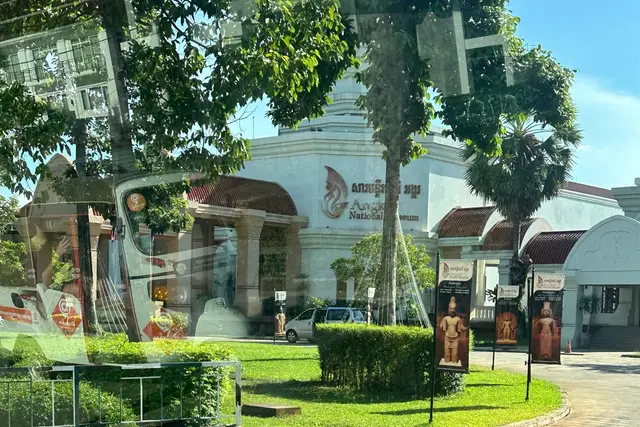 attraction
 Angkor National Museum: Siem Reap Travel Guide (4.4★)
 restaurant
 1932 (Raffles Grand Hotel d'Angkor): Where to Eat in Siem Reap
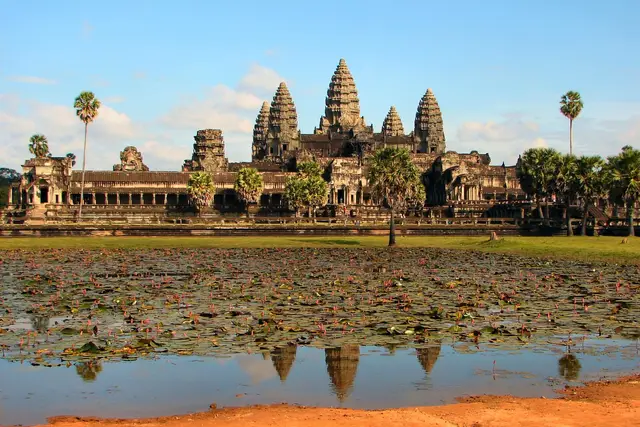 attraction
 Angkor Wat: Siem Reap Travel Guide (4.8★)
 attraction