Siem Reap with photographs on the walls
In late November, Siem Reap turns into a gallery. The Angkor Photo Festival hangs work by international and Cambodian photographers across town, some of it indoors and some outside. All of the exhibitions are free, so there’s no ticket desk and no turnstile. You walk in the way you’d walk into a shop.
The festival started in 2005 and is widely considered the longest-running photography festival in Southeast Asia. The 2026 edition is dated late November. Multi-day workshops and portfolio reviews run alongside the exhibitions, so photographers come here to work as much as to look.
What the exhibitions are like
The outdoor shows are prints mounted in the open air. They sit in courtyards, along walls and in public spaces you might pass on your way to dinner. The indoor shows are in galleries and cultural venues, where you get shade, fans and a closer look at the prints.
The real draw is the line-up mix. Photographers from abroad hang next to Cambodian photographers, so pictures taken in the region sit beside pictures by people who grew up in it. The programme has always leaned towards documentary and storytelling work. Expect long series and captions that are worth reading, rather than single postcard-style shots.
Every year the festival publishes its own map of venues. The festival’s website and social channels carry the programme, artist list and locations for each edition.
Workshops and portfolio reviews
The second half of the festival happens in smaller rooms. The workshops last several days and have traditionally been aimed at emerging photographers from across Asia. Participants get in by application, not by walk-up registration. Their finished work usually goes on show before the festival ends.
In the portfolio reviews, photographers sit down with experienced editors and photographers for feedback on their work. That makes the festival a real career event for people trying to get into documentary photography. If you’re just there to look, the main thing you’ll notice is that more of the crowd carries cameras than usual.
Getting between venues
Siem Reap’s centre is small and flat. Most visitors get between venues on foot or by tuk-tuk. The old core runs from Psar Chaa (the Old Market) and Pub Street out to the paths along the Siem Reap River. Many cultural spaces sit within walking distance of that stretch.
- Tuk-tuks: easy to find on the street. You agree the fare before you get in.
- Ride-hailing apps: PassApp and Grab both work in town, and the fare is shown upfront.
- Bicycles: many guesthouses rent them, which helps when venues are spread out.
- From the airport: Siem Reap-Angkor International Airport (SAI) is roughly an hour’s drive from the town centre.
How to behave at the exhibitions
The shows are informal, but a few habits make them go more smoothly. Some exhibitions hang in cafés, bars and hotels. Visitors there usually buy a drink as a courtesy, even though looking at the prints costs nothing.
- Money: US dollars and Cambodian riel are both used every day. Small change often comes back in riel.
- Photographing the prints: visitors usually take a wide shot of the room but don’t copy whole series frame by frame. Credit the photographer if you share anything.
- Street photography: there are lots of cameras around during festival week. Ask before you photograph people up close, especially monks and children.
- Clothing: covered shoulders and knees are expected at Angkor’s temples, and that suits a day that moves from exhibitions to ruins.
- Talking to photographers: artists often come to their own shows. They’re usually happy to answer questions about a series.
Exhibitions after a day at the temples
Late November is early in the dry season. The heavy rains have usually stopped, and mornings and evenings are among the coolest of the year. Many festival visitors spend the morning at the temples and go round the exhibitions later in the day, when the light outside goes soft.
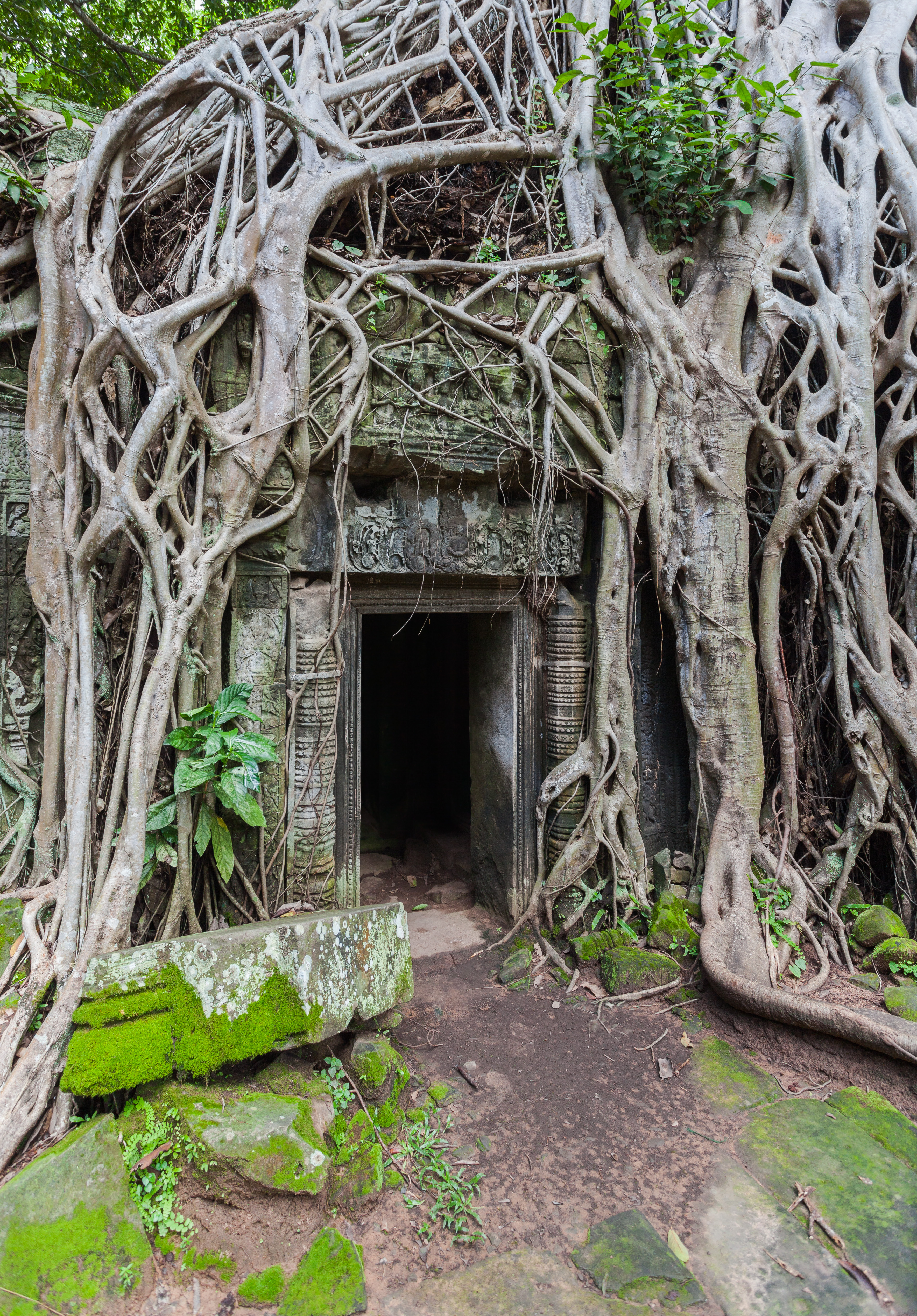
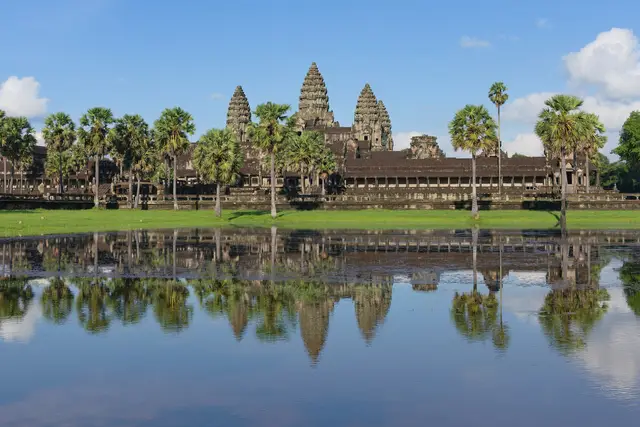
Angkor Wat is about 6km north of the town centre. Entry to the Angkor Archaeological Park needs an Angkor Pass, which is sold at the official ticket centre on the road out of town, where prices are posted. Sunrise at Angkor Wat, the faces of the Bayon and the tree-grown walls of Ta Prohm make a full first day. That still leaves evenings free for the festival.
Most visitors stay three or four nights. That gives you two days for the temples and enough unhurried time to see the exhibitions across town.
Frequently asked questions
When is the Angkor Photo Festival 2026?
The 2026 edition is dated late November, in Siem Reap. The festival's website and social channels carry the exact programme and the venue list for each edition.
Do I need tickets for the Angkor Photo Festival?
No. The outdoor and indoor exhibitions are free and open to the public. The workshops and portfolio reviews are different: participants are selected by application, so you can't just turn up.
Where in Siem Reap are the exhibitions held?
The exhibitions are spread across town, both indoors and outdoors, and venues change from year to year. Many are within walking or tuk-tuk distance of Psar Chaa (the Old Market), Pub Street and the paths along the Siem Reap River.
How much time should I give the festival?
Most visitors see the exhibitions over two or three evenings and spend the days at the temples. Three or four nights in Siem Reap covers both without rushing.
Can I visit Angkor Wat during the festival?
Yes. Angkor Wat is about 6km north of town and is open as usual. You need an Angkor Pass, sold at the official ticket centre, where the prices are posted. Late November falls in the cooler, drier start of the dry season.
Plan your trip to Siem Reap
Cambodia eSIM & staying connected →
Some links above are affiliate links — if you book through them, Wander Atlas earns a small commission at no extra cost to you. It's how we keep every guide free.
Related guides
 event
event 20th Francophonie Summit: Dates, Tickets & Venue (Siem Reap)
 event
event Angkor Wat International Half Marathon: Dates, Tickets & Venue (Siem Reap)
 event
event Jayavarman VII Festival: Dates, Tickets & Venue (Siem Reap)
 Ended
Ended