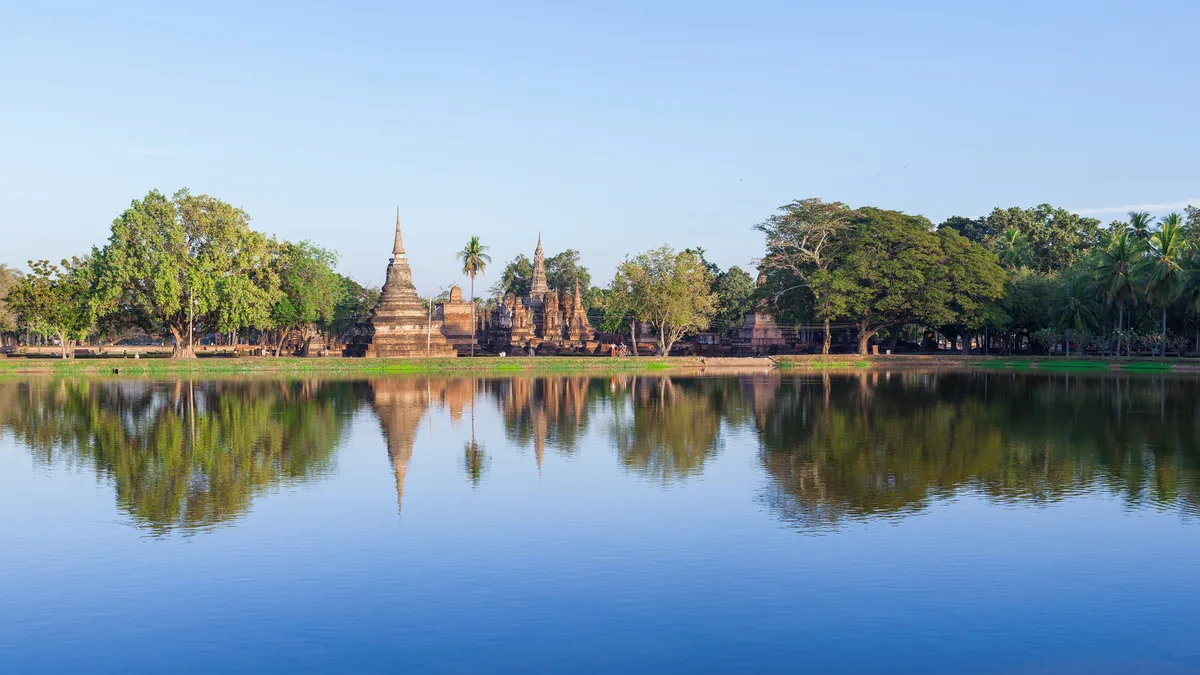
A lotus bud above the moat
Start with the shape. Rising from the middle of the ruins is a tall brick chedi topped by a lotus-bud spire, the form most closely tied to Sukhothai-era architecture. Around it stand rows of laterite columns, a scatter of smaller chedis and seated Buddhas facing the morning side of the compound.
This was the royal temple of the Sukhothai kingdom, founded in the 13th century. Its walls and moat mark it as the spiritual centre of the old capital. The whole site is part of the UNESCO-listed Historic Town of Sukhothai, inscribed in 1991. Expect clipped lawns, water and plenty of open sky.
What to look for on the platform
The compound is big enough to drift around aimlessly, so it helps to know what to look for. Walk the main platform slowly and you will find:
- The stucco procession around the base of the principal chedi: a line of monks walking with hands pressed together, worn but still readable.
- Two standing Buddhas in tall brick enclosures on either side of the central chedi.
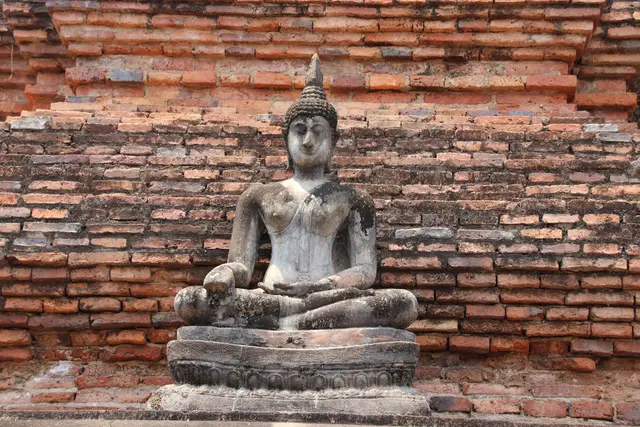
- The great seated Buddha among the remaining columns of the old assembly hall, the ruin most people photograph first.
- Smaller satellite chedis in different styles, some showing Sri Lankan and Khmer influence.
The original bronze Phra Si Sakyamuni Buddha that once sat here was moved to Wat Suthat in Bangkok in the 19th century. The brick and laterite seat you see today gives you a sense of its scale.
Out to Mueang Kao
Don’t stay near the ruins expecting a short walk. Modern Sukhothai, where most guesthouses and the bus terminal are, sits about 12 km east of the historical park. Blue songthaews (shared pickup trucks) run along the road between the two, and they will drop you near the Central Zone gate.
Bicycle rental shops line the road outside the park entrance. Cycling is the usual way to link Wat Mahathat with the outer temples. The Central Zone is flat and paved, and Wat Mahathat sits close to the entrance, so you reach it within minutes of buying your ticket. Ticket prices for entry and bicycles are posted at the gate.

Picking your hours
Google currently lists the site as open from 9:30am to midnight every day. Historical parks in Thailand change their hours with the season and for events, though, so check the Fine Arts Department or the park’s official channels for this month’s times.
Timing comes down to heat and light. Midday sun bounces hard off pale laterite, and the lawns have little shade. Arriving early in the opening hours, or saving the visit for late afternoon, makes the walk easier and gives you longer shadows on the stucco. The ponds around the temple reflect the chedis when the water is still.
In November the park hosts Sukhothai’s Loy Krathong celebrations, with lanterns, floating offerings and performances around these ruins. It is a spectacular time to visit, but it gets crowded, and accommodation in town books up early.
Manners among the Buddha images
The ruins are roofless, but they are still sacred ground. Visitors who act as if they’re in an open-air museum stand out quickly. A few habits keep you on the right side of things:
- Cover shoulders and knees. A light scarf or loose trousers solves this in the heat.
- Stay off the brickwork. Climbing chedis or platforms for a photo is prohibited and damages the structures.
- Keep your head lower than the Buddha. Never pose with a hand on an image, turn your back to one for a selfie, or point your feet toward it when you sit.
- Lock bikes at the edges rather than wheeling them across the temple platform.
Pay at the gate in Thai baht, and carry small notes, since the kiosks and the snack stalls outside work mostly in cash. If you see locals leave lotus flowers or light incense at a seated Buddha, give them room and wait until they’re finished before you take photos.
Next door in the Central Zone
Wat Mahathat is the anchor, but several sites are only a short ride away. Wat Sa Si sits on an island in a pond to the north, reached by a small bridge. Wat Si Sawai has three Khmer-style prangs, older in feel than anything else nearby.
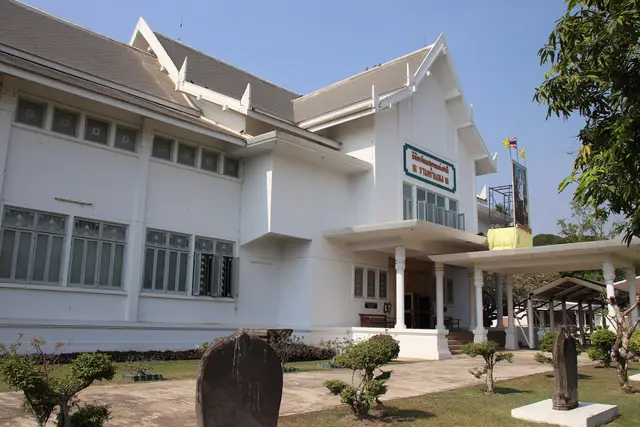
The King Ramkhamhaeng Monument shows the seated king who is traditionally credited with creating the Thai script. Wat Traphang Ngoen and its pond are just west of the main temple. The Ramkhamhaeng National Museum, near the park entrance, holds bronzes and ceramics recovered from the site and is worth an hour before or after the ruins.
Frequently asked questions
How do I get to Wat Mahathat from Sukhothai New Town?
Take a blue songthaew along the road west to Old Sukhothai (Mueang Kao), about 12 km away. Drivers stop near the Central Zone entrance of Sukhothai Historical Park, and Wat Mahathat is a few minutes' walk or ride from the gate.
How long should I spend at Wat Mahathat?
Allow 1–1.5 hours for Wat Mahathat itself. If you want to cycle the rest of the Central Zone and visit the Ramkhamhaeng National Museum too, budget half a day.
What are the opening hours?
Google currently lists 9:30am to midnight every day. Historical park hours change by season and for events, so check the official park or Fine Arts Department information for this month before you go.
What should I wear?
Wear clothes that cover your shoulders and knees, because it is an active religious site. Bring a hat and water too, since the lawns and laterite platforms have very little shade.
Is it worth visiting during Loy Krathong?
Yes, if you don't mind crowds. Sukhothai's November Loy Krathong celebrations are held around these ruins, with lanterns and performances, but you should book your room in town well ahead.
Plan your trip to Sukhothai
Thailand eSIM & staying connected →
Some links above are affiliate links — if you book through them, Wander Atlas earns a small commission at no extra cost to you. It's how we keep every guide free.
Related guides
 hidden gem
Sukhothai Historical Park: Travel Guide (4.7★)
 attraction
Ramkhamhaeng National Museum: Sukhothai Travel Guide (4.4★)
 attraction
Wat Si Chum: Sukhothai Travel Guide (4.8★)
 attraction