What November 26 commemorates
The date goes back to 1924. On November 26 that year, the first State Great Khural adopted Mongolia’s first constitution and proclaimed the Mongolian People’s Republic. The same year the capital, then called Urga or Niislel Khüree, took the name Ulaanbaatar, meaning “Red Hero”.
The republic of 1924 was a socialist state closely tied to the Soviet Union. That lasted until the democratic revolution of 1990 and the 1992 constitution. Modern Mongolia keeps November 26 as the birthday of its statehood as a republic, and it was restored as a public holiday in 2016.
On November 26, 2026, the country marks the day with state ceremonies and public commemorations in the capital. It is a civic holiday rather than a festival. Don’t expect Naadam-style wrestling or horse racing. This is the government and the nation marking a founding date.
Sükhbaatar Square and the State Palace
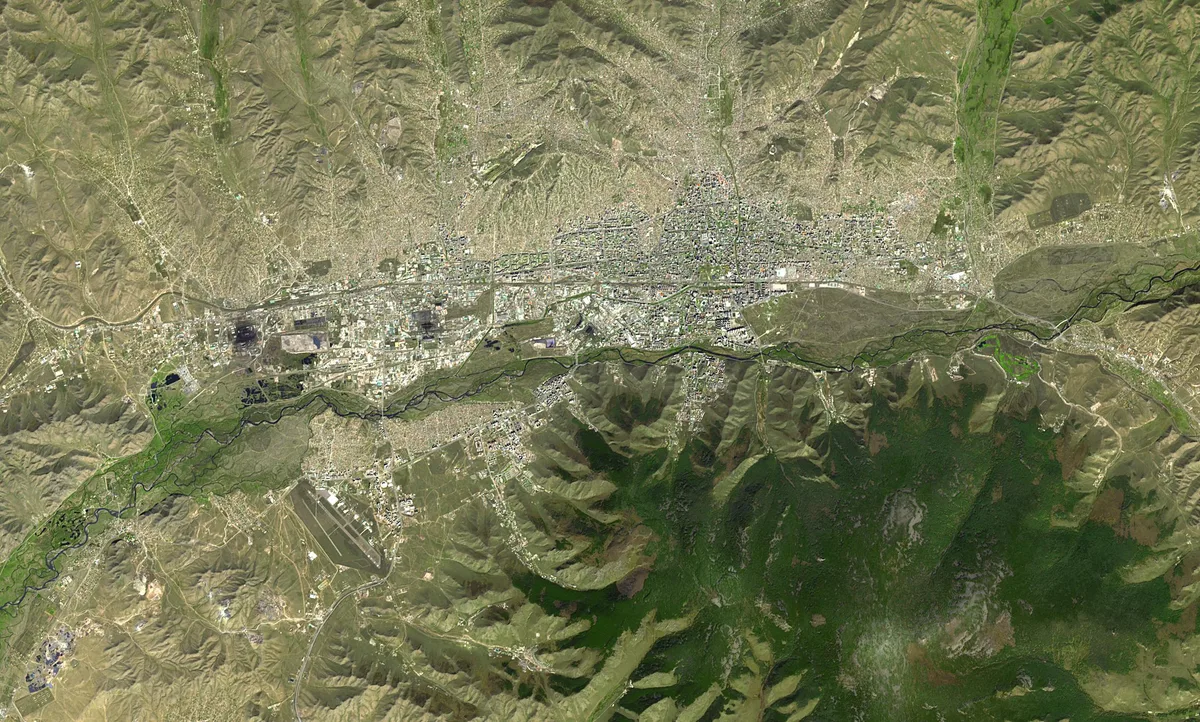
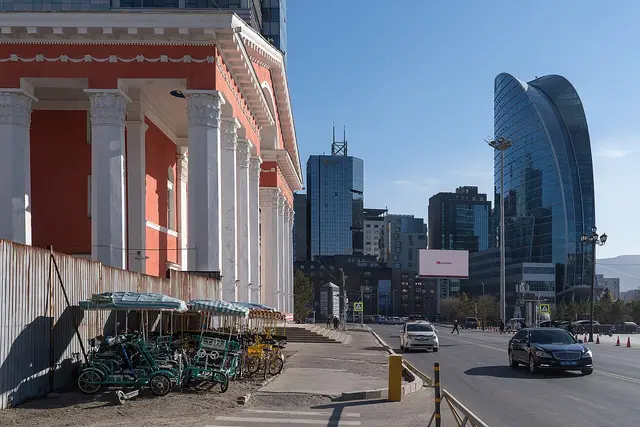
Ulaanbaatar’s civic stage is a big stone plaza. Sükhbaatar Square sits on the north side of Peace Avenue (Enkh Taivny Örgön Chölöö). The State Palace, home of the parliament, closes its northern edge.
You’ll find these landmarks around the square:
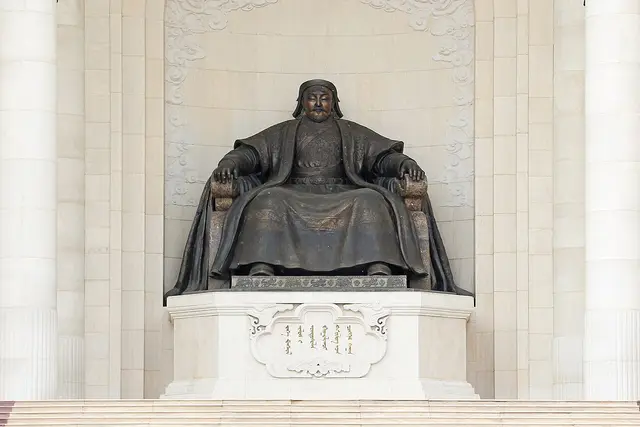
- The State Palace colonnade: a huge seated statue of Chinggis Khaan at the centre, flanked by Ögedei and Kublai Khan.
- Damdin Sükhbaatar on horseback: the equestrian statue in the middle of the square, honouring the revolutionary leader of 1921.
- The flagpoles and open paving: where national ceremonies and formal guards traditionally stand.
When Mongolia holds a state occasion in the capital, this square is where it traditionally happens. On Republic Day, people usually come to the square and Peace Avenue to see the flags and whatever public ceremony is held.
Tickets, and why there aren’t any
There is no general ticket for Mongolia Republic Day. It is a national public holiday, and you don’t need a pass to stand in a public square. Formal ceremonies inside government buildings are run by the state for invited officials. They aren’t sold to visitors.
The holiday changes the city’s rhythm more than its entry rules. Government offices, banks and many businesses close for the day. Museums and attractions often keep holiday hours, and the times also change with the season. Each institution posts its own hours on its official site.
Minus twenty on an open square
The weather sets the terms for this holiday. Ulaanbaatar is the coldest national capital on Earth, and late November is already deep winter. Overnight lows routinely sink well below minus 15°C. Daytime highs on the square often stay well below freezing.
Sükhbaatar Square is open paving with almost no shelter, so wind cuts straight across it. Locals who stand outside for any length of time dress in layers:
- A down parka long enough to cover the hips
- A hat that covers the ears, plus a scarf or neck gaiter
- Insulated boots with thick soles, because the cold comes up through stone
- Gloves thin enough to work a phone, with mittens over the top
Phone batteries drain fast at these temperatures. People usually keep theirs in an inside pocket between photos. Winter also brings smog. Coal and wood stoves in the ger districts leave a haze over the valley on still days, so many residents wear masks outdoors from late autumn.
Standing for the anthem: etiquette on the square
Republic Day is a solemn civic occasion, and people behave that way. When the national anthem plays or the flag is raised, people stop, stand still and face the flag. Men usually take their hats off if the cold allows. Visitors who do the same fit in without anyone noticing.
The honour guards in ceremonial uniform at the State Palace are on duty, not posing. People photograph them from a respectful distance and don’t step into their line or touch them. Security marks off parts of the square with barriers during official moments. Crowds stay behind them, and the police directing foot traffic expect to be obeyed straight away.
Some practical habits help too. Mongolian holiday greetings are warm and simple. A “Bayar khürgeye” (congratulations) to a host or shopkeeper goes down well. Cards work widely in central Ulaanbaatar, but small kiosks and taxis still work mostly in Mongolian tögrög. People keep a little cash for those.
Getting into central Ulaanbaatar
International flights land at Chinggis Khaan International Airport. It opened in 2021 at Khöshig Valley, roughly 50 kilometres south of the city. The drive into the centre takes about an hour, longer in winter traffic. Most visitors take a taxi, a hotel transfer or the airport bus.
The Trans-Mongolian Railway arrives at Ulaanbaatar Railway Station, southwest of the centre. From there, a short taxi ride reaches Peace Avenue. Most visitors who come for the holiday stay within walking distance of Sükhbaatar Square, around Peace Avenue and Seoul Street. That saves taking a car through the gridlock on a day when roads near the State Palace may be closed.
Walking is the reliable way to reach the square. On a holiday morning the pavements along Peace Avenue fill with families heading the same way.
Around the square after the ceremony
Everything near the square is close enough to walk between in the cold, which matters in November.
- National Museum of Mongolia: just west of the square. It traces the country from prehistory through the empire to the socialist and democratic eras. This is the clearest way to understand what 1924 actually changed.
- Chinggis Khaan Museum: a large modern museum a short walk south of Peace Avenue, focused on the imperial period.
- Choijin Lama Temple Museum: a walled cluster of early twentieth-century temples a few minutes south of the square. It’s quiet and wooden, and a contrast to the socialist-era monumental style around it.
- Gandantegchinlen Monastery: a short taxi ride west, and the country’s principal working Buddhist monastery. Its towering standing statue of Avalokiteshvara is the centrepiece.
- Zaisan Memorial: on a hill south of the city. This Soviet-era monument has a circular mosaic of Mongolian-Soviet history and wide views over the valley, when the smog allows.
Allow half a day for the square and a museum. Make it a full day if you add Gandan or Zaisan. Many visitors finish indoors over buuz (steamed mutton dumplings) or a bowl of suutei tsai, the salty milk tea served across the city in winter.
Frequently asked questions
When is Mongolia Republic Day in 2026?
It falls on Thursday, November 26, 2026. It is a national public holiday, so government offices and banks close for the day.
Do I need tickets for Republic Day in Ulaanbaatar?
No. There is no general ticket for the holiday. Public commemorations take place in open civic space such as Sükhbaatar Square, and formal state ceremonies inside government buildings are for invited officials.
Where are the main Republic Day events held?
Mongolia's state occasions in the capital traditionally centre on Sükhbaatar Square, in front of the State Palace with its large Chinggis Khaan statue, just north of Peace Avenue.
How cold is Ulaanbaatar in late November?
It's very cold. Overnight lows routinely fall well below minus 15°C, and daytime highs usually stay below freezing. People standing outside wear a long down parka, a hat that covers the ears, insulated boots and layered gloves. Winter smog also leads many residents to wear masks.
What can I see near Sükhbaatar Square on the holiday?
The National Museum of Mongolia, the Chinggis Khaan Museum and the Choijin Lama Temple Museum are all a short walk away. Gandantegchinlen Monastery and the Zaisan Memorial are a short taxi ride. Holiday and seasonal hours vary, and each museum posts them on its official site.
Plan your trip to Ulaanbaatar
Mongolia eSIM & staying connected →
Some links above are affiliate links — if you book through them, Wander Atlas earns a small commission at no extra cost to you. It's how we keep every guide free.
Related guides
 event
Genghis Khan Birthday Commemoration: Dates, Tickets & Venue (Ulaanbaatar)
 event
MLBB Championship Tour East Asia (MCT EA) Ulaanbaatar: Dates, Tickets & Venue (Ulaanbaatar)
 event
Mongolia Independence Day: Dates, Tickets & Venue (Ulaanbaatar)
 event